Start with roll-in shower and threshold rules
Choose the exact accessible suite before selecting the itinerary, flights, hotel, or family configuration. Build the trip outward from that confirmed room. Start with bathroom access, doorway clearance, thresholds, bed transfers, storage, and balcony use. Then choose the ship and sailing, secure the suite number, and arrange the land pieces. Seven Seas Explorer illustrates the reason: Concierge Suites 822 and 823 have roll-in showers, shower seats, balcony ramps, and wheelchair-height door peepholes.
Treat the cabin number as part of the product, not an administrative detail. Seven Seas Explorer Penthouse Suite 916 measures 450 square feet, with a 176-square-foot balcony and a walk-in closet. Its bathroom has one sink, a shower seat, and no bathtub or under-sink cabinet. That configuration suits a traveler needing open knee space and more interior room. It is less suitable when two people need separate sinks or anyone relies on a bathtub.
Separate accessibility from size before comparing larger family accommodations. Crystal Grace lists an ADA-compliant Aquamarine Suite among categories reaching 341 square feet, with verandas reaching 175 square feet. Some Aquamarine layouts use a walk-in shower, while others combine a separate shower and bathtub. Several can form two-bedroom configurations.
Use the same order across Regent, Crystal, and Cunard’s Grills, even though their suite systems differ. A traveler who cannot cross a balcony lip needs that problem solved before discussing dining space or views. A grandparent needing assistance beside the toilet may need more than a room described as accessible. This approach is not for travelers unwilling to document equipment measurements, transfer direction, caregiver space, and bathing needs before choosing their cruise.
Doorways, transfers, and roll-in showers decide the ship
Define the traveler’s daily movements before comparing destinations. Record the mobility device’s width and turning needs, preferred bed side, transfer method, shower routine, and required caregiver space. Include any need for a lowered sink, reachable safe, shower bench, or handheld showerhead. Celebrity’s Accessible Sky Suite provides a useful mass-market contrast because its specified features include wider doorways, grab bars, a raised toilet, a lowered sink, and a fold-down shower bench.
Match thresholds as carefully as bathroom fixtures. Seven Seas Voyager Penthouse Suites 859 and 860 have 325 square feet inside and 52-square-foot balconies, but no permanently installed ramps. Concierge Suite 761 has fabricated ramps leading toward the bathroom and balcony. Concierge Suite 762 has fabricated balcony access. Those differences can determine independent movement. A traveler using a heavy power chair should not assume two accessible rooms in the same category handle level changes identically.
Choose the bathroom arrangement around the user, not the category name. Crystal Grace Penthouse Panorama Suites reach 1,221 square feet, with verandas reaching 983 square feet. Their bathrooms include a Jacuzzi bathtub, separate shower, bidet, and guest bathroom. That layout may help families needing two toilet spaces. It is not automatically suitable for someone requiring a roll-in shower, a fixed seat, open sink clearance, or a caregiver positioned beside the primary shower.
Write one functional profile for every traveler needing adaptations. Couples should identify which partner needs the accessible side of the bed. Families should include stroller storage, caregiver proximity, medication refrigeration, and nighttime routes. Grandparents paying for several rooms should decide whether assistance comes from a relative, companion, or ship staff member. The profile controls the suite, neighboring rooms, transfer vehicle, hotel room, and insurance questions that follow. It also prevents relatives from substituting preference for physical need.
June 2028 Mediterranean space needs early decisions
Time the booking around the scarcest suitable configuration, not a generic regional calendar. Crystal Grace offers an eight-night Mediterranean sailing from Civitavecchia, Rome, to Fusina, Venice, departing June 11, 2028, and arriving June 19, 2028. Families considering that sailing should settle bathroom and bedroom needs before coordinating several vacation schedules. A two-bedroom combination carries more dependencies than a standard veranda, especially when one room must meet ADA requirements.
Use longer voyages only after testing the same physical routine against every travel day. Crystal Grace also shows a 34-night round trip from Civitavecchia, Rome, departing June 11, 2028, and returning July 15, 2028. That duration increases the importance of storage, laundry planning, medication quantities, equipment maintenance, and caregiver endurance. A long Mediterranean booking is not for someone still uncertain about shower transfers, overnight assistance, or spending several weeks with the chosen mobility setup.
Treat linked segments as separate logistical problems before accepting the longer itinerary. A 27-night Crystal Grace voyage leaves Civitavecchia, Rome, on June 11, 2028, and reaches Barcelona on July 8, 2028. The embarkation and disembarkation cities require different flight, hotel, and ground arrangements. Families using wheelchairs should map each end independently. A workable suite does not solve an inaccessible transfer vehicle, unsuitable hotel bathroom, or airport connection with insufficient assistance time.
Use the eight-night Fusina, Venice, to Piraeus, Athens, sailing as the shorter comparison. It departs June 19, 2028, and arrives June 27, 2028. Shorter duration reduces medication volume and caregiver time away, but it does not reduce the need for exact measurements. Mediterranean travel in June 2028 still involves two land gateways and a shipboard room. Decide the functional requirements first, request the matching accommodation next, and schedule the surrounding travel only after that match.
Compare Concierge, Penthouse, and Aquamarine layouts
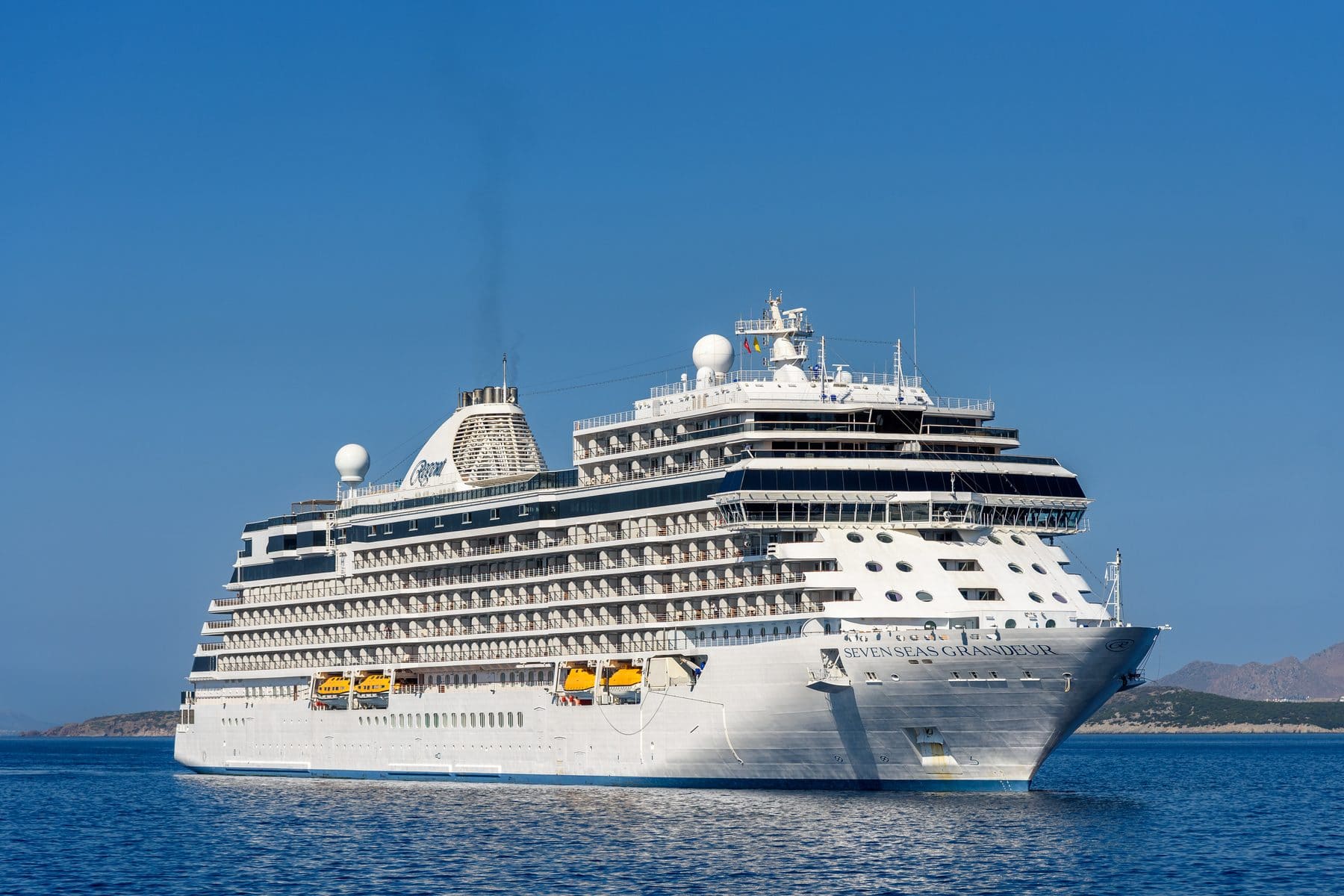
Compare Regent ships by individual accessible inventory rather than fleet reputation. Seven Seas Grandeur Penthouse Suite 916 has 450 square feet inside and a 176-square-foot balcony. It includes a shower seat, open space below one sink, balcony ramps, powered curtains, and wheelchair-height peepholes. Concierge Suites 822 and 823 measure 332 square feet, with 132-square-foot balconies and two sinks. Their built-in cabinets replace walk-in closets, creating a different storage arrangement for equipment and clothing.
Consider Seven Seas Splendor when the same core dimensions work but controls matter. Concierge Suites 822 and 823 pair 332-square-foot interiors with 132-square-foot balconies and remote-controlled curtains. Penthouse Suite 916 provides 450 square feet, a 176-square-foot balcony, one sink, and a walk-in closet. Both categories have balcony ramps, shower seats, and wheelchair-height peepholes. The Penthouse better serves travelers needing more floor area, while the Concierge can suit companions who value two sinks.
Use Seven Seas Explorer for another precise comparison within familiar categories. Its Concierge Suites 822 and 823 have two sinks and electronic self-closing curtains. Penthouse Suite 916 adds more interior and balcony space, but returns to one sink. Families often focus on the larger Penthouse name without considering morning routines. Two adults sharing personal care may prefer separate sinks, while a wheelchair user may value the Penthouse floor area and walk-in storage more.
Keep Crystal and Cunard’s Grills in the broader conversation without treating every large suite as accessible. Crystal Grace identifies the Aquamarine Suite as its ADA option and permits two-bedroom configurations in that category. Celebrity’s Accessible Sky Suite is a useful contrast because its access features are tied clearly to the suite type. Cunard’s Grills remains a luxury candidate only after the required room and bathroom details are matched to the traveler’s written functional profile.
Suite 916 and two-bedroom pairs come first
Prioritize configurations represented by one named suite. Seven Seas Grandeur, Seven Seas Splendor, and Seven Seas Explorer each identify Penthouse Suite 916 as the accessible Penthouse. That makes the room a planning bottleneck whenever its exact features match the traveler. A broader sailing choice can remain open while this physical match cannot. Families should make the single accessible room their first decision, then place relatives in nearby standard accommodations after reviewing the deck arrangement.
Place two-bedroom combinations next in the decision order. Crystal Grace allows its Owner’s Suite, Penthouse Panorama Suite, Penthouse Suite, Junior Penthouse Suite, and several Sapphire and Aquamarine categories to be booked in two-bedroom forms. A two-room plan has more linked requirements than a single suite. It may need the right connecting configuration, enough bathrooms, acceptable separation, and a workable route between rooms. That complexity deserves attention before choosing optional dining or shore activities.
Let flexible relatives wait while the mobility-dependent traveler cannot. Family members who can use a standard room usually have more workable categories than someone needing a roll-in shower and ramped balcony. Avoid assigning the accessible suite to the person paying merely because it appears larger. The traveler whose body or equipment requires its adaptations should occupy it. Place independent adults around that anchor according to caregiving, sleep schedules, and family boundaries rather than status within the group.
Delay amenities that do not determine physical use. Butler service, lounge access, larger verandas, and guest bathrooms may improve the stay, but they cannot correct a blocked threshold. Crystal Grace Owner’s Suites reach 1,986 square feet inside and 2,187 square feet outside, yet size remains secondary to the needed adaptations. This ship is not for a traveler whose required access cannot be tied to the selected room, regardless of how generous another category appears.
Accessible flights and transfers follow the suite hold
Arrange flights only after the cruise room and companion layout are settled. Give the airline the mobility device’s dimensions, weight, battery type, and disassembly limits. State whether the traveler can walk to a seat or requires aisle-chair assistance. Keep essential medication and detachable equipment in hand luggage where permitted. A family needing several seats should protect the disabled traveler’s needs first, rather than choosing the cheapest schedule and trying to add assistance later.
Choose hotels by measured bathroom function, not an accessible label alone. Request the entry width, bed height, transfer side, toilet clearance, shower type, seat design, and sink clearance. One night can fail for the same reasons as a cruise suite. The Accessible Sky Suite contrast shows why details matter: its defined elements include a raised toilet, lowered vanity and safe, accessible veranda, wider doors, and a handheld showerhead. Ask the hotel equally concrete questions.
Specify the transfer vehicle around both the traveler and equipment. State whether the wheelchair user remains seated during the ride, whether an elevator or ramp is required, and how luggage changes capacity. Include scooters, walkers, portable hoists, and spare batteries in the count. Utopia of the Seas demonstrates why occupancy is not access: its Royal Loft Suite sleeps six, while its three-bedroom family suite sleeps ten. Neither large capacity nor multiple bedrooms establishes suitable wheelchair features.
Buy insurance around the financial and medical exposure created by the whole plan. Review preexisting-condition terms, medical treatment, evacuation, mobility-equipment loss, trip interruption, and the effect of one traveler’s cancellation on linked family rooms. Confirm that every nonrefundable air, hotel, transfer, and cruise component is handled as intended. This work is not for a traveler prepared to insure only the cruise fare while leaving specialized equipment, companions, and overseas medical transport outside the calculation.
A tub, balcony threshold, or sofa can break the plan
Avoid assuming every accessible suite has the same furniture. Seven Seas Navigator Concierge Suites 832 and 833 measure 390 square feet, with 71.5-square-foot balconies, but use two chairs and a table instead of a sofa. Suite 832 has no ramps at the entrance, bathroom, or balcony thresholds. Suite 833 adds ramps at the bathroom and balcony, though not at the entrance. Choosing by category alone can place the traveler in the wrong physical setup.
Check every threshold rather than asking only about the shower. Seven Seas Navigator Penthouse Suites 928 and 929 include a bathroom ramp but lack ramps at the entrance and balcony thresholds. Both have roll-in showers, one sink, no bathtub, and no under-sink cabinet. A traveler may manage the bathroom independently yet remain unable to reach the veranda. Families lose options when they discover that distinction after arranging flights and adjacent rooms.
Do not confuse a walk-in shower with a roll-in shower. Crystal Grace Sapphire Panorama Suites reach 537 square feet, with verandas reaching 344 square feet, and include a bathtub plus walk-in shower. The category may work well for ambulatory travelers wanting separate bathing fixtures. It is not the default choice for someone transferring directly from a wheelchair.
Include storage and approach space in the decision. Seven Seas Mariner Deluxe Suites 828 and 829 have 269 square feet inside, 51-square-foot balconies, threshold ramps, roll-in showers, and large cabinets instead of walk-in closets. The same cabinet arrangement applies to its accessible Concierge Suites. Equipment can consume the open area that made the cabin workable on paper. Families should map where a wheelchair, walker, shower chair, luggage, and companion will sit overnight.
Confirm suite number, bathroom, and balcony in writing
Confirm the exact ship, suite category, and suite number before authorizing payment. Attach the traveler’s functional profile and request a line-by-line response covering doorway clearance, thresholds, bathroom layout, grab bars, shower seating, bed access, controls, storage, and veranda entry. Seven Seas Voyager Suites 859, 860, 761, and 762 show why the number matters. Their ramp arrangements differ even though every room belongs to an accessible Penthouse or Concierge category.
Confirm occupancy and bedroom structure for every person in the party. Ask which bed each traveler will use, whether it separates, and where a caregiver sleeps. Record connecting doors, privacy, bathroom assignment, and the route between rooms. A large family suite should not replace a properly documented accessible room merely because it accommodates more guests.
Confirm all equipment and assistance across ship and shore. Record wheelchair or scooter dimensions, battery specifications, portable-hoist needs, shower equipment, oxygen arrangements, medication storage, tender limitations, and assistance during embarkation. Include accessible vehicles, hotel rooms, airport services, and companion responsibilities in the same file. The cruise room is only one link. A workable Penthouse Suite cannot repair a transfer vehicle that will not accept the chair or a hotel bed that prevents safe transfers.
Confirm cancellation terms, insurance timing, written accessibility details, final payment conditions, and every linked reservation before paying. Keep the approved suite number and functional responses with the booking record. Make no substitute-room assumption and accept no category-only description when the traveler needs specific adaptations. Before payment, ask us to confirm the exact suite, bathroom, thresholds, bed setup, equipment approval, ports, transfers, hotel, flights, insurance, and family-room arrangement in writing.
Questions people ask
Good to know
Questions, answered
Do accessible cruise suites include a bathtub?
Not necessarily. Regent’s named accessible suites replace the bathtub with a roll-in shower and seat. Crystal Grace Aquamarine layouts vary, with some offering separate tubs and showers and others using a larger walk-in shower. Match the exact bathing arrangement to transfer ability.
Can a solo traveler book an accessible luxury cabin?
Crystal Grace lists a Single Veranda for solo occupancy, reaching 230 square feet with a veranda reaching 114 square feet. Solo guests may instead receive a Premium Veranda, depending on availability. That rule concerns occupancy rather than ADA design. A solo wheelchair user should still match bathroom, doorway, threshold, bed, and balcony details to a specific assigned accommodation before accepting it.
Which suite controls help travelers with limited reach?
Seven Seas Explorer Concierge Suites 822 and 823 include a Braille thermostat with an easy-change lever, plus an electronic self-closing curtain. Seven Seas Splendor uses a remote-controlled curtain in the comparable Concierge rooms. Controls matter when hand strength, vision, or reach is limited. Ask where switches, outlets, temperature controls, curtains, safe, telephone, and bedside lighting sit relative to the bed and wheelchair position.
Does every luxury cruise suite include butler service?
Every guest room and suite on Crystal Grace includes 24-hour private butler service. That service may assist with ordinary in-room arrangements, but it should not be treated as personal care or medical support. Travelers needing help with dressing, bathing, transfers, medication, or nighttime routines should define who will provide it and select a room with enough working space for that person.
Are suite lounges useful for travelers with disabilities?
They can reduce movement when their location and entrances work for the traveler. Princess Sanctuary Collection suites on Sun Princess and Star Princess include access to the two-level Signature Suite Lounge, Sanctuary Club, and a separate restaurant. Those benefits do not prove that an individual suite meets mobility needs. Review the room first, then map the distance and route to any lounge or dining area the traveler expects to use.
Still have a question? Book a free 30 minute call or send us the brief.
Sources
Where to go next
- How it works: Six steps from first conversation to sailing day.
- When to book: Timing by region and by suite type.
- Book a free 30 minute call: Tell us who is traveling; we will shortlist the ships we would consider.







