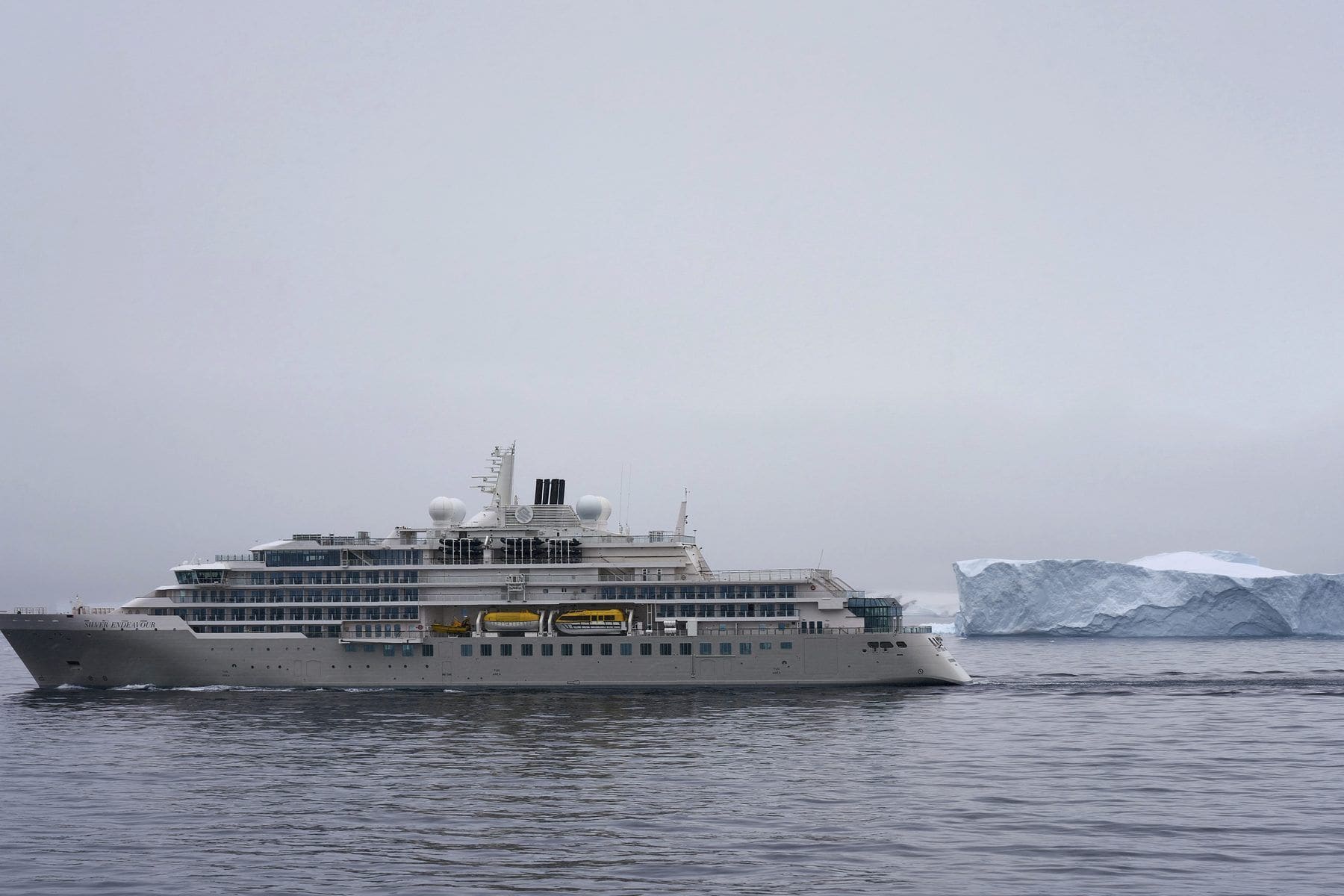
Lindblad fits most three-generation Antarctica parties
Choose Lindblad for most three-generation Antarctica trips because its program serves different energy levels without separating the family. National Geographic Endurance and National Geographic Resolution carry 138 guests in 76 cabins across six decks. Their 12-day Voyage to Antarctica combines active landings with gentler shipboard time. Ponant becomes the stronger choice when deep-ice access and polar lectures matter more than a structured program for children and teenagers. Swan Hellenic fits a smaller parent and adult child party better than a broad age spread.
Lindblad works especially well when the grandparents want Antarctica but cannot match the teenagers at every landing. The 12-day voyage allows hiking, kayaking, Zodiac outings, and more relaxed schedules. Its Explorers-in-Training program gives children and teenagers a defined learning track. A stated minimum age of four keeps the line open to younger families, although preschoolers may find repeated cold-weather transfers tiring. The ship still requires an expedition mindset, not the predictable rhythm of an ordinary ocean cruise.
Ponant deserves priority when the destination itself drives every decision. Le Commandant Charcot has carried parents with two young children through Weddell Sea ice, including a landing at Paulet Island. The family walked on sea ice, observed Adélie penguins, and attended talks about Antarctic fish and environmental pressures. Le Soléal also has a January 2027 Ross Sea expedition with an Explorers Club speaker. These trips suit capable families who accept changing conditions and physically involved days.
Swan Hellenic enters the comparison for a different reason. Its Antarctica account follows a mother and daughter, which supports its appeal for two adult generations sharing the trip. Families needing several rooms, age-specific activities, and mixed daily tempos should start with Lindblad. Parties prioritizing close family time over organized youth activities may still prefer Swan Hellenic’s smaller social pattern.
Endurance cabins beat unconfirmed connecting-suite plans
Book Lindblad by cabin count rather than assuming that one large suite will hold three generations. National Geographic Endurance and National Geographic Resolution each place 138 guests among 76 cabins, an average of about 1.8 guests per cabin. National Geographic Explorer carries 148 guests in 81 cabins, producing a nearly identical ratio. Those figures indicate ships designed mainly around compact private cabins, not sprawling multigenerational apartments. Grandparents usually benefit from their own room beside, rather than inside, the children’s accommodation.
It faces outward through four large windows and has two single beds convertible to a queen. A sofa adds daytime seating, which matters during Drake Passage hours and after cold landings. Treat it as a comfortable base for two people. A party of six should plan around three cabins unless a different approved arrangement is confirmed before deposit.
Separate cabins usually protect the family relationship better on a 12-day expedition. Grandparents gain quiet recovery time after Zodiac boarding, while parents can manage children’s clothing and sleep without using the older generation’s room. Teenagers also benefit from a distinct retreat after group meals and lectures. The six-deck layouts on Endurance and Resolution keep cabins within a manageable ship. Families should favor proximity to one oversized room because nighttime movement and wet expedition gear quickly consume shared floor space.
Ponant should be approached differently because neither the Le Commandant Charcot family account nor the January 2027 Le Soléal voyage identifies a suite category. The ships remain credible family choices, but room planning cannot rest on a named connecting configuration here. Swan Hellenic’s mother-daughter account likewise supports shared travel without defining cabin arrangements. A family choosing either line should establish exact occupancy, bed type, door location, and distance between rooms before treating the ship as suitable for six people.
Resolution balances meals, landings and Drake days
Choose Lindblad when the family needs permission to split its daily pace. Voyage to Antarctica offers active and relaxed agendas aboard National Geographic Resolution and National Geographic Endurance. Hiking, kayaking, Zodiac cruising, and possible early-November skiing can occupy stronger family members. Others can attend a penguin talk, visit the Bridge, use the observation lounge, or book a massage during the crossing. That flexibility matters more than formal service rituals when three generations have different stamina, interests, and tolerance for cold.
Dining follows the expedition day rather than controlling it. Breakfast, lunch, and dinner are included through the main sailing days on the 12-day program, followed by breakfast on disembarkation day. A private catamaran lunch in the Beagle Channel starts the experience before embarkation. The schedule also includes a farewell dinner during the return from Antarctica. Families gain a dependable meal framework, but they should expect wildlife opportunities and safe landing windows to influence when everyone changes clothes or gathers.
Service is built around field expertise. A diverse expedition team accompanies landings, while naturalists explain wildlife and changing conditions. Every departure includes a National Geographic Photographer, which can interest teenagers who already use cameras or cell phones. The itinerary may shift for weather, wildlife, and ice, so a fixed sequence is never the priority. That operating style suits grandparents who value interpretation and teenagers who prefer participation. It is less suitable for diners who expect each evening to anchor the day.
Ponant’s strongest service distinction here is intellectual rather than ceremonial. Aboard Le Commandant Charcot, Dr. Cassandra Brooks discussed Antarctic fish, polar adaptations, climate change, fishing, and pollution. The ship also moved through thick Weddell Sea ice before guests stepped onto sea ice. That creates a focused learning environment for families already engaged with science. Swan Hellenic’s mother-daughter model suggests shared experience, but it provides less practical guidance for balancing younger children, older grandparents, and separate evening routines.
Explorers-in-Training serves children and teenagers
Families with school-age children and teenagers should place Lindblad first. Explorers-in-Training turns Antarctica into an organized learning experience rather than expecting every child to follow the adult lecture schedule. Children must be at least four at embarkation on Antarctic and Arctic voyages. That rule establishes eligibility, not readiness. A young child still faces cold clothing, Zodiac transfers, variable landing conditions, and long travel through Ushuaia. Older children who enjoy animals, photography, and practical science are the clearer fit.
Teenagers gain more from the 12-day Voyage to Antarctica than from a ship chosen mainly for cabin finish. They can kayak protected waters, photograph gentoo, Adélie, and chinstrap penguins, hike, and join early-November snowshoeing when conditions permit. Time with naturalists and photographers gives the trip structure without making it feel like school. Teenagers who dislike outdoor activity, changing plans, or shared family learning may resist the expedition rhythm. A conventional warm-weather cruise would fit them better.
Grandparents should choose according to recovery speed, balance, and comfort with uncertainty. Endurance and Resolution provide relaxed onboard alternatives when another landing feels excessive. The ships are fully stabilized, yet the Drake Passage still occupies Days 3 and 4, then Days 10 and 11. Grandparents who enjoy lectures, observation, and wildlife can remain involved without taking every hike. Those requiring a fixed daily sequence or easy shore access should not treat an Antarctica expedition as an ordinary sightseeing cruise.
Ponant suits physically able grandparents traveling with curious children whose parents will supervise them closely. The Le Commandant Charcot family walked directly onto thick sea ice and moved carefully among penguins at Paulet Island. That is active family participation, not a drop-off children’s club. Swan Hellenic better matches an adult daughter traveling with a parent, particularly when both want shared Zodiac time and wildlife observation. Neither example supports choosing those lines primarily for organized care of young children.
Lindblad includes meals but adds recommended flights
Budget Lindblad as a ship-and-expedition program, then account separately for the air plan. The 12-day Voyage to Antarctica excludes flights, and recommended group flights are added separately. Main sailing days include breakfast, lunch, and dinner, while the final Ushuaia day includes breakfast. Guests also receive the core field program: expedition staff, Zodiac exploration, kayaking opportunities, hiking, photography support, and the Explorers-in-Training program. The value lies in access and guidance rather than a single bundled transportation price.
The arrival sequence adds useful components before the ship sails. Guests begin in Buenos Aires or Santiago and transfer to a hotel, then continue south. A private catamaran cruise in the Beagle Channel includes lunch before embarkation. Families should still distinguish included meals and the overnight arrangement from the flights needed to reach Ushuaia and return north. Three generations create more luggage, more seat assignments, and less tolerance for short connections, so the separate air component deserves its own planning decision.
The 18-day Antarctica and Patagonia program uses the same broad structure. Meals are included across the operating days, and an overnight hotel is included near the beginning. Recommended group flights remain extra. Kayaks and Zodiacs support exploration, while the itinerary adds Tierra del Fuego National Park, Glacier Alley, Karukinka Natural Park, and Torres del Paine. That longer plan can replace a separate Patagonia vacation, but it also commits grandparents and children to more transfers, changing landscapes, and nearly three weeks away.
Ponant and Swan Hellenic cannot be compared line by line on inclusions from these particulars. Le Commandant Charcot clearly delivered lectures, sea-ice walking, wildlife observation, and a Paulet Island landing during its family expedition. Le Soléal’s January 2027 Ross Sea sailing includes Dr. Brooks as an Explorers Club speaker. Families should not assume those examples settle air, hotel, beverage, gratuity, equipment, or private-transfer arrangements. Compare the written fare components rather than judging inclusion by each line’s general market position.
Ushuaia and Ross Sea reward different seasons
Choose November 2026 through March 2027 according to route length and family stamina. Lindblad’s 12-day Voyage to Antarctica operates in January, February, March, October, November, and December. It sails round trip from Ushuaia aboard National Geographic Endurance or National Geographic Resolution. Five central days are devoted to Antarctic exploration after the southbound Drake crossing. This classic structure works for first time family parties that want the peninsula without adding South Georgia, Patagonia, or a second major expedition region.
Early November offers the widest activity mix for capable families. Cross-country skiing and snowshoeing on frozen sea ice may be offered when conditions allow. Kayaking, hiking, Zodiac cruising, and penguin observation remain central across the broader season. Families tied to school breaks may favor December 2026 or January 2027, but vacation timing does not remove the physical demands. March 2027 remains available for families whose calendars permit later travel and whose main goal is a compact peninsula voyage.
Choose the 18-day Antarctica and Patagonia route for grandparents who want more than polar landings. National Geographic Resolution and National Geographic Explorer sail from Ushuaia to Puerto Natales in February, March, November, and December. The route joins the Antarctic Peninsula with Chilean fjords, Glacier Alley, Karukinka Natural Park, and Torres del Paine. Travelers can explore by kayak, Zodiac, foot, or vehicle. The broader geography rewards adults who may not expect to return to southern Chile.
Ponant wins for a family targeting deeper polar history and ice. Le Soléal’s Scott and Shackleton Ross Sea expedition sails in January 2027 with Dr. Brooks as a speaker. Le Commandant Charcot’s earlier Weddell Sea family expedition demonstrated a different pattern, including heavy ice, Antarctic Sound, and Paulet Island. Families should choose Ross Sea or Weddell Sea ambitions because they want those regions, not merely because the ships carry fewer conventional cruise expectations. Conditions still determine the actual daily sequence.
Le Soléal wins for January 2027 depth
Choose Ponant over Lindblad when the family’s shared subject is polar history, ice, and science. The January 2027 Scott and Shackleton Ross Sea expedition aboard Le Soléal carries Dr. Brooks as an Explorers Club speaker. That is a strong match for grandparents funding a serious educational trip and teenagers already interested in exploration or environmental science. It is not the obvious choice for a preschooler needing age-based activities, or for relatives who want a short first encounter with the Antarctic Peninsula.
Choose Lindblad’s 18-day Antarctica and Patagonia program over Ponant when varied landscapes reduce expedition fatigue. The itinerary moves from the Antarctic Peninsula through Chilean fjords toward Puerto Natales, with Torres del Paine explored by foot or vehicle. A grandparent can value Patagonia even if repeated polar landings become tiring. A teenager gains kayaking, wildlife, and photography. The route also wins when several family members regard the Drake crossing as part of the experience rather than an obstacle to avoid.
Choose a shorter Lindblad fly option when time or sea days decide the booking. Antarctica Direct: Fly the Drake Passage runs eight to ten days in January, February, November, and December. Antarctica Direct: Sail and Fly the Drake Passage runs ten to twelve days across those months plus March. These options better suit a school calendar or a grandparent who wants less time at sea. They lose when the family wants the shared achievement and wildlife watching of both Drake crossings.
Choose Swan Hellenic when the party is really two adult generations, not a six-person group spanning young children to grandparents. Its mother-daughter Antarctica experience fits a parent and adult child seeking concentrated time together. That model can feel more personal than building the trip around a youth program. It loses when parents need defined children’s activities, when grandparents need a documented relaxed track, or when the family requires several precisely arranged cabins. Lindblad provides firmer practical answers for those needs.
Confirm cabins, ages and Ushuaia flights
Decide first which family member sets the physical ceiling. A young child meets Lindblad’s minimum age rule, but that does not make every landing sensible. A grandparent may enjoy the observation lounge and lectures yet decline a slippery walk. List each person’s comfort with Zodiacs, uneven ground, cold, and the Drake Passage before selecting National Geographic Endurance, Le Soléal, or another ship. The right expedition lets relatives separate for several hours without making anyone feel that the trip was chosen against them.
Decide next how many days the family can sustain expedition routines. Voyage to Antarctica uses 12 days, with four days assigned to outward and return Drake crossings. Antarctica and Patagonia takes 18 days and ends in Puerto Natales rather than Ushuaia. The Ross Sea aboard Le Soléal in January 2027 serves a more specialized ambition. Longer is not automatically better for three generations. School calendars, medication, laundry, sleep patterns, and recovery after landings can matter more than adding another region.
Match the cabin plan to relationships, not just occupancy limits. Grandparents generally need a private room, while parents may need immediate access to younger children. Teenagers may share if bed arrangements and storage work. The Islander Suite’s convertible twin beds, four windows, and sofa make it a useful Lindblad reference point, but not proof of a connecting setup. Compare deck, stair and elevator access, room separation, bed configuration, bathroom layout, and the route from each cabin to the mudroom.
Set one final family rule before paying: nobody must join every landing. That agreement makes the active and relaxed Lindblad agendas useful, protects grandparents from overexertion, and lets teenagers pursue kayaking or photography. Ponant families should apply the same rule to sea-ice walks and longer polar days. Confirm exact cabin connections, approved occupancy, minimum ages, medical and mobility requirements, included equipment, flight arrangements, cancellation terms, and children’s programming with an Antarctica specialist before committing.
Questions people ask
Good to know
Questions, answered
Can a young child go on a Lindblad Antarctica cruise?
Yes. Lindblad requires children on Antarctic and Arctic voyages to be at least four years old at embarkation. Readiness is a separate decision because the trip involves Zodiac boarding, cold conditions, and changing landing plans. The Explorers-in-Training program serves children and teenagers, but parents remain responsible for deciding which outings suit a young child’s balance, attention span, and tolerance for weather.
Which Lindblad ship carries the fewest guests in Antarctica?
National Geographic Orion carries 102 guests in 53 cabins across six decks, fewer than National Geographic Endurance or Resolution at 138 guests each. Ship assignment still depends on the chosen itinerary. A lower guest count alone does not settle cabin proximity, children’s programming, or landing pace, so compare the particular sailing rather than selecting Orion solely from its capacity.
Does Lindblad include flights to Ushuaia?
No. Flights are outside the 12-day Voyage to Antarctica fare, and recommended group flights are added separately. Endurance departures route through Buenos Aires. Resolution departures through the 2027 to 2028 season route through Santiago, then change to Buenos Aires for the 2028 to 2029 season. Families should build adequate connection time around the southern flight and their international itinerary.
What beds are in Lindblad’s Islander Suite?
The Islander Suite has two single beds that convert into a queen. It also has four large outward-facing windows and a sofa. Those details make it practical for a couple or grandparents who value daylight and a sitting area.
How late should our return flight leave after Antarctica?
Lindblad’s 12-day program advises a departure after 9:00 p.m. local time on Day 12 following disembarkation in Ushuaia and the recommended flight north. Families should avoid building a tight independent connection around that day. Three generations may need more time for checked luggage, mobility support, meals, and terminal changes before the international flight home.
Still have a question? Book a free 30 minute call or send us the brief.
Sources
Where to go next
- Hosting the family: Bringing the family together without taking on the planning.
- Three generations: Connecting suites, pacing, dining and who pays.
- Book a free 30 minute call: Tell us who is traveling; we will shortlist the ships we would consider.







