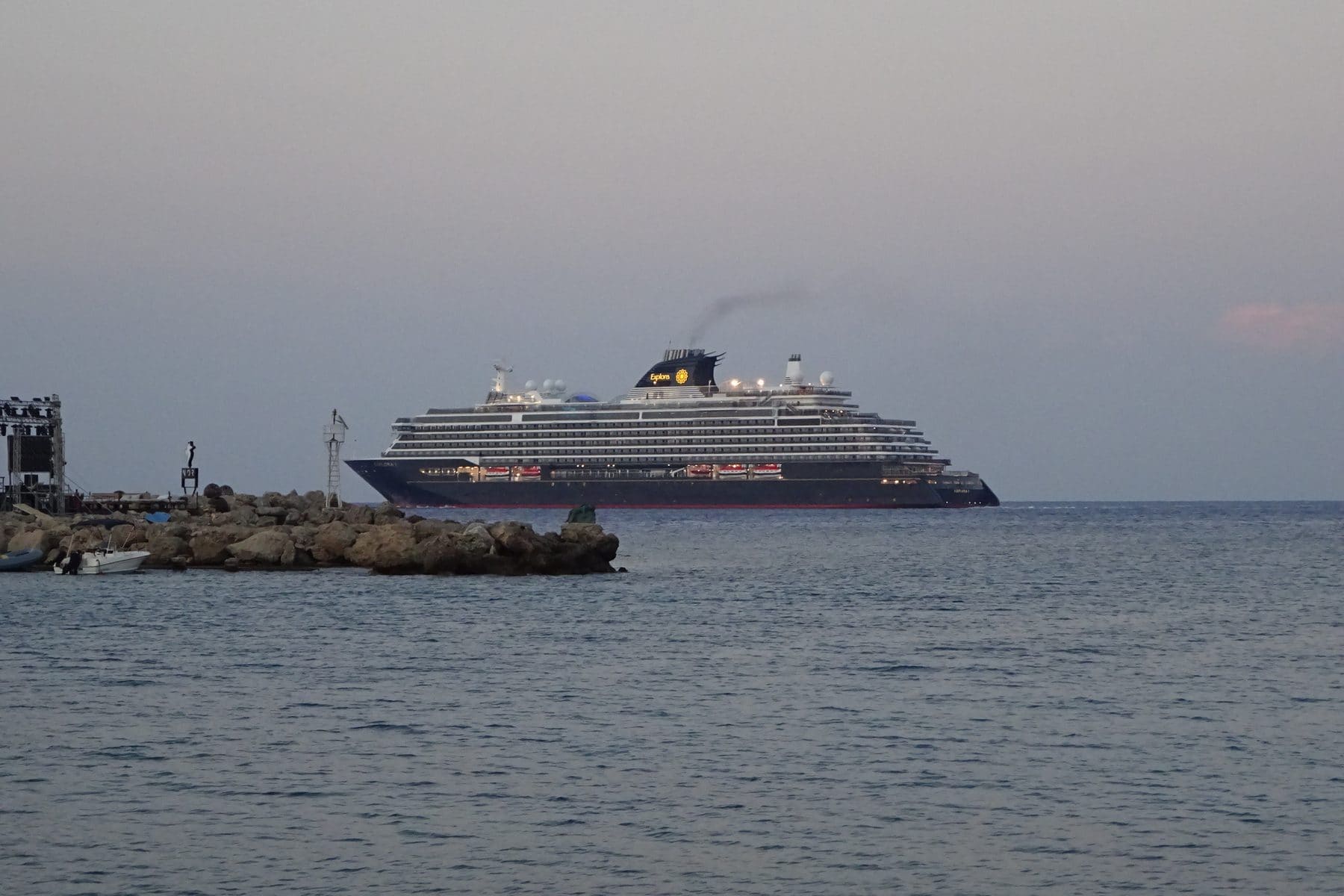
Explora I beats Seabourn for most families
Choose Explora for most families because its ships provide connected suites, a children’s club and defined age rules. Choose Seabourn when capable older children and active grandparents want expedition activity to drive every day. Explora I and Explora II are easier recommendations for mixed ages, especially when adults need private space between shared meals. Seabourn Venture and Seabourn Pursuit make more sense when Antarctica, the Arctic or the Kimberley matters more than child-specific facilities aboard ship.
Explora sets out the clearer family structure for children from six months through age 17. Nautilus Club serves ages 6 to 17, while ages 3 to 5 can join designated sessions with a parent or guardian. Infants from 6 to 23 months receive separate fare treatment, although they do not have organized club activities. That framework lets parents and grandparents assess ordinary sea days before committing, rather than assuming every young guest receives the same level of supervision.
Seabourn should be treated as an expedition decision for families, not as a substitute for Explora’s youth setup. Seabourn Venture and Seabourn Pursuit organize shared landings, guided hikes, Zodiac trips and destination briefings around remote places. That rhythm can work exceptionally well for a curious teenager who willingly follows naturalists. It is less convincing for a younger child who needs predictable play periods, familiar indoor activities or regular separation from adults during a demanding itinerary.
Grandparents paying for three generations should begin with the family’s least flexible traveler. A preschooler needing accompanied sessions points toward Explora, while a grandparent unable to board a Zodiac without help argues against many Seabourn expedition days. A family of strong walkers with older teenagers may reach the opposite conclusion. Explora wins the broad comparison because it accommodates more family patterns; Seabourn wins the narrower case where the destination and field program are the central reasons for traveling.
Ocean Penthouses connect better than Seabourn expedition suites
Book connected space on Explora when privacy between generations matters more than one very large suite. Explora I and Explora II each draw from 82 multigenerational connected accommodations across Ocean Suites, Ocean Penthouses and Ocean Residences. That choice lets grandparents close a door at night while parents remain near younger children. It also avoids forcing several adults into third and fourth berths merely to stay together, a compromise that becomes tiresome during longer sailings or consecutive days at sea.
Ocean Penthouses and Ocean Residences matter when the gathering space must serve several suites. The Journey Together Gathering arrangement applies to groups booking three or four suites, with at least one Ocean Penthouse or Ocean Residence required. One accommodation then functions as the group’s social base. This setup suits grandparents hosting adult children and grandchildren, because everyone can meet privately without turning one couple’s sleeping area into the permanent family room throughout the voyage.
Ocean Suites are the practical starting point for smaller groups needing adjoining rooms rather than residence-level space. Parents can place school-age children next door while retaining separate bathrooms and evening routines. Connecting doors also help grandparents participate without sharing every waking hour. Families should resist assigning too many relatives to one accommodation simply because its booking capacity permits them. Usable space per guest depends on doors, bathrooms and quiet zones, not merely the maximum number accepted in a suite.
Seabourn Venture and Seabourn Pursuit provide oceanfront suites, but Explora carries the stronger documented connecting-suite proposition. That distinction matters for six travelers more than decorative finishes or a marginally larger sitting area. Two couples and two children usually function better across connected accommodations than inside one open-plan room. Seabourn remains viable when each household books a separate suite and accepts meeting in public spaces, particularly when everyone values the expedition schedule above private group space.
Explora dining bends around Nautilus Club hours
Choose Explora when different generations expect to eat on different schedules. Children are welcome across the ship’s restaurants, lounges, pools and bars apart from the adults-only Helios Pool & Bar. The culinary team also prepares choices intended for younger diners. Those rules make split evenings workable: grandparents can dine alone, parents can feed children earlier, and everyone can regroup later. The arrangement suits families who reject fixed group meals after long port days or unpredictable naps.
Nautilus Club runs every day from 9 a.m. until midnight, giving Explora families unusually broad scheduling freedom. Parents can plan a quiet meal after a child’s activity begins, while teenagers can return to the club after dining with the family. The long operating window does not mean every child will remain there for hours. It means each household can build its own rhythm instead of forcing every generation through the same meal, activity and bedtime sequence.
Helios Pool & Bar on Deck 12 gives Explora adults a defined retreat without making the rest of the ship hostile to children. Its forward location supports a quiet hour for parents or grandparents while another adult remains with younger relatives. During busy periods, Explora may designate further areas for adults and others for families. That separation is useful during school breaks, when different generations may share a ship successfully but still need different sound levels and social spaces.
Seabourn’s expedition pace is more collective, especially ashore. Guests commonly undertake the same included experience before returning for recap and briefing, so the destination shapes the daily schedule. That shared pattern can strengthen a family trip when teenagers and grandparents enjoy discussing wildlife, geology or local communities together. It offers less freedom when one branch wants organized children’s activities while another pursues a landing. Choose that pace only when the family accepts common plans as a benefit.
Nautilus Club suits children and independent teenagers
Families with children ages 6 to 17 receive the clearest fit aboard Explora I and Explora II. Nautilus Club offers PlayStation 5, PlayStation VR2, Xbox, Nintendo Switch, iPads and Oculus Pro. It also provides foosball, pool, board games and a multilingual digital library. That mix matters because a young child and a teenager rarely want the same organized session. Teenagers can use technology and social space without being treated like younger children.
Active children gain more than screens aboard Explora. Nautilus Club schedules sports, technology tournaments, painting, arts and crafts, plus activities elsewhere around the ship. Younger guests receive reserved periods at the Sports Court and one heated pool. Hosts follow CLIA youth-activity standards and hold child-safeguarding certification. This structure suits parents who want defined oversight, although children who dislike organized groups may still prefer family-led time ashore and independent meals with grandparents.
Families with toddlers need a more measured expectation. Children ages 3 to 5 enter Nautilus Club only during designated periods and must have a parent or guardian present. Babies receive in-suite toys rather than a supervised nursery program. Explora still works because cribs, blankets, linens and pillows can be requested, reducing what parents must bring. It does not remove the need for an adult to manage naps, meals and early bedtimes throughout the sailing.
Older multigenerational groups may prefer Seabourn when every traveler can participate as an adult. A teenager fascinated by whales, penguins or polar landscapes may value guided field time more than a youth lounge. An active grandparent may welcome the same daily objective. Seabourn is not the sensible choice for a family expecting the ship to separate children from adults for long periods. Its strongest family case is shared intellectual interest, physical readiness and patience with changing expedition conditions.
Seabourn Venture includes more expedition activity
Choose Seabourn Venture or Seabourn Pursuit when included field activity carries more value than children’s facilities. Most shore and expedition experiences on these ships carry no added charge. Included options can cover guided walks, hikes, snorkeling, Zodiac tours and Zodiac landings. When a third-party operator runs the day, Seabourn normally provides an included excursion for every guest except at turnaround ports. That structure helps a family understand the core experience before considering optional additions.
Included expedition activities require no reservation and have room for all guests, while included shore excursions can be reserved online. Snorkel equipment is supplied apart from wetsuits and rash guards. A Zodiac sightseeing run generally lasts 90 to 120 minutes, a meaningful consideration for children and grandparents exposed to wind, spray or cold. Families should assess attention span and physical comfort against that duration, rather than assuming an included outing will suit every relative equally.
Optional Seabourn activities create the principal extra layer. Kayaking, submarine dives and the Image Masters photography program carry an added charge and have limited capacity. Taking a paid alternative instead of the included excursion does not produce compensation for the activity skipped. Helicopter flights and certain destination-specific tours can also sit outside the included program. A family should therefore separate the voyage’s shared core from scarce extras that only some relatives may pursue.
Explora directs more of its family value toward life aboard. Children ages 2 to 17 can receive reduced treatment when booked as the third or fourth guest in the same suite, while infants ages 6 to 23 months can sail without a separate fare under the stated conditions. Adults occupying third or fourth positions may also qualify for different savings. These arrangements favor families consolidating accommodations, though connected suites may remain the better practical choice for sleep and privacy.
Seabourn Pursuit leads in remote expedition regions
Choose Seabourn for remote geography rather than ordinary resort-style family time. Seabourn Pursuit serves Antarctica, South Georgia and the Falklands, the Kimberley and the South Pacific. Seabourn Venture covers Antarctica, South Georgia and the Falklands, the Arctic and the Northwest Passage. These regions reward families who accept landings, wildlife observation and variable daily plans. Explora is the easier shipboard choice, but its children’s program should not outweigh a family’s serious wish to study polar or tropical expedition environments.
Antarctica gives Seabourn its clearest destination advantage. Expedition plans can combine Zodiac cruising, kayaking, wildlife watching, guided walks and hikes around places such as Paradise Bay, Cuverville Island, Antarctic Sound and Gerlache Strait. Penguins, seals and whales provide a common focus across generations. This is the stronger choice for families whose teenagers already enjoy nature, photography and outdoor learning. It is a poor match for relatives who primarily want predictable port calls, shopping time or independent days ashore.
The Kimberley favors Seabourn Pursuit for active families drawn to river gorges, rock formations and cultural sites. Named locations include Jar Island, King George Falls, Montgomery Reef and Talbot Bay’s Horizontal Waterfalls. Zodiac landings and gorge cruising shape the experience more than conventional port touring. Grandparents must be comfortable with marine transfers and uneven terrain. Families seeking restaurant choice, long pool days and supervised children’s sessions should keep Explora ahead, even if the remote map initially appears more ambitious.
Future expedition planning extends beyond the immediate season. Seabourn has opened expedition departures for 2027 through 2029, including expanded 2028 and 2029 programs. Seabourn Venture also reaches Svalbard, Greenland, Iceland, the British Isles and the Northwest Passage, while Seabourn Pursuit continues into South Pacific locations such as Easter Island, Agats, Pentecost and Kitava. Match the ship to the region first, because these vessels divide assignments rather than operating interchangeably everywhere.
Seabourn wins when the Zodiac is the point
Choose Seabourn over Explora when every family member views the expedition as the vacation’s purpose. In the Arctic, Seabourn Venture can combine Zodiac cruising, wildlife searches and contact with northern communities. Northwest Passage plans add tundra walks, Inuit community visits and Arctic Circle hiking. Families may encounter polar bears, walruses, musk oxen, seals and whales. Those possibilities justify giving up a formal children’s program for travelers who value naturalists, field learning and shared discovery.
Choose Explora instead when the ship must absorb different energy levels. A grandparent can use Helios Pool & Bar while school-age children attend Nautilus Club and parents spend time alone. Later, everyone can meet for dinner without excluding children from most public spaces. That pattern works when the family wants togetherness in controlled doses. Seabourn’s expedition model works better when the group prefers to leave, learn and debrief together rather than divide into separate onboard routines.
Seabourn also wins for families whose older children want active days with educational substance. South Pacific routes can include coral exploration, snorkeling, kayaking, World War II sites and cultural exchanges. Kimberley excursions may add wildlife encounters and river cruising. These are not interchangeable with a conventional children’s club. They demand curiosity and cooperation from the young traveler. An unwilling teenager can disrupt an expensive family plan more decisively than a smaller suite or limited evening entertainment.
Explora wins again when one child needs supervision while another seeks independence. Its age bands distinguish preschoolers, school-age children and teenagers, while its connected accommodation plan keeps adults nearby at night. That combination suits first time family cruisers because daily logistics remain legible. Seabourn becomes the better answer after the family has agreed on physical demands, shared objectives and remote-route uncertainty. The other line wins whenever those expedition requirements become the attraction rather than a compromise.
Confirm the suite doors and Zodiac ability
Start the decision with sleeping arrangements, not the destination photograph. Count adults, children, bathrooms and required quiet rooms, then compare connected Ocean Suites with combinations involving an Ocean Penthouse or Ocean Residence. Three or four Explora suites may qualify for the Journey Together Gathering structure when the category condition is met. On Seabourn Venture or Seabourn Pursuit, decide whether separate oceanfront suites provide enough proximity without a connecting arrangement driving the choice.
Test the daily schedule against the youngest child and least mobile grandparent. Explora offers long Nautilus Club hours, but ages 3 to 5 still need an accompanying adult during their designated sessions. Seabourn requires unassisted Zodiac boarding for guests who want to leave the ship where no gangway is available. A traveler who cannot meet that rule may remain aboard during key expedition experiences. That restriction can outweigh every difference in suite finish, dining style or service tone.
Separate essential inclusions from optional ambitions before selecting Seabourn. The main expedition program generally accommodates everyone, yet kayaks, submarines and specialist photography places are capacity-controlled. Explora families should perform a different calculation: decide how often children will actually use Nautilus Club, the Sports Court and reserved pool periods. Paying for a family-oriented setup makes sense only when its spaces solve real scheduling problems for parents, teenagers or grandparents during sea days.
Make the final choice from a written family brief covering room adjacency, child ages, mobility, dining habits and shore priorities. Explora I or Explora II should lead when the brief emphasizes flexible separation and connected accommodations. Seabourn Venture or Seabourn Pursuit should lead when every traveler accepts expedition pacing and marine transfers. Ask us to confirm exact connecting doors, berth limits, children’s access, dress rules, dining hours, activity ages and Zodiac requirements for the selected departure.
Questions people ask
Good to know
Questions, answered
How many guests share a Seabourn expedition ship’s included excursions?
Seabourn plans included expedition experiences for all guests. In rare remote locations, two or three shore excursions may divide the ship’s 264 travelers because one operator cannot handle everyone together. Each guest then selects one included option. Families that skip advance booking should still have access to an included excursion, although the preferred departure time or exact option may differ.
How limited are Seabourn’s kayaks and submarines?
Seabourn Venture and Seabourn Pursuit each carry eight double kayaks and two submarines seating six guests apiece. Those optional activities have limited daily and voyage-wide capacity, so not every traveler can participate on every departure. Submarine dives take about 40 to 45 minutes, while kayak outings run roughly two hours under the expedition policy. Necessary operating equipment is supplied.
Can families add Iguazu Falls before a Seabourn expedition?
A three-night journey to Iguazu Falls before the cruise appears among Seabourn’s expedition extensions. It can broaden a South America trip for older children and grandparents who handle additional hotel changes and flights well. Treat the extension as a separate pacing decision from the ship. Extra nights before a remote voyage may help with arrival timing, but they also increase walking, transfers and total time away.
Does Seabourn offer a shorter Australia expedition option?
Seabourn lists a seven-day Australia Reef, Rock and Rainforest journey connected with its expedition program. A one-week format can suit families unable to commit to a long polar voyage, while still placing the destination ahead of children’s facilities. Review the land component and transfer demands carefully because a shorter duration does not necessarily mean lighter activity or easier access for grandparents.
What is Seabourn’s Image Masters program?
Image Masters is an optional four-day photography program led by a nature photographer. It covers composition, camera technique, editing and retouching through field and onboard instruction. Participation carries an added charge and has limited space. It suits a serious teenage photographer or grandparent who wants structured practice, but it may divide the family during activities that others planned to experience together.
Still have a question? Book a free 30 minute call or send us the brief.
Sources
Where to go next
- Cruise lines: Who each line is for, and who it isn't for.
- Compare ships: Our ratings for every line we sell.
- Book a free 30 minute call: Tell us who is traveling; we will shortlist the ships we would consider.







