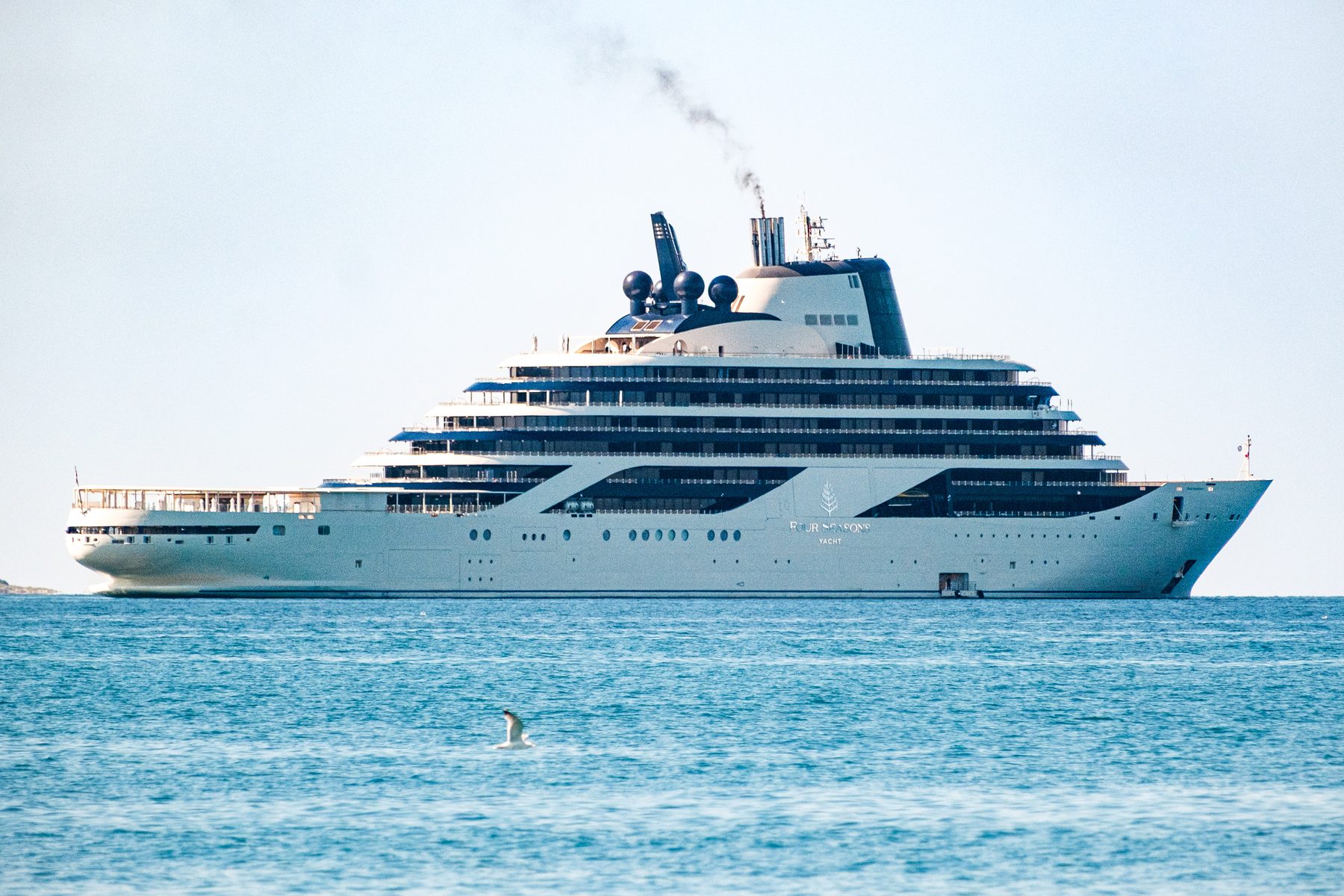
Four Seasons I offers staffed, flexible children's activities
Four Seasons I has a staffed children's club, but families should not treat it as comprehensive childcare. Kids For All Seasons provides supervised activities from a dedicated onboard space. Staffing is planned at one adult for every six children. The program adjusts to the children sailing, rather than following one fixed sequence throughout every voyage. That flexible model suits families comfortable building shared meals, port time and parent-led hours around the club's daily offering.
The program gives children their own place aboard a ship designed primarily for adults. Staff can adapt sessions according to interests, ages and the destination. Creativity and independent participation shape the approach. This differs from a large cruise ship divided into several clubs with rigid age brackets. Four Seasons I instead offers a smaller setting, where the number and ages of participating children can influence each day. Parents wanting firm schedules should request them before committing.
Families should choose Four Seasons I for shared travel first and supervised play second. The club can create useful time for a quiet lunch, a spa appointment or an adult conversation. It should not drive the entire vacation decision. Grandparents paying for several generations will gain more from matching the ship's pace and suite plan to everyone than from choosing solely because Kids For All Seasons exists. The program supports family time without replacing it.
The strongest fit is a child who enjoys projects, small groups and changing daily themes. A youngster expecting water slides, large sports leagues or constant scheduled entertainment may find the format limited. Parents should also consider how readily their child joins an unfamiliar group. A one-to-six staffing plan can feel personal, yet it remains group supervision. Children who need continuous individual assistance require a separate care arrangement acceptable aboard Four Seasons I.
The 1:6 club model follows families onboard
Plan each day around the published onboard schedule rather than assuming open access. Kids For All Seasons operates from its own club area aboard Four Seasons I, with staff adjusting activities to participating families. That operating style allows a morning session to differ from an evening gathering. It also means attendance patterns can shape the group. Parents need the current hours, sign-in procedure and collection rules for their specific departure before arranging adult meals or treatments.
Treat supervision as a club service, not permission for parents to leave the yacht. The responsible adult must understand exactly when the club accepts and releases each child.
Expect hands-on sessions rather than a classroom schedule. Children might design a model of the yacht, make sea creatures or join an evening film. Other sessions can connect activities with the surrounding destination. This format favors children who like art, storytelling and short group projects. It may be less effective for a child who wants the same sport every afternoon. Parents should review the planned activity calendar after boarding and identify sessions their child will genuinely attend.
Build a backup plan for every adult-only reservation. A restaurant booking, spa treatment or shore activity can outlast the children's session, especially when collection times are fixed. One adult should remain available until the family understands the operating rhythm aboard Four Seasons I. Grandparents can divide responsibility with parents, but the authorized pickup list must match that plan. No family should arrange an off-yacht day solely around an onboard activity without knowing the applicable supervision rule.
Four Seasons II changes the ship in 2028
Separate Four Seasons I's current children's offering from plans for Four Seasons II. The second yacht is scheduled to launch in 2028 with 79 suites. It will measure 679 feet and carry a gross tonnage of 34,000. Those figures describe a low-density yacht, not a large resort ship. Families should not transfer every detail from the first vessel to the second until the 2028 operating plan identifies its children's spaces, age handling and daily procedures.
Four Seasons II will have a guest-to-staff ratio close to one-to-one across the yacht. That figure covers the broader hospitality operation and should not be confused with the children's club ratio aboard Four Seasons I. Families should use one-to-six when evaluating supervised group activities on the first yacht. The shipwide figure helps explain service scale, but it does not promise an individual youth counselor, private nanny or dedicated caregiver for a child requiring extra support.
Dining will also shape family life differently aboard Four Seasons II. Its plan includes 11 culinary concepts, giving multigenerational parties more choices across a voyage. Choice alone does not resolve children's dining hours, meal duration or seating arrangements. Families with early bedtimes need restaurants whose service rhythm fits younger guests. Grandparents may prefer alternating full-family dinners with adult meals, provided the children's schedule and authorized pickup arrangements support that plan.
Choose between the two yachts according to confirmed operations, not the assumption that newer means better for children. Four Seasons I already has Kids For All Seasons in operation. Four Seasons II remains a 2028 proposition with different accommodations and public spaces. A family considering the second yacht should wait for ship-specific details that match its child's age and needs. Couples without children may instead value the smaller suite count and should ask how school-break departures affect the onboard atmosphere.
Suite occupancy matters more than the category label
Choose the suite by legal occupancy before comparing views, terrace size or location. A family booking Four Seasons I needs written confirmation of every adult, child and infant assigned to that accommodation. The same discipline applies to Four Seasons II and its 79-suite plan for 2028. A spacious room does not automatically permit the required number of guests. The reservation must reflect the actual party, including a grandparent or caregiver who will sleep in the suite.
Treat adjoining accommodations and internal connections as separate questions. Grandparents may want privacy while remaining close enough to help with morning routines or collection from Kids For All Seasons. Parents may prefer one accommodation if its approved capacity works for everyone. Neither arrangement should be inferred from neighboring suite numbers. Request the exact deck plan, door configuration and permitted occupancy. A nearby suite without an internal door functions very differently after a child goes to bed.
Match the sleeping layout to the child's routine rather than the most impressive category name. A terrace, separate living area or additional bathroom can improve family use, but only if the bedding arrangement works. Ask where each child sleeps, whether that bed remains open during the day and whether a crib changes usable space. Families should also identify who can reach the bathroom without crossing another person's sleeping area. These practical details matter on every night of the voyage.
Keep supervision logistics in the suite decision. A child participating in the club still returns to the family's accommodation for naps, clothing changes and bedtime. Long walks between relatives' suites can weaken an otherwise sensible multigenerational plan. Proximity to elevators may help grandparents, while parents of light sleepers may prefer distance from busy public spaces. The correct category is the one whose capacity, layout and location support the family's daily pattern without depending on an unconfirmed upgrade.
Four Seasons I suits flexible multigenerational days
Families gain the most when adults and children want substantial time together. Four Seasons I gives younger guests a dedicated club while keeping the broader vacation centered on shared meals, the yacht and destinations. Parents can use selected sessions for adult time without turning each day into separate schedules. Grandparents can join the family rhythm while retaining periods alone. This balance works well for parties that view supervised activities as support rather than the main reason for sailing.
Grandparents paying for three generations should assign responsibilities before departure. One adult can handle morning sign-in, another can collect children, and a third can manage a suite rest period. The one-to-six club ratio does not settle those family roles. Clear assignments prevent a spa reservation or long lunch from conflicting with collection. They also help when grandparents have mobility limits or parents plan separate activities. Every adult should know which child remains under their care outside club hours.
Couples should examine departure timing rather than reject a family-capable yacht outright. Four Seasons I is not presented as a children's resort, and Kids For All Seasons occupies a dedicated area. Adult travelers can still build days around dining, wellness and their private terrace. School-break departures may attract more families, which can change pool use and restaurant timing. Couples seeking the quietest atmosphere should compare dates and ask how many children are expected on their selected voyage.
First time luxury cruisers should expect a yacht rhythm, not a mass-market activity grid. The smaller children's operation can feel attentive, but fewer participants may produce a changing social mix. A shy child might appreciate the group size, while a teenager wanting many same-age companions may not. Parents accustomed to resort camps should resist assuming identical hours or age divisions at sea. Four Seasons I works best when the family values destination time and shared onboard routines equally.
The eight-night Atlantic crossing tests family rhythm
Choose an itinerary whose sea-day pattern suits the child, not merely its ports. One Four Seasons I option runs eight nights from Las Palmas, Gran Canaria, to Philipsburg, Sint Maarten. A transatlantic crossing places greater weight on the yacht, suite and daily activities than a port-intensive Mediterranean route. Families considering that format should know how their children handle repeated days without a shore break. The club can provide structure, but parents still carry most of the day's planning.
Use winter 2026 Caribbean and Bahamas planning differently from an Atlantic crossing. Warm-water itineraries can divide time among the yacht, beaches and port visits, while the eight-night Las Palmas to Philipsburg route emphasizes uninterrupted sea days. Families with active children may prefer frequent shore opportunities. Others may value a slower onboard routine. Parents should compare the number and placement of sea days before selecting a departure, because identical voyage lengths can produce very different family experiences.
Start planning early enough to solve occupancy and care questions before committing. Families often need multiple suites, nearby locations or a specific permitted capacity. Four Seasons II will have only 79 suites when it launches in 2028, so the most workable configurations may be limited. Early planning should focus on the correct layout rather than speculative benefits. Record each traveler's age at sailing, preferred sleeping arrangement and mobility needs before discussing possible dates with a specialist.
Ask for the children's schedule when it becomes available for the selected departure. The program can respond to the families aboard, so a generic description cannot replace that voyage's operating details. Parents should align dining reservations and adult activities only after learning session times. On an eight-night crossing, small timing conflicts repeat across several days. On a port-heavy voyage, collection times can collide with shore returns. Both patterns reward careful planning well before embarkation.
A 1:6 ratio is not a private nanny
Do not interpret one staff member per six children as individual childcare. Kids For All Seasons remains a group program aboard Four Seasons I. Activities change with participating families, and a counselor may be guiding several children through the same project. A child needing one-to-one behavioral, medical or mobility assistance requires a different plan. Parents should describe those needs accurately before booking rather than assuming a small yacht can absorb them within normal club staffing.
Do not assume every child can attend every session. Age eligibility, toilet-training requirements, sign-in rules and capacity can affect access on cruise lines generally. Families must obtain the rules applying to their own Four Seasons I departure and child. A younger sibling may not follow an older child into the same activity. A teenager may find a mixed group too young. The club's flexible format helps staff respond, but it cannot make every session appropriate for every developmental stage.
Do not equate a flexible program with unrestricted opening hours. A cinema evening, art project or destination-related session has a beginning and an end. Parents remain responsible outside those periods. This matters when an adult dinner runs late or a shore return is delayed. Families expecting care from breakfast through bedtime should choose another vacation format unless their confirmed arrangements provide it. Four Seasons I is better for intermittent supervised activities within a parent-led family day.
Do not assume Four Seasons II will duplicate the first yacht in 2028. Its 79-suite configuration and new residential-style accommodations establish a different physical plan. They do not settle the children's operating model. Families booking the second yacht need ship-specific answers rather than copied expectations about spaces, staffing or schedules. Travelers who require a guaranteed age division, fixed daily hours or individual care should not rely on a future program until those exact arrangements form part of their confirmed reservation.
Confirm 2028 family details before paying
Confirm the child's eligibility for the selected yacht and departure. Give the specialist each child's birth date, age at sailing and any support needs. Ask for the applicable minimum sailing age and the club's participating ages. Those are different questions. A child may be permitted aboard Four Seasons I without qualifying for every supervised session. Families considering Four Seasons II in 2028 need answers specific to that ship rather than assumptions drawn from the first yacht.
Confirm the daily operating model before scheduling adult time. Request club hours, registration steps, capacity controls, staff-to-child ratio and authorized pickup rules. Ask whether parents may leave the yacht while a child attends. Establish what happens if a session fills or changes. The published one-to-six ratio aboard Four Seasons I is useful, but it does not answer those operational questions. Parents should also disclose allergies, medication needs and developmental requirements before treating any session as workable.
Confirm the accommodation as a complete family plan. Obtain the exact suite name, maximum occupancy, bedding arrangement, crib placement and connection type. Check deck location for every suite in a multigenerational booking. Four Seasons II's 79-suite plan may create different options from Four Seasons I. Grandparents should consider walking distance, bathroom access and nighttime responsibilities. Parents should know where each child sleeps and which adult remains responsible when relatives occupy separate accommodations.
Confirm the itinerary's practical demands alongside the children's arrangements. Count sea days, review port times and identify adult reservations that depend on club access. An eight-night Las Palmas to Philipsburg crossing requires a different backup plan from a Caribbean voyage with frequent shore stops. Ask us to confirm ages, hours, supervision rules, suite occupancy, connecting doors, sea-day schedules and 2028 ship details before any payment becomes nonrefundable.
Questions people ask
Good to know
Questions, answered
What kinds of activities do children do on Four Seasons I?
Activities favor small-group creativity rather than large organized competitions. One example invites children to build their own version of a Four Seasons yacht during a hands-on session. The daily mix can respond to participating families and the location. Parents should review the onboard schedule after embarkation, then choose sessions that match their child's attention span, interests and comfort with a changing group.
Does Kids For All Seasons have evening activities?
An evening may include a film shown in a low-lit cinema setting. Parents should obtain the schedule for their sailing before reserving a long dinner or late treatment. They also need the collection deadline and the name of every adult authorized to sign the child out after an evening session.
Is the Four Seasons Yachts kids program educational?
Some activities combine creative work with simple learning. Children may construct sea animals and present short wildlife reports to the group. The program can also draw ideas from the yacht's location, giving a project more connection to the voyage. It is still a vacation club rather than a school course. Families should select sessions according to the child's interests rather than expecting a formal curriculum.
Will Four Seasons II be better for families than Four Seasons I?
Four Seasons II may suit families wanting a newer 79-suite yacht with late port stays and overnight calls when it launches in 2028. It will also have 11 dining concepts. Those features do not decide the childcare question. Four Seasons I is the ship with the described Kids For All Seasons model. Compare the second yacht only after its age rules, club space, hours and supervision procedures are confirmed.
Still have a question? Book a free 30 minute call or send us the brief.
Sources
Where to go next
- Cruise lines: Who each line is for, and who it isn't for.
- Compare ships: Our ratings for every line we sell.
- Book a free 30 minute call: Tell us who is traveling; we will shortlist the ships we would consider.







