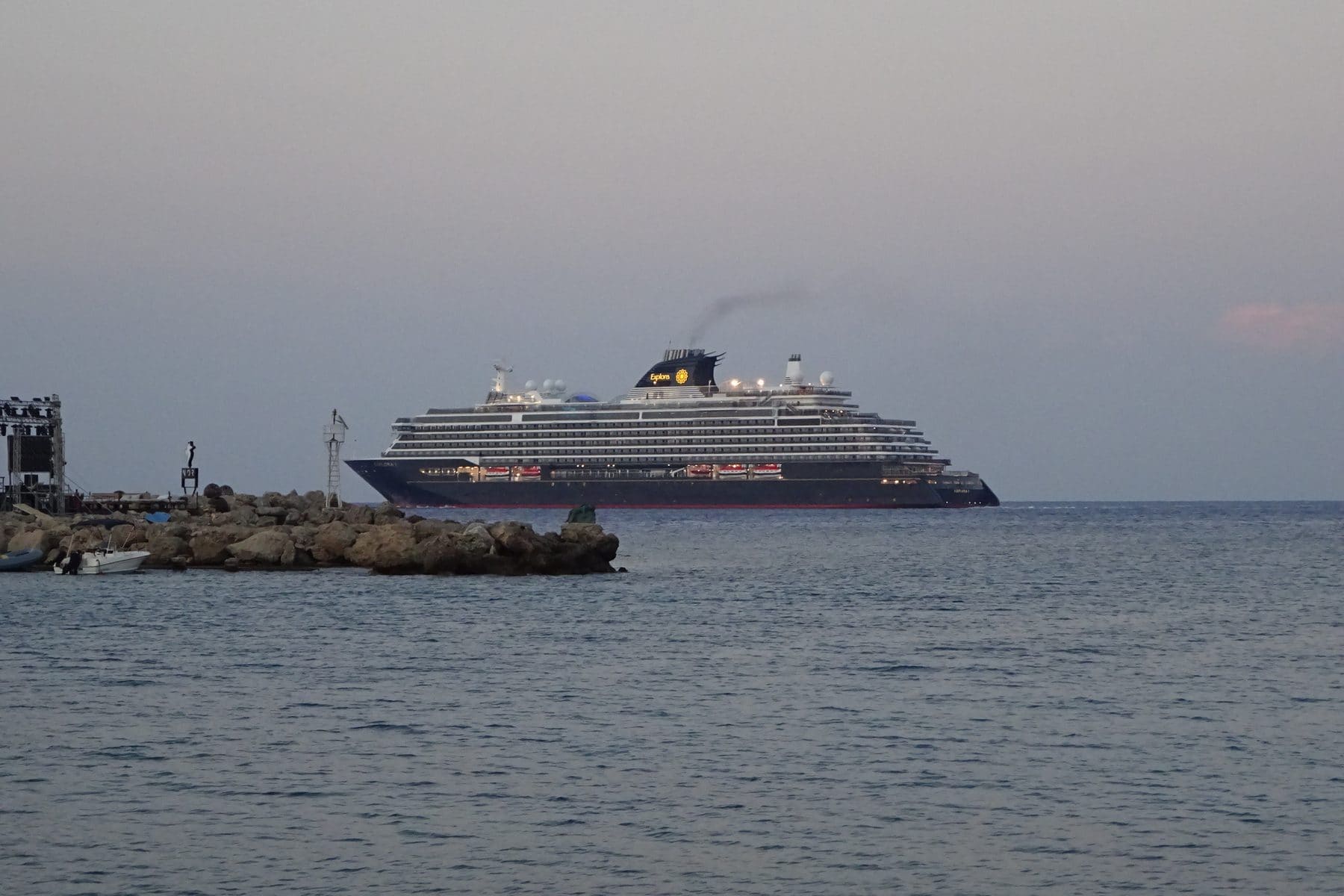
Explora Journeys suits families who want shared space
Explora Journeys is good for families, particularly those traveling with school-age children or three generations. It works best when adults value quiet surroundings as much as children value dedicated activities. Explora I and Explora II combine connected accommodations, the Nautilus Club and separate grown-up space without making the ship feel child-centered. Parents seeking nursery care, water slides or continuous preschool supervision should choose a different line. The ships suit families who want substantial time together but do not require constant organized entertainment.
The family proposition rests on separation without isolation. Children have their own base in Nautilus Club, while adults retain restaurants, lounges and quiet areas that feel intended for them. Grandparents can join meals and destination outings, then return to their own accommodation. Explora I and Explora II make that pattern easier through connected layouts rather than one crowded room. The result feels closer to several neighboring apartments than a conventional cabin shared by parents, children and luggage.
Life outside the youth space remains usable across generations. Families can join sports, games, workshops, quizzes and destination-focused talks during the day. Evening performances and live music give older children options beyond a club room. Explora Lounge and Sky Bar on 14 remain adult-oriented settings, while other venues support shared evenings. That balance particularly suits teenagers who resist formal children’s programming but still want activities, music and places to meet peers.
The strongest fit is a family that treats the ship as a shared resort, not supervised childcare. Explora I and Explora II support parallel schedules, allowing children, parents and grandparents to separate for several hours before meeting again. Ocean Suites, Ocean Penthouses and Ocean Residences provide several ways to organize the sleeping arrangements. This is a measured family product with substantial adult appeal, rather than a children’s ship with finer dining and larger rooms added around it.
Nautilus Club sets Explora Journeys’ family rhythm
Nautilus Club provides the clearest daily structure for families aboard Explora Journeys. It opens from 9:00 a.m. until midnight for guests ages 6 to 17. Those long hours permit morning activities, afternoon family time and an adult dinner without moving children between several programs. The age span is broad, so parents should ask how participants will be grouped on their sailing. A young child and a teenager may share the facility, but they will not want the same schedule.
Children ages 3 to 5 have a narrower arrangement. They may join designated age-appropriate sessions only when accompanied by a parent or guardian. This is not a routine drop-off program for preschoolers, and it should not be planned as one. Families with a young child therefore need an adult available during club visits. Families with a young child can use Nautilus more independently, subject to the onboard registration and sign-out procedures communicated for their sailing.
The club’s program mixes technology, tabletop activities, sports and creative work. Sessions can include technology tournaments, painting, crafts and games around the ship. This variety helps siblings with different interests, although participation will still depend on the published daily schedule. Families should treat the 9:00 a.m. to midnight opening window as access to a program, not a promise that every preferred activity runs continuously. Teenagers may spend only part of an evening there.
Adult boundaries are equally clear. Helios Pool & Bar on Deck 12 is reserved for adults, giving parents and grandparents a dependable retreat. During busy periods, Explora Journeys may assign other areas to adults or families as passenger numbers require. That flexibility can improve separation, but the atmosphere may change between a quiet November sailing and a December school break. Families should follow the daily schedule because temporary area designations can affect where everyone meets.
Age rules distinguish Explora’s family offering
Explora Journeys occupies a useful middle position among higher-end family choices. Explora I and Explora II provide connected accommodations and a club spanning ages 6 to 17. Cunard divides children more tightly, with programs for ages 2 to 7, 8 to 12 and 13 to 17. Cunard also offers four clubs covering children from six months through age 17. Families wanting distinct peer groups may prefer that structure, while families prioritizing contemporary shared space may favor Explora.
Silversea requires a different calculation. A guest under 18 must share the same or a connecting suite with a parent or responsible adult over 21. Its Classic Fleet does not accept infants younger than six months, and a child between six months and one year requires a signed, notarized waiver. Silversea also states that it provides no childcare. Explora’s Nautilus program therefore gives school-age families a more defined daily framework, despite both lines welcoming children aboard.
Ponant changes its rules by ship and voyage type. Expedition cruises generally accept children from age 6, while Le Commandant Charcot begins at age 8. Kid Explorers serves ages 4 to 13 on applicable ships, but Le Commandant Charcot uses an older band. The club holds no more than 24 children, with one leader for every eight. Explora is the simpler choice when siblings span several school years and the family does not need a polar expedition.
Oceania is no longer a family alternative for minors. Since January 7, 2026, its minimum age at embarkation has been 18. Regent remains available to families and divides Club Mariner into ages 5 to 8, 9 to 12 and 13 to 17. Those distinctions matter more than broad labels about luxury. A family with a young child needs a functioning children’s program, while parents traveling with a adult traveler can reasonably compare Oceania, Regent and Explora on adult interests.
Explora’s connected Ocean Suites protect family privacy
Choose the accommodation around nighttime needs rather than daytime plans. Explora I and Explora II have 82 multigenerational connected suites across Ocean Suites, Ocean Penthouses and Ocean Residences. A connected pair lets children remain close without requiring everyone to sleep in one room. It also gives grandparents a door they can close. Families should begin with the required number of real beds, bathrooms and private sleeping areas, then select the category that provides that configuration.
Ocean Suites are the practical starting point for a smaller family needing proximity. Ocean Penthouses provide a step up for groups wanting more shared interior space. Ocean Residences make more sense when several adults expect a true gathering room rather than using one bedroom as the family headquarters. The category name alone does not settle the decision. Two connected units can work better than one larger residence when grandparents keep different hours or teenagers need firmer boundaries.
Larger groups should examine the Journey Together Gathering structure carefully. The published arrangement is designed for three or four suites, with at least one Ocean Penthouse or Ocean Residence serving as the social center. That can suit grandparents paying for several households because each branch retains private space. It is less helpful for five people who simply want the lowest number of rooms. Door placement and the exact suite combination matter more than total floor area.
Families bringing a baby can request a crib, blankets, linens and pillows. Smaller bathrobes, slippers and hangers are available for younger guests, while infants from six months to two years can receive in-suite toys. These provisions reduce packing but do not change the sleeping capacity of a category. A crib also occupies usable floor space. Parents should map stroller storage, nighttime feeding and access to the bathroom before treating any connected arrangement as workable.
Explora’s fare structure favors several generations together
The family economics work best when children occupy the third or fourth position in a suite. Guests ages 2 to 17 can receive savings of up to 50 percent in those positions. Infants ages 6 to 23 months can sail without a journey fare. The first and second guests do not receive those child terms merely because they are young. A parent traveling alone with one child may therefore see a very different calculation from two adults sharing with two children.
Grandparents paying for three generations gain most from using the accommodations strategically. The connecting inventory allows grandparents to remain nearby without becoming the default nighttime caregivers. Adults booked as the third or fourth guests can receive savings of up to 25 percent. That can help where three adults share, but it does not automatically make a crowded suite sensible. Privacy, bathroom access and sleeping arrangements should decide the layout before any percentage benefit influences the booking.
Couples without children should not dismiss Explora I or Explora II as family ships. Helios protects one defined adult setting, and the broader onboard program remains largely suitable for adults. Couples traveling during school breaks may encounter more multigenerational groups and temporary family zones. Those who require an adults-only vessel should not book Explora. Those comfortable sharing most public spaces with well-supervised children can still find the ship’s scale and evening program appropriate.
Solo parents and first time cruisers need the clearest plan. A solo parent cannot assume the child occupies a discounted third position, while a first time family may overestimate how much supervision Nautilus provides outside its scheduled activities. Families should assign responsibility for mornings, shore days and late evenings before departure. Grandparents should agree whether they are companions or caregivers. These conversations matter more aboard a smaller ship, where family members naturally cross paths throughout the day.
October 2026 planning starts with connected Explora inventory
Book around the connected configuration, not a general promise of suite availability. As of October 2026, the additional-guest offer is ongoing for new reservations on selected journeys, but it may be withdrawn. Connected Ocean Suites, Ocean Penthouses and Ocean Residences form a finite subset aboard Explora I and Explora II. A family needing adjacent doors has less flexibility than a couple choosing any oceanfront accommodation. Secure the workable layout before arranging flights, hotels or family leave.
A December 2026 school break deserves earlier action than a flexible November 2026 departure. The same principle applies to March 2027 spring break and the June through August 2027 vacation period. These are planning examples, not assurances about a particular ship or route. Several households create more points of failure, including school calendars, adult leave and grandparents’ medical schedules. Waiting for every detail to become ideal can leave only separated suites or an unsuitable guest distribution.
Longer sailings change the onboard rhythm. Explora Journeys rotates resident and visiting performers across extended trips, so evenings need not repeat the same program. Grand Journeys can also cross continents, which may affect available television channels. Families considering several weeks aboard should focus on varied interests rather than club hours alone. A teenager content during a seven-night vacation may need sports, workshops, music and independent reading on a much longer trip. Adults face the same concern.
The offer’s timing should not dictate the vacation date. Benefits apply to selected journeys and are built into the displayed fare when eligible. Families should first choose a season that suits the children’s stamina and the adults’ schedules. A December 2026 sailing may simplify school absence but increase family demand. A May 2027 trip may offer more choice for adults with flexible calendars, yet it can conflict with examinations. The right timing begins with the least flexible traveler.
Explora is not nursery care with larger suites
Explora Journeys is a poor choice for a baby under six months. Its family terms start at six months, while Nautilus programming begins at age three only during accompanied sessions. Infants ages six months to two years may have toys delivered to the suite, but parents still handle their care. Families requiring dependable nursery coverage for several hours should book another ship. A crib and connecting door simplify daily routines, but they do not provide child care.
Preschool families commonly misread the Nautilus age wording. A child ages 3 to 5 can attend only specified sessions with a parent or guardian present. That arrangement offers activities together, not routine adult time apart. The full 9:00 a.m. to midnight schedule belongs to the broader club operation for ages 6 to 17. A family with a young child and a young traveler will therefore have two different supervision patterns, even when both children visit the same facility.
The younger-traveler benefit is not a blanket child-sails-free policy. Ages 2 to 17 receive savings of up to 50 percent, while only infants ages 6 to 23 months can have no journey fare. Position also matters because the child must be the third or fourth guest. The benefit covers the journey fare rather than hotels, transfers, Destination Experiences or paid onboard activities. A low child fare should never be read as an all-inclusive family vacation beyond the ship.
Quiet-seeking adults should understand the limits of Helios. Deck 12 supplies a defined adult pool and bar, but most restaurants, lounges, pools and bars welcome families. Explora may designate more adult areas during crowded periods, though travelers cannot build their entire vacation around that possibility. Couples who object to seeing children at dinner or around shared pools need an adults-only line. Families expecting unrestricted access should also respect the areas assigned to adults.
Confirm the exact Explora suite pair before paying
Start with the names and ages of every traveler on the sailing date. That determines who can use Nautilus, who needs an accompanying adult and which guests may occupy the third or fourth positions. Record whether each household needs a crib, a real bed or a separate room. For Explora I and Explora II, request the exact connected suite numbers and categories. “Near each other” is not equivalent to a connecting door, particularly for younger children.
Match the daily care plan to the family rather than the published opening span. Ask how ages 6 to 17 will be divided on the chosen sailing and how sign-in privileges work. Families with children ages 3 to 5 should identify the accompanied sessions before assigning adult dinners or spa appointments. Grandparents should decide which activities they will join and which periods remain private. Put shore-day responsibility in writing when several adults might assume somebody else is watching a child.
Match every offer condition to the final rooming list. Verify which travelers qualify for child, infant, or additional-adult benefits and that the selected sailing remains eligible. Confirm that other benefits may be combined. Fare reductions apply only to the journey, excluding hotels before or after sailing, transfers, Destination Experiences, and paid onboard activities. Families booking three or four suites should review the current Journey Together Gathering rules instead of assuming the terms match a previous family sailing.
Finish with operational details that can change the experience without changing the ship. Review the Deck 12 adult boundary, anticipated family-zone arrangements, Nautilus registration, stroller storage and requested infant items. Compare the port schedule with each child’s tolerance for long days ashore. Identify the suite that will serve as the gathering room and agree who holds access. Before paying, confirm the exact suite connection, legal occupancy, age eligibility, current offer terms and youth-program schedule with a specialist.
Questions people ask
Good to know
Questions, answered
Does Explora Journeys have supervised activities for children?
Nautilus Club hosts follow CLIA youth-activity standards and child-safeguarding practices. The core program serves ages 6 to 17. Its broad span makes the sailing’s actual age mix important, because a young child and a teenager need different sessions. Ask about grouping and sign-out privileges for your departure rather than assuming every child receives the same level of supervision.
Can children swim and play sports on Explora ships?
Younger guests receive reserved periods at the Sports Court and one heated pool, alongside activities elsewhere aboard. Access follows the daily schedule rather than remaining dedicated to children all day. Helios Pool & Bar on Deck 12 remains for adults. Families should check the onboard schedule each morning before promising a particular pool or sports session to a child.
What technology does Nautilus Club have?
Nautilus includes PlayStation 5, PlayStation VR2, Xbox, Nintendo Switch, iPads and Oculus Pro equipment. Children can also use foosball, a pool table, board games, streaming music and a multilingual digital library. Technology tournaments may appear in the schedule. Availability can vary by session, so families should view these as program resources rather than personal devices reserved for each child.
Are Explora Journeys shows suitable for families?
Explora offers daily games, quizzes, workshops and destination talks, plus evening music and performances. Cinema Nights screen films indoors, while Silent Sweet Cinema presents movies under the stars in the Conservatory. Show reservations are generally unnecessary. Parents still need to judge individual content and timing for younger children, since most entertainment serves adults and families rather than being written solely for children.
Will picky eaters find suitable food on Explora Journeys?
The culinary team can provide choices for younger guests throughout the day. The broader fare includes nine dining experiences, including in-suite dining, which can help when a child cannot manage a long restaurant meal. Families should discuss allergies and strict dietary needs before departure. A willingness to prepare child-appropriate choices does not mean every venue carries a separate children’s menu at every service.
Still have a question? Book a free 30 minute call or send us the brief.
Sources
Where to go next
- Family cruises: Which ships genuinely work with children, and which quietly don't.
- Compare the lines: Families, children, food and formality, side by side.
- Book a free 30 minute call: Tell us who is traveling; we will shortlist the ships we would consider.







