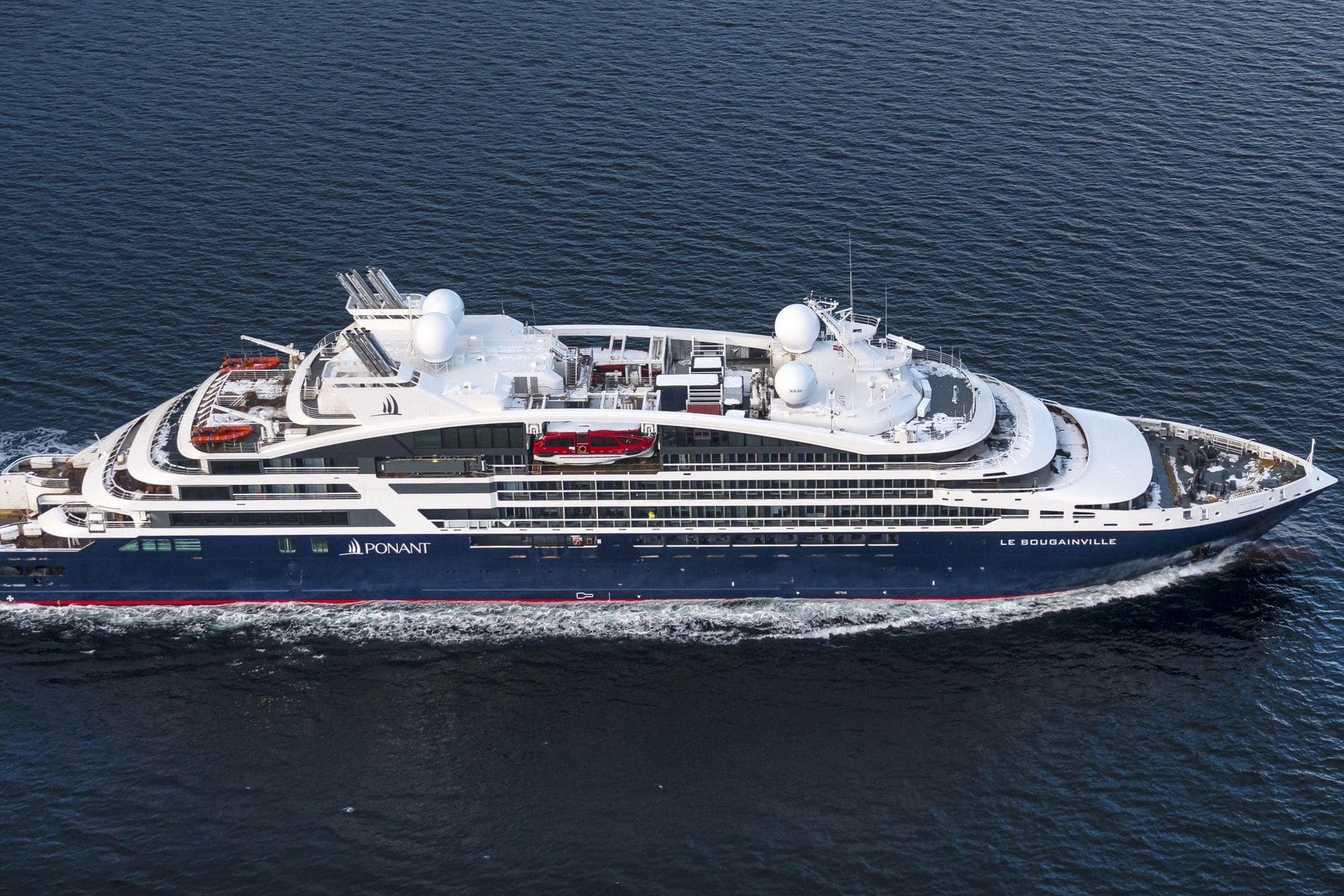
Lindblad leads for active multigenerational expeditions
Lindblad is the strongest choice for families who want children beside them in the field. Ponant is better when parents need a supervised club during parts of the day. Lindblad’s Explorers-in-Training program links children and teenagers with certified field educators in Alaska, Baja California and the Galápagos. Ponant’s Kid Explorers accepts ages 4 to 13 on selected ships, with different minimum ages on expedition sailings and Le Commandant Charcot.
Choose Lindblad when the family measures success by wildlife sightings, Zodiac outings and shared naturalist time. Children and teenagers may snorkel, kayak and hike when accompanied by an adult. Several ships have adjoining rooms that form family suites, which helps grandparents remain close without sharing one cabin. This model does not suit parents expecting dependable, daylong drop-off care. The program supports family participation rather than replacing it with a resort-style children’s schedule.
Choose Ponant when children need their own organized sessions while adults take guided excursions or dine separately. Kid Explorers can accommodate 24 children, with one leader for every eight participants. The club serves ages 4 to 13 on Sisterships and Ponant Explorers, but expedition passengers must generally be at least 6. Le Commandant Charcot raises the expedition minimum to 8, making that ship unsuitable for a family bringing a younger child.
Choose Hapag-Lloyd when structured care carries more weight than an English-first expedition program. Europa 2 separates children into the Knopf Club for ages 2 and 3, Kids Club for ages 4 to 10, and Teens Club for ages 11 to 15. Selected expedition cruises offer a separate program for ages 10 to 17. Cunard offers broader supervised age coverage, but it is an ocean-cruise alternative rather than our expedition recommendation.
Family suites beat one oversized cabin
Book adjoining rooms before paying for one large suite that places three generations together. Lindblad families often reserve adjacent cabins, while several ships have adjoining rooms that combine as family suites. Select vessels also carry larger staterooms suitable for families. These arrangements preserve an adult sleeping area and a second bathroom, depending on the ship selected. Exact configurations vary, so the useful category is the family suite formed by adjoining rooms, not simply the largest cabin aboard.
Ponant offers the clearest general configuration for families needing a separate sitting area. Its ships have sea-view staterooms with sofa beds, plus connecting suites with a lounge. A connecting suite pair usually works better than one sofa-bed stateroom for grandparents, parents and children who keep different hours. Families should not assume every connecting configuration appears on every ship or sailing. The relevant distinction is between a sofa-bed stateroom and a connected arrangement with shared living space.
Hapag-Lloyd provides spacious cabins and suites across its fleet, including Europa and Europa 2. Europa 2 serves children from age 2 in the Knopf Club, while Europa’s playroom begins at age 4. That two-year difference can matter more than extra floor space when parents are planning shore time without a preschooler.
Space per guest matters most during cold-weather expeditions, when wet clothing and equipment return to the cabin. Le Commandant Charcot accepts Kid Explorers participants from age 8 and places families on a purpose-led expedition schedule. Lindblad’s National Geographic Endeavor II adds an open bridge that children and parents may visit together. Families prioritizing private rooms should favor adjoining cabins. Families prioritizing a shared lounge should start with Ponant’s connecting-suite configuration.
Informal meals keep expedition days flexible
Lindblad has the easiest dining rhythm for families returning from active days ashore. Meals are informal, with several choices intended to cover different appetites. The daily plan lets families choose among activities such as kayaking, hiking and wildlife observation instead of building the day around a formal dinner. This pace suits children who eat quickly and teenagers who would rather return to the deck. It is less suitable for families treating dinner as the main event.
Ponant provides more dining formats without moving into a large-ship routine. Families may use the buffet, order from an à la carte menu or request room service. That flexibility helps when a young child tires after an excursion or grandparents prefer a quieter meal. Kid Explorers opening hours follow the itinerary, so club time does not create the same fixed daily pattern on every voyage. Parents must read each day’s schedule before planning dinner apart from their children.
Hapag-Lloyd places more structure around family dining and supervision. Children may eat dinner as a group with the child-care staff, using children’s menus. Sea days can include morning, afternoon and evening activities, while care on shore days follows excursion times. A babysitter may be available after the clubs close. This arrangement suits parents who want an adult dinner, though the babysitting service depends on availability and should not drive the entire booking decision.
Expedition pace remains physical even when dining is flexible. Lindblad expects younger participants to join many activities with an adult, while Hapag-Lloyd’s selected expedition departures give ages 10 to 17 their own hikes, microscopy, Zodiac trips and workshops. Ponant sits between those models. It offers supervised sessions and excursions, yet hours follow the route. Families wanting predictable care should choose a structured Europa 2 family sailing rather than assuming every expedition day will support separation.
Ages 4 to 17 need different ships
Grade-school children suit Lindblad when they enjoy wildlife, fieldwork and time with adults. The family program welcomes children and teenagers, while daily choices let relatives divide by interest when an adult accompanies the youngest participants. A child can visit the bridge aboard National Geographic Endeavor II while a teenager chooses kayaking. Families seeking several uninterrupted adult hours each day should not select Lindblad solely because it has a youth education program.
Teenagers gain the most from expedition work that feels consequential rather than decorative. Hapag-Lloyd offers selected expedition programs for ages 10 to 17, including microscopy, Zodiac trips and age-specific lectures. Ponant’s standard Kid Explorers band ends at 13, although Le Commandant Charcot welcomes ages 8 to 14 in its activities. A teenager may therefore fit Hapag-Lloyd better. A younger sibling aged 6 may fit Ponant, except aboard Le Commandant Charcot.
Preschool families need the closest reading of age rules. Ponant ships can welcome children from age 1, but no more than five children aged 1 to 6 may sail. Its expedition cruises begin at age 6, or age 8 on Le Commandant Charcot. Europa 2 provides Knopf Club care for ages 2 and 3, though places are limited and a fee applies. Hapag-Lloyd also sets regional minimums for babies and small children.
Grandparents benefit from ships that permit different activity levels without splitting the family for the whole day. Lindblad offers naturalist talks, deck wildlife watching and active choices ashore. Ponant combines guided excursions with club sessions for children aged 4 to 13 on eligible sailings. Europa 2 works when grandparents want a slower onboard day while parents take an excursion. None suits a group whose youngest child falls below the ship’s stated expedition minimum.
Selected-sailing rules decide what is included
Treat every children’s program as sailing-specific rather than fleetwide. Ponant offers Kid Explorers across much of its fleet only on selected departures, excluding Le Ponant and using Moana Explorer instead aboard Paul Gauguin. Kid Explorers accepts up to 24 children and staffs one leader for every eight. The club operates on selected Polynesia cruises and Mediterranean summer departures. A ship carrying suitable facilities does not mean a particular departure runs the program.
Lindblad includes family learning within the expedition rhythm instead of selling child care as a separate layer. Explorers-in-Training runs on every expedition in Alaska, Baja California and the Galápagos, plus selected Antarctica and Iceland voyages. Meals and daily planning form part of the onboard operation. Lindblad can also arrange flights, transfers and land accommodations, but families should keep those arrangements distinct from the shipboard program when comparing the complete vacation.
Hapag-Lloyd includes substantial family support but attaches conditions to several services. Europa 2’s Knopf Club for ages 2 and 3 carries a fee and limits participation. Babysitting after club hours depends on availability. Children under 4 may join adult shore excursions without an excursion charge. Children aged 4 to 11 receive a reduced excursion rate, except for flights and overland trips, while those aged 12 and older pay the adult rate.
Cunard provides the clearest included club model for families who can forgo an expedition ship. Access to the Kids’ Zone for ages 8 to 12 is included, alongside supervised spaces for ages 2 to 7 and 13 to 17. That does not include an expedition field program, Zodiac operations or naturalist-led landings. The contrast is useful: an included children’s club and an included expedition education program solve different problems for parents.
Alaska and summer Mediterranean suit different families
Choose Alaska for a first family expedition with shared wildlife and active days. Lindblad runs Explorers-in-Training on every Alaska expedition, making the program easier to identify than a club offered only on selected departures. Children and teenagers can join snorkeling, kayaking and hiking with an adult when those activities operate. Alaska also suits grandparents who prefer naturalist talks or deck observation. The family should still accept changing daily plans and close participation from adults.
Choose the Mediterranean when club time and easier port days matter more than continuous field exploration. Ponant schedules children’s clubs on selected summer departures across the region, including routes around the Greek islands, Adriatic, Iberian Peninsula, and French and Italian Rivieras. Le Dumont d’Urville has a seven-night Athens round trip departing July 13, 2027. That duration works for families testing a small ship without committing to a long polar expedition.
Choose Northern Europe for older children who meet stricter expedition rules. Le Commandant Charcot sails eight nights from Helsinki to Kemi beginning December 22, 2026, with Kid Explorers serving the ship’s older age band. Children must be at least 8 aboard this vessel. The winter date and Arctic gateway route favor families comfortable with cold conditions, specialized outerwear and limited daylight. It is not the easy answer for a first vacation with a young child.
Choose Hapag-Lloyd when the school-break calendar matters more than a specific expedition region. Its advertised family cruises follow major school vacation periods, and selected expedition departures add programming for ages 10 to 17. Europa and Europa 2 also support family excursions in many ports. Lindblad remains stronger for Alaska, Baja California and the Galápagos because the youth field program runs on every expedition there, rather than only selected family departures.
Ponant wins when parents need club time
Ponant wins over Lindblad when reliable periods of supervised activity matter more than exploring together. Kid Explorers supplies leaders, group sessions and children’s excursions for ages 4 to 13 on eligible Sisterships and Ponant Explorers. The one-to-eight staffing ratio and 24-child limit give parents useful planning facts. Lindblad remains the better choice when parents want to join their children in kayaks, on hikes and beside naturalists throughout the day.
Hapag-Lloyd wins when one family contains a preschooler and a teenager with different needs. Europa 2 divides ages 2 and 3, 4 to 10, and 11 to 15 among three clubs. Its shore-day care can follow excursion times, and children may dine with staff. Lindblad cannot replace that structure because its youngest explorers often need an accompanying adult. Ponant cannot match it when a teenager has aged beyond the standard Kid Explorers band.
Cunard wins when supervision and a broad age span matter more than expedition access. Its spaces cover ages 2 to 7, 8 to 12, and 13 to 17. Sea days usually carry more club sessions than port days, and the fare includes access. Families gain conventional ship entertainment rather than Zodiac outings, field notebooks or expedition workshops. That trade makes sense for parents wanting scheduled separation, but not for children primarily interested in wildlife work.
Lindblad wins again when three generations want one shared subject rather than parallel vacations. A grandparent can attend a naturalist talk, a teenager can kayak, and a younger child can examine the bridge with a parent. Adjacent cabins or adjoining family suites keep the group close afterward. Ponant remains preferable when adults want room service and defined club periods. Hapag-Lloyd remains preferable when evening babysitting and children’s group dinners carry more value.
Confirm ages, rooms and selected-sailing rules
Start with the youngest child’s age, not the destination photograph. Ponant expedition cruises generally begin at age 6, while Le Commandant Charcot starts at 8. Europa 2 accepts ages 2 and 3 into the fee-based Knopf Club, subject to capacity. Lindblad welcomes children across its voyages, but many active experiences require the youngest participants to join an adult. These rules quickly remove ships that cannot serve the whole party.
Match the room plan to sleeping habits before comparing public spaces. Lindblad offers adjacent cabins, adjoining rooms that form family suites, and larger staterooms on select ships. Ponant provides sofa-bed staterooms and connecting suites with lounge space. Grandparents usually need a private room and bathroom rather than a larger shared cabin. Parents should map every bed, door and shared area against the booked ship’s configuration, not a general fleet description.
Match the daily plan to the amount of separation the adults actually want. Lindblad favors shared exploration and flexible choices. Ponant supplies supervised Kid Explorers sessions on selected departures, with hours linked to the itinerary. Hapag-Lloyd provides organized sea-day activities, shore-day care and children’s dinners on advertised family sailings. Cunard gives the broadest conventional club bands but removes the expedition component. The right answer follows the family’s desired day, not the line’s general reputation.
Confirm with a specialist the child minimums, adjoining-room numbers, bed layout, club operation, language, supervision hours, excursion eligibility and extra services for the exact sailing.
Questions people ask
Good to know
Questions, answered
Do expedition children’s clubs run while parents go ashore?
Sometimes, but the operating model varies. Hapag-Lloyd coordinates shore-day supervision with excursion times on advertised family sailings. Ponant adjusts Kid Explorers hours to each itinerary, so parents should not assume all-day care. Lindblad focuses on children joining expedition activities with an adult. Cunard usually schedules afternoon and evening sessions on port days, but it is not an expedition line.
How early do I register a child for Cunard’s youth clubs?
Cunard opens youth registration 14 days before sailing through My Cunard. Parents complete a form and supply the required consents for each child. Once aboard, sessions can be reserved through My Voyage without an access charge. Exact age groupings may change with the number of children sailing, so siblings near a boundary may not be placed as expected.
What does Hapag-Lloyd provide for a baby in the suite?
Hapag-Lloyd offers a Baby Welcome Package for children through age 3. Available items include changing supplies, baby food, a baby monitor, bottle sterilization, food warming, a baby bath and a crib that can serve as a playpen. Regional minimum ages still apply: babies must be older than 8 months within Europe and at least 2 elsewhere.
Does Ponant have medical staff and a pool for children?
Ponant family ships carry a doctor and nurse and provide a heated outdoor swimming pool. A children’s area includes games and a library. Those amenities do not change the expedition minimums of age 6 generally and age 8 aboard Le Commandant Charcot.
Where else does Lindblad run its youth expedition program?
Beyond Alaska, Baja California and the Galápagos, Lindblad offers Explorers-in-Training on selected Antarctica and Iceland voyages. Family activities can include paddleboarding, biking and photo walks, depending on the expedition. Children may also play games in the library, watch for wildlife from the deck and speak with naturalists. The mix changes by destination and daily conditions.
Still have a question? Book a free 30 minute call or send us the brief.
Sources
Where to go next
- Cruise lines: Who each line is for, and who it isn't for.
- Compare ships: Our ratings for every line we sell.
- Book a free 30 minute call: Tell us who is traveling; we will shortlist the ships we would consider.