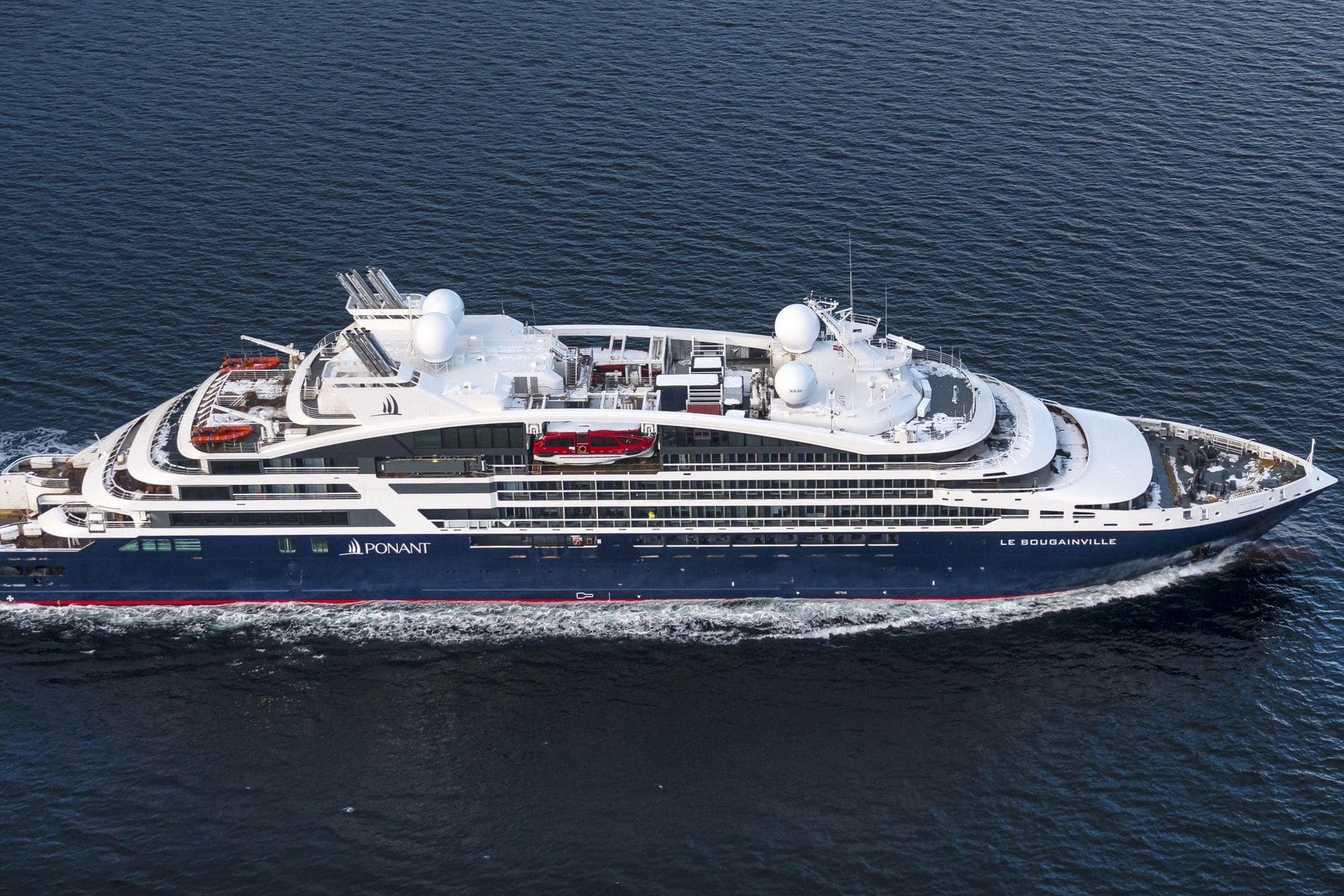
Lindblad leads active families; Ponant suits quieter groups
Choose Lindblad for children and teenagers who want wildlife, field learning, and daily physical activity. Choose Ponant when grandparents prefer French dining, quieter cultural calls, and more hotel services included. Lindblad builds family days around naturalists, landings, and choices such as kayaking or hiking. Ponant’s Kid Explorers club organizes activities and outings by age group. The distinction matters more than small differences in décor: Lindblad makes expedition activity central, while Ponant balances exploration with a calmer onboard rhythm.
Lindblad works especially well when education must hold a teenager’s attention without resembling school. Its Explorers-in-Training program uses certified field educators in Alaska, Baja California, the Galápagos, Iceland, Greenland, and selected Antarctica voyages. Participation is optional, so children can join an activity or remain with their parents. Families may separate for different pursuits when an adult accompanies the youngest members. That structure helps grandparents attend a naturalist talk while older children kayak, photograph wildlife, or join a field session.
Ponant is the stronger choice when adults want expedition access without making every day physically demanding. Le Lapérouse carries 184 guests and combines a marina platform with cultural programming on some departures. Its Ice Class 1C rating favors lighter seasonal ice and temperate routes rather than the hardest polar conditions. Families who value an open bar, Wi-Fi, included gratuities, and a more French style of dining may accept a less activity-led atmosphere. The ship suits mixed groups whose interests extend beyond wildlife.
Neither line behaves like a resort ship with supervised entertainment throughout every sea day. Lindblad expects families to explore together, and younger participants need adult accompaniment for the broader activity program. Ponant’s club provides age-based structure, yet the ship remains small and adult in tone. Families wanting slides, large children’s facilities, or constant drop-off care should choose another type of vacation. For the right group, the smaller scale keeps grandparents, parents, and children involved in the same destination rather than separate attractions.
Le Lapérouse and Endurance trade space for scale
Compare the passenger count before comparing cabin photographs. Le Lapérouse carries 184 guests, while National Geographic Endurance carries 126. Endurance therefore places fewer guests around expedition staff, observation areas, and landing operations. Le Lapérouse remains small by ocean-cruise standards but accommodates roughly half again as many passengers. That difference can shape family movement more than decorative finishes. A three-generation party should decide whether it values Endurance’s smaller community or Ponant’s broader hotel atmosphere and larger social setting.
Treat Lindblad’s family suite as a configuration, not a universal cabin category. Families often reserve adjacent cabins, and several Lindblad ships have adjoining rooms that combine into family suites. Selected ships also offer larger staterooms that can hold family parties. The practical advantage is separation: parents can retain a door, children gain their own sleeping space, and grandparents can remain nearby. The exact arrangement depends on the ship, so Endurance should not be assumed to match every other vessel in the fleet.
Prioritize two real bedrooms over one larger room when three generations travel together. A connected Lindblad arrangement can reduce nighttime disruption and provide another bathroom, depending on the assigned cabins. Separate adjacent cabins may work for grandparents and older teenagers who do not need an internal door. Younger children usually make true adjoining rooms more valuable. Space per guest also changes when berths are opened, so compare the occupied layout rather than relying on the cabin’s headline dimensions or its daytime appearance.
Use Le Lapérouse when the group values public rooms and a yachtlike scale more than a documented family-suite arrangement. Its 184-guest capacity remains manageable for grandparents who dislike long corridors and crowded gathering points. Endurance’s 126-guest scale is the more focused choice for families who expect to spend substantial time with expedition staff. Neither capacity answers the bedtime question. Families should map each traveler to a bed, bathroom, internal door, and adult supervisor before selecting the ship.
Ponant dining is French; Lindblad meals stay informal
Choose Ponant when dinner is an important part of the family’s day. Its service style leans French, and Le Lapérouse presents a more polished hotel experience than expedition-first Endurance. That approach suits grandparents who want an established dining rhythm after a landing. It may suit less-active relatives who judge the vacation as much by meals and service as wildlife. Children comfortable with adult restaurants should settle more easily than families expecting a dedicated dining venue built around younger passengers.
Choose Lindblad when mealtimes must remain simple around landings and changing interests. Meals are informal, with enough choice for differing tastes, and daily planning leaves families free to select activities. The tone supports wet gear, early wildlife reports, and quick changes between ship and shore. Endurance concentrates attention on the expedition team rather than formal service rituals. Families who dislike dressing for dinner or holding children through a long meal should find that operating style easier during an active polar itinerary.
Expect Lindblad’s day to move according to wildlife and field conditions. Families can choose among onboard and shore activities, then split when interests differ and adult supervision allows it. A teenager might select kayaking while a grandparent attends interpretation aboard the ship. The schedule is flexible, but the experience remains active and destination-led. Families wanting fixed leisure hours around lunch and dinner may find the pace demanding, especially when several landings or wildlife opportunities occur within a short operating window.
Expect Ponant’s pace to feel more balanced on cultural and temperate routes. Le Lapérouse combines expedition hardware with a service model that gives meals and public rooms greater weight. That balance can help a multigenerational party whose members have unequal stamina. Active relatives can go ashore while others enjoy the ship without feeling they missed its entire purpose. Lindblad wins when every traveler wants field time. Ponant wins when shared dinners and comfortable intervals are equally important to the group.
Explorers-in-Training favors teens and active grandparents
Book Lindblad for curious grade-school children who engage through direct tasks. Explorers-in-Training connects nature, science, photography, geology, navigation, and wildlife through optional sessions. Certified field educators lead the work, which keeps instruction tied to the day’s surroundings. The program is not conventional child care. Children can participate when interested, then spend other periods with parents or grandparents. That freedom suits confident children who enjoy adults, boats, wildlife observation, and changing plans more than scheduled games in a dedicated club room.
Lindblad gives teenagers credible reasons to leave their screens behind. Kayaking, paddleboarding, snorkeling, hiking, biking, and photo walks may be available, with participation shaped by the voyage and conditions. The line also welcomes children and teens into libraries, wildlife watching, and conversations with naturalists. Active teenagers should respond well to that choice. Shy children who need a fixed peer group may take longer to settle because the emphasis remains shared exploration, not a separate social program operating independently from the expedition.
Grandparents fit Lindblad when they enjoy lectures, wildlife, and watching younger relatives learn. The family can divide among activities, provided an adult accompanies its youngest explorers. That rule lets one adult take a child ashore while another attends a different session. Grandparents with limited mobility may find repeated boat transfers and active outings tiring, particularly on Endurance. The line suits older relatives who still want intellectual and physical engagement. It is less suitable when the family expects passive sightseeing from the ship.
Ponant better serves families whose age groups need clearer separation and a gentler common denominator. Kid Explorers provides activities and outings organized for different ages, while the smaller ships retain an adult atmosphere. That can work for grandparents who want quiet time without giving children an entirely separate vacation. Ponant is not the obvious choice for teenagers seeking continuous high-energy fieldwork. It becomes more persuasive when the group values cultural calls, French meals, and time together aboard Le Lapérouse between organized outings.
Ponant includes hotel basics; Lindblad covers fieldwork
Value Ponant’s package when predictable onboard spending matters to the host grandparent. The line includes an open bar, Wi-Fi, and gratuities, removing three common shipboard extras from the family account. Smithsonian Journeys departures also include one organized excursion in each port. That combination favors travelers who want cultural touring and hotel services gathered into the cruise arrangement. It does not make every family expense disappear, since flights, private arrangements, and choices beyond the included port outing can still sit outside the voyage.
Value Lindblad’s package when the family expects to join most expedition operations. Its expedition excursions are included, along with naturalist programming and science equipment used during the voyage. Polar sailings also include an open bar. The structure aligns spending with the main reason to choose Endurance: going ashore, using expedition craft, and learning from the field team. Families can focus on selecting the day’s activities rather than deciding which core landing merits another charge. That is a practical advantage for larger multigenerational groups.
Separate cruise inclusions from the complete trip before comparing either line. Lindblad can arrange flights, transfers, and lodging before or after an expedition, but those arrangements are distinct planning components. Ponant’s Wi-Fi and gratuities have clear onboard value, while its Smithsonian excursion benefit applies to those specific sailings. A family paying for several cabins should compare identical boundaries: ship services, shore operations, drinks, transfers, and before sailing nights. A longer inclusion list matters only when the group will use those items.
Match the package to the group’s behavior rather than counting benefits. An active family joining every landing may derive more value from Lindblad’s included expedition operations and specialist staff. A group with grandparents who remain aboard more often may place greater weight on Ponant’s drinks, internet access, service, and gratuities. The difference is especially relevant on a 126-guest Endurance expedition versus a 184-guest Le Lapérouse cultural sailing. Their inclusions support different daily priorities rather than interchangeable versions of the same cruise.
Endurance owns polar depth; Le Lapérouse favors culture
Choose Lindblad first for a family expedition centered on Alaska, Baja California, or the Galápagos. Explorers-in-Training operates on every expedition in those three regions, giving parents a clearer expectation of youth programming. The line also offers the program on selected Antarctica and Iceland voyages, with Greenland included among its program destinations. These routes suit families who want wildlife and field science to define the day. School-break space deserves early attention because preferred cabins and adjoining arrangements can fill well ahead.
Choose National Geographic Endurance when ice capability shapes the decision. Its Polar Class 5 rating permits operation in medium first-year ice that may contain older ice inclusions. The 126-guest ship was designed around demanding polar exploration and naturalist-led operations. That makes it the stronger platform for a family prioritizing Arctic or Antarctica field time over restaurant style. The ship’s smaller count also supports a close expedition community, although polar outings still require suitable mobility, clothing, and comfort with small boats.
Choose Le Lapérouse for lighter ice, temperate coasts, and culturally weighted itineraries. Its Ice Class 1C rating handles light first-year ice but does not target the same operating conditions as Endurance. The ship fits Arctic summer programs, lighter-ice Antarctica routes, and destinations where port culture matters alongside nature. Smithsonian programming on selected sailings strengthens that case through an included excursion in each port. Families combining grandparents, younger children, and adults with different activity levels may prefer that broader balance.
Let the destination determine the ship rather than forcing a favored brand onto every region. Alaska and the Galápagos make Lindblad’s children’s program especially dependable across departures. A temperate itinerary with several cultural ports can shift the advantage toward Ponant, particularly when shared meals and quieter ship time matter. Antarctica requires closer judgment. Endurance is the clearer expedition-first choice, while Le Lapérouse may suit a group accepting lighter ice capability in return for Ponant’s onboard style and broader hotel inclusions.
Le Lapérouse wins when Endurance feels too intense
Pick Ponant over Lindblad when several relatives want the destination without constant expedition intensity. Le Lapérouse gives a 184-guest family group more room to treat the ship as part of the vacation, not merely a field base. French dining and included hotel basics support slower evenings after shore visits. That matters when grandparents enjoy cultural interpretation but do not want repeated kayaking, hiking, or small-boat sessions. It also helps parents whose children prefer organized age-group activities over joining adults throughout the day.
Pick Ponant when cultural ports carry equal weight with wildlife. A Smithsonian Journeys sailing can include one planned excursion per port, while Le Lapérouse’s design supports temperate and cultural deployment. The line’s Kid Explorers outings can give younger travelers a structured way into those destinations. Lindblad remains stronger for hands-on science, but some families do not need every landing to become a lesson. Shared meals, moderate activity, and adult-oriented public rooms can hold three generations together more effectively on those trips.
Pick Lindblad instead when the children would regard conventional touring as passive. Explorers-in-Training lets them work with photography, navigation, geology, and wildlife under certified educators. Endurance adds a smaller 126-guest setting and stronger polar capability. The line also makes daily participation flexible rather than compulsory. An energetic teenager can pursue physical activity while a grandparent selects interpretation aboard. Ponant’s age-based club may be better organized for separation, but Lindblad more fully integrates young travelers into the expedition itself.
Avoid choosing either line solely because it accepts families. Ponant can feel too adult for children who need large peer groups and constant entertainment. Lindblad can feel too active for relatives who dislike variable schedules, wet landings, or repeated outdoor sessions. Le Lapérouse is not Endurance with French food, and Endurance is not Le Lapérouse with more naturalists. The other option wins whenever its operating style matches the least-flexible family member, because that person usually determines whether the group can participate together.
Confirm cabins and program dates before choosing
Start with the child who has the strongest needs. A teenager seeking kayaking and field photography points toward Lindblad, while a younger child who benefits from age-group outings may favor Ponant. Then assess the grandparent with the lowest mobility or energy. Endurance rewards active participation, and Le Lapérouse offers a broader onboard experience between ports. This sequence prevents the most enthusiastic adult from selecting an expedition that other relatives cannot use. The right line should work on an ordinary day, not only its headline landing.
Draw the sleeping plan before selecting a departure. Mark each adult, child, bed, bathroom, and internal door. Lindblad offers adjoining cabins that can become family suites on several ships, plus larger staterooms on selected vessels. Adjacent cabins without a connecting door may suit grandparents and older teenagers but complicate supervision for younger children. Compare the exact occupied configuration, not a generic deck plan. A 126-guest ship can feel intimate in public while still offering the wrong private arrangement for five relatives.
Compare sample days rather than broad labels. Ask how many landings, lectures, meals, and optional activities the group would actually choose. Lindblad’s informal dining and flexible field schedule suit families willing to adapt around wildlife. Ponant’s French service and Kid Explorers structure better support relatives who prefer defined meals and age-based organization. Place Alaska, Baja California, the Galápagos, or selected Antarctica programs beside a Le Lapérouse cultural route. The clearer choice usually appears once each person’s likely day is written down.
Confirm the exact connecting-cabin layout, berth limits, children’s program operation, adult-accompaniment rules, included excursions, transfers, and activity demands with a specialist before committing to any sailing after October 2026.
Questions people ask
Good to know
Questions, answered
What do children actually do on a Lindblad family expedition?
Activities change by region. In Baja California, children may collect plankton from a Zodiac and examine it under a microscope aboard ship. Alaska sessions can teach smartphone time-lapse and slow-motion filming with a photo instructor. The work is optional, so a child can join selected sessions rather than follow a compulsory daily schedule.
Can kids steer a Zodiac on a Galápagos cruise?
Lindblad’s Galápagos Explorers-in-Training activity can teach children to handle a Zodiac with a certified field instructor. Participants receive a program driver’s license after the lesson. The activity is offered across the line’s Galápagos expeditions, but it remains an instructional session rather than permission for a child to operate expedition craft independently.
Does Lindblad offer activities for children in Antarctica?
Selected Antarctica departures offer Explorers-in-Training rather than every sailing. One activity asks children to design an Antarctic mammal by choosing survival traits such as blubber, teeth, swimming ability, or natural antifreeze. Families should select the departure for its overall expedition plan first, then treat the youth session as one part of the voyage.
Is there anything for children to do aboard the ship?
Lindblad children can visit the open bridge aboard National Geographic Endeavour II, learn about navigation, watch for wildlife, play games in the library, and speak with naturalists. In Iceland and Greenland, participants may photograph whales from the bow and contribute images to Happywhale, a cetacean identification and tracking project.
Do children have to attend every family activity?
Lindblad’s Explorers-in-Training sessions are optional. Children can follow interests such as photography, geology, wildlife, or navigation without attending every session. That works well for independent children and siblings with different interests. Ponant takes a more age-group-based approach through Kid Explorers, so parents should compare the exact club schedule with each child’s preferred level of structure.
Still have a question? Book a free 30 minute call or send us the brief.
Sources
Where to go next
- Cruise lines: Who each line is for, and who it isn't for.
- Compare ships: Our ratings for every line we sell.
- Book a free 30 minute call: Tell us who is traveling; we will shortlist the ships we would consider.







