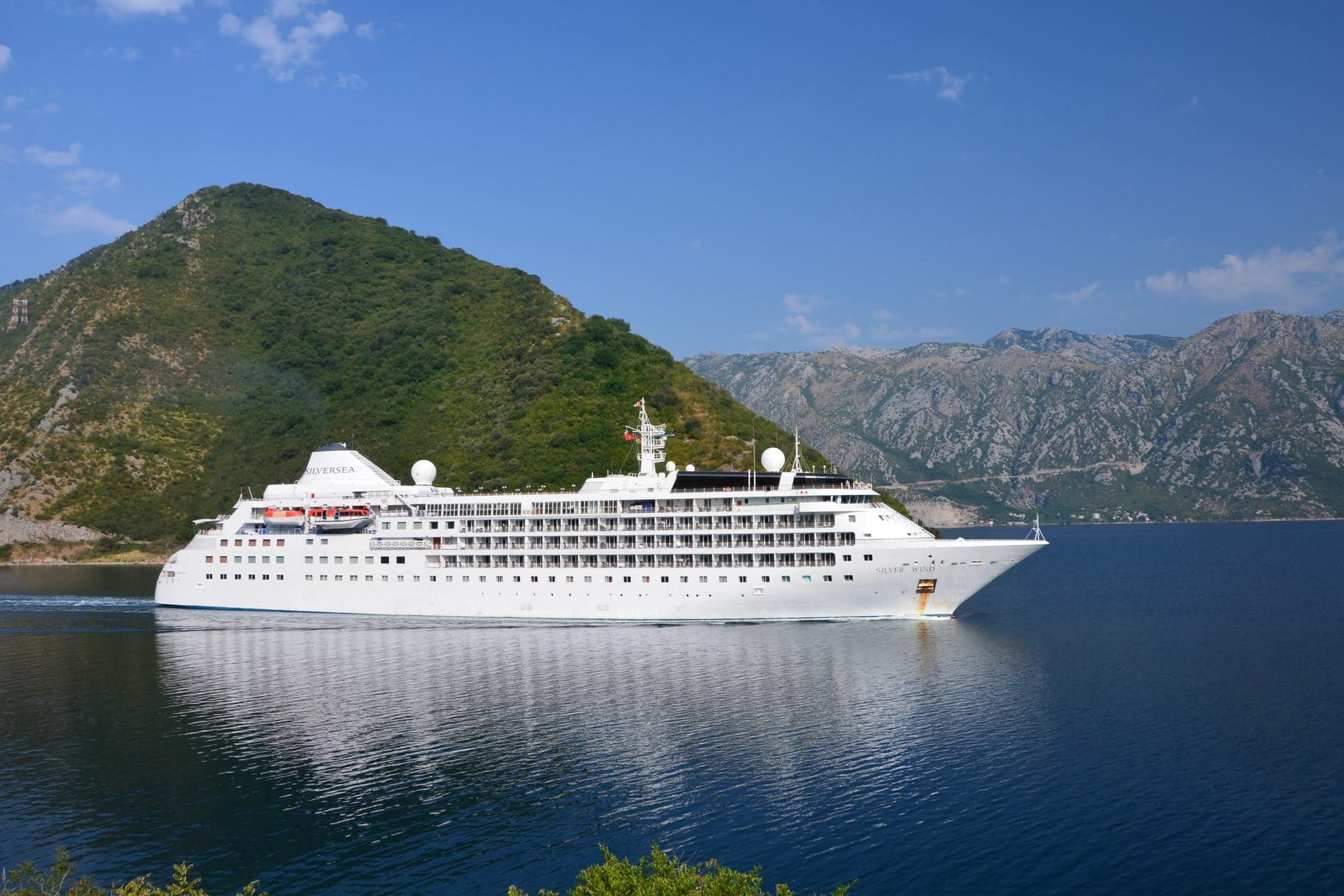
Start with Silversea’s Royal Suite and adjoining Veranda
Book the family layout before selecting the sailing, ship, or travel arrangements. Silversea’s clearest connecting option is a Royal Suite expanded to two bedrooms through an adjoining Veranda Suite. This arrangement suits grandparents paying for separate sleeping space without separating the group. It is less suitable for families seeking slides, large youth areas, or constant children’s entertainment. Start with the number of bedrooms, bathrooms, and private spaces required each morning and evening.
Follow that decision by finding ships carrying the required Royal Suite arrangement. Silversea lists the category on Silver Wind, Silver Shadow, Silver Spirit, Silver Moon, Silver Cloud, Silver Whisper, Silver Dawn, and Silver Muse. The ship choice comes after the layout because a suitable itinerary cannot repair an unsuitable room arrangement. Adult children may accept nearby suites, while younger children often make internal access more valuable. Keep both arrangements available until everyone agrees how nights will work.
Set the travel period only after identifying workable ships and rooms. A family tied to a 2027 school break has less flexibility than grandparents with time to travel traveling with adult children. The region, cruise duration, and departure date should narrow the ship list without changing the bedroom requirement. Avoid choosing a favored sailing first and forcing the family into whatever rooms remain. That order often leaves one adult on a converted sleeping surface or places children beyond the agreed access plan.
Arrange flights, hotels, transfers, and insurance after Silversea assigns the intended suite numbers. Those elements can support the cruise, but they cannot create an internal door between two unrelated rooms. Keep the sequence disciplined: household needs, suite configuration, suitable ship, sailing date, and supporting travel. This method also makes alternatives easier to compare. If the Royal Suite combination is unavailable, everyone can judge nearby Veranda Suites against an already agreed privacy standard.
Choose Royal Suite bedrooms before choosing Silver Wind
Count sleepers by household before discussing Silver Wind or Silver Muse. Write down every adult, teenager, and younger child, then assign each person a real sleeping place. Do not treat total occupancy as the complete answer. A grandparent may need a closed bedroom, while parents may require direct access to children overnight. The Royal Suite arrangement provides a living room and dining area, which can become the shared family space rather than another household’s bedroom.
Map morning routines before choosing the larger name on the deck plan. Separate bedrooms solve only part of a multigenerational layout. Families should consider bathroom demand, dressing space, early risers, and quiet time after dinner. A suite that gathers everyone comfortably may still fail when six people prepare for an early shore departure. Use the family’s busiest hour as the test. That reveals whether one larger suite or several connected spaces will work better.
Use the Deluxe Veranda Suite’s stated three-guest capacity as a boundary, not a planning target. Three people may fit the category, yet three adults can have different privacy needs from two parents and one child. A couple with one teenager might accept the arrangement for a shorter cruise. Grandparents sharing with an adult child may prefer another room. Decide who shares before comparing balcony position, décor, or proximity to restaurants.
Reject Silversea when the family’s main requirement is a large children’s resort at sea. The line’s suite structure better serves groups prioritizing adult space, shared meals, and quieter evenings. It can also suit grandparents whose family time centers on the itinerary rather than supervised attractions. Silver Wind and Silver Muse remain candidates only after the bedroom map works. A beautiful ship does not compensate for daily friction over privacy, sleep, or bathroom access.
Plan 2027 Villa and Residence benefits before the season
Begin 2027 planning as soon as the family fixes its region and usable travel weeks. Silversea will add benefits to Villa and Residence categories beginning in 2027, making the category decision relevant before comparing departure dates. Families considering those suites should separate required space from added privileges. Early restaurant and spa access may matter to adults, but it cannot replace another bedroom. Keep the room plan unchanged while evaluating what the 2027 category package adds.
Treat school breaks and fixed family events as the least flexible seasons. A family limited to one 2027 vacation week should request the connecting configuration before arranging air or hotels. Travelers with flexible dates joining adult children may gain more options by shifting the sailing date while preserving the ship and suite plan. Region comes next because the family must first agree where it wants to travel. The calendar should reduce choices, not overturn the agreed sleeping arrangement.
Handle expedition-style and conventional ocean plans as separate searches. Silver Cloud appears among the ships carrying a Royal Suite, while Silver Moon and Silver Dawn provide other ocean-ship choices. Different regions can produce different packing, transfer, and arrival needs, so avoid combining every possibility into one vague request. Give each region a preferred period and one alternate period. This keeps the family’s essential suite requirement visible when comparing ships across distinct types of sailing.
Use October 2026 as the point for organizing 2027 travel, not as a reason to rush blindly. Ask for the exact suite pair first, then compare acceptable sailings around it. Families with broad calendars can weigh Silver Shadow against Silver Spirit without surrendering their bedroom plan. Families with one fixed week should prepare a second ship or region. The practical advantage comes from having ranked alternatives before any nonrefundable travel arrangements enter the decision.
Silver Ray and Silver Nova offer Junior Grand Suites
Compare Silver Ray and Silver Nova when one private bedroom may satisfy the family. Their Junior Grand Suites measure 581 to 624 square feet, including a 64-square-foot balcony. The layout includes separate living and dining space plus a secluded bedroom. This can work for a couple wanting more separation from the living area. It does not automatically equal two connecting suites, and families should not treat square footage as proof of suitable sleeping capacity.
Choose the Junior Grand Suite for its internal layout rather than its forward view. The category sits high in the bow and includes a double vanity, whirlpool bath, and walk-in shower. That bathroom arrangement may ease mornings for two adults, while the separated bedroom can protect sleep when another family member stays awake. Movement at the bow may concern travelers sensitive to ship motion. Their comfort should outweigh the appeal of extra room or a preferred outlook.
Consider the Silver Suite when midship placement matters more than a forward location. Silversea places this category near the ship’s onboard venues and offers it across Silver Ray, Silver Nova, Silver Dawn, Silver Moon, and Silver Muse, among others. Its position may help relatives who prefer shorter walks to shared spaces. It remains a different decision from an adjoining Royal and Veranda combination. Location and bedroom count should stay as separate columns in the family comparison.
Keep Deluxe Veranda Suites in the comparison when the party divides naturally into smaller households. Silversea offers the category on Silver Endeavour, Silver Whisper, Silver Spirit, Silver Shadow, and several other ships. Its private balcony supports personal outdoor space, and its three-guest capacity may fit one branch of a larger family. Two independently suitable suites can be preferable to one compromised larger room, provided their relationship on the deck plan meets the family’s access needs.
Request the Royal Suite and Veranda pair first
Protect the Royal Suite and adjoining Veranda request before spending time on optional details. The dependency involves two specific accommodations functioning as one family plan. A single available suite elsewhere on Silver Whisper does not preserve that arrangement. Treat the pair as one piece of inventory in every discussion. Record both suite numbers together and keep the relationship visible. Dining preferences, spa times, and routine onboard choices can wait until the room structure is settled.
Rank substitutes before the first choice becomes unavailable. A nearby Veranda arrangement on Silver Dawn may be acceptable for adult children but unsuitable for younger children needing internal access. A Junior Grand Suite on Silver Ray offers separated living and sleeping areas, yet it answers a different household problem. Decide which compromise comes first: another ship, another date, or another layout. Never let a time-sensitive decision force the family to invent that ranking during payment.
Leave reversible travel choices until the ship and rooms align. A hotel can often be selected from several properties, while the desired suite relationship depends on the ship’s physical plan. Flights also offer routing choices that do not exist for a fixed internal doorway. Focus early attention on the feature with the fewest substitutes. Put optional sightseeing, restaurant requests, and extended stays behind the accommodation decision, especially when grandparents are coordinating several households.
Keep one acceptable fallback active instead of collecting many weak possibilities. The fallback might be two separate Deluxe Veranda Suites on Silver Shadow or a larger single category on Silver Nova. It should meet the family’s minimum privacy and access rules without hopeful assumptions. A vague wait for something better can delay every linked booking. A defined second choice gives the group a clear response if the requested Royal Suite combination cannot be held.
Hold air until Silver Moon suites align
Match air to the confirmed Silver Moon or Silver Spirit sailing rather than choosing the cruise around airfare. Build enough arrival time for the family’s risk tolerance, mobility, and connection pattern. Grandparents, young children, and travelers checking medical equipment may need a simpler routing than independent adults. Keep every household on a written arrival plan. A lower fare or shorter connection should not override the room arrangement or create an arrival schedule the family cannot manage.
Select the precruise hotel for logistics rather than decoration. Consider the distance from the arrival airport, the route to the ship, room capacity, and breakfast timing. A family using a Royal Suite plus Veranda still needs suitable hotel rooms before embarkation. One hotel room may not reproduce the shipboard bedroom plan. Keep grandparents’ mobility and children’s sleep routines in view, then decide whether households should travel together or meet at the hotel.
Assign transfers by household and luggage load. One vehicle may appear convenient until strollers, mobility aids, and several large bags are included. Record who meets each arriving flight, where the group gathers, and which traveler holds the ship details. If relatives arrive separately, avoid making the earliest household responsible for every later delay. The same plan should cover the trip from the ship to the airport or postcruise hotel after disembarkation.
Choose insurance after listing the cruise, air, hotel, transfer, and prepaid trip components. Compare coverage according to each traveler’s age, medical circumstances, and financial exposure. A multigenerational party may not share identical needs, even when everyone sails in the same Silver Muse accommodation plan. Read the covered reasons, exclusions, claim procedures, and timing requirements before purchase. Keep policy documents and emergency contacts available to more than one responsible adult.
Three guests change Deluxe Veranda Suite planning
Avoid turning the Deluxe Veranda Suite’s three-guest capacity into an assumption about comfort. Capacity answers how many guests the category accepts, not how three particular relatives will share it. Ask which bed each person uses and where belongings go during the day. A teenager, adult child, or grandparent changes the practical result. Families should also decide whether balcony access remains usable after nighttime arrangements are in place. Comfort depends on the people, not the printed maximum.
Avoid assuming every Silversea category connects in the same way. The documented adjoining arrangement combines a Royal Suite with a Veranda Suite, while Villa, Residence, Veranda, and Oceanview describe broader suite groups. Use the exact ship, deck, category, and suite numbers together. A category name without that context leaves too much room for a costly misunderstanding.
Avoid paying for more space before deciding what the space must accomplish. A large living room may support family meals, yet it may not supply another closed bedroom. A forward Junior Grand Suite may offer separation, while a midship Silver Suite answers a location preference. Put doors, beds, bathrooms, and access ahead of total area. This prevents grandparents from funding a higher category that still leaves the family’s central privacy problem unresolved.
Avoid building the trip around an unranked set of preferences. Families often discuss a favored ship, a 2027 date, a balcony, and nearby rooms without deciding which condition wins. Convert those wishes into firm requirements and optional preferences. Keep each household involved before payment, including adult children whose assumptions may differ from the grandparents’. A clear priority order reduces changes to flights, hotels, and insurance after the cruise arrangement is selected.
Record Silver Muse suite details before payment
Request a written accommodation record for Silver Muse before money changes hands. It should identify the ship, sailing, suite category, deck, and each assigned suite number. For the Royal and Veranda arrangement, the record should show both components of the family plan. Match every traveler to a room and sleeping place. Names, birth information, and household groupings should agree across the cruise and supporting travel documents before the family accepts the arrangement.
Review the deck relationship as carefully as the suite names. Determine whether access is internal, whether doors can operate as expected, and how each household reaches shared space. Ask how the living and dining areas function when the Royal Suite uses its two-bedroom form. Record bathroom access and nighttime privacy for every traveler. If the answer changes the agreed bedroom map, return to the ranked fallback rather than accepting a layout that works only on paper.
Itemize the 2027 category benefits separately from the accommodation itself. Villa and Residence categories receive added benefits beginning in 2027, including priority elements described for those groups. The booking record should distinguish included services from requests and optional purchases. Apply the same discipline to air, hotel nights, transfers, and insurance. Each component needs the correct dates, traveler names, and cancellation terms, especially when several households pay different parts of the trip.
Finish with one coordinated review rather than separate household assumptions. Check the sailing dates, ship, suite numbers, guest assignments, bed plan, internal access, included services, flight schedule, hotel rooms, transfers, and insurance documents together. Give one responsible adult the complete record and provide copies to another. Before paying, confirm with a Silversea specialist the exact connecting layout, occupancy, suite assignments, inclusions, cancellation terms, and every linked travel arrangement.
Questions people ask
Good to know
Questions, answered
Do all Silversea suites have an ocean view?
Silversea says every suite has an ocean view, while many include a private teak veranda. That distinction matters when dividing a family across categories. Do not assume an ocean view means private outdoor space. Compare the exact category assigned to each household, especially if grandparents expect a balcony and adult children are comfortable with a window.
Where is the Classic Veranda Suite located?
Silversea places the Classic Veranda Suite beneath the bow. That location may appeal to travelers prioritizing a particular part of the ship, but motion-sensitive relatives should assess their own comfort. Compare its position with the family’s daily routes and bedroom needs rather than treating the category name as interchangeable with another Veranda option.
Is the Superior Veranda Suite on an upper deck?
Yes. Silversea identifies the Superior Veranda Suite as an upper-deck category. Check the exact ship and suite relationship before relying on the category. Grandparents may also care more about walking distance and motion than the deck’s outlook.
Which Silversea ships have the Otium Suite?
The Otium Suite is available on Silver Nova and Silver Ray. It is a separate category from the Junior Grand Suite, even though both appear on those ships. Families should compare the actual bedroom, bathroom, and living-space arrangement rather than choosing by category status. The correct answer depends on who sleeps where and how much separation the household needs.
Where is the Premium Medallion Suite positioned?
Silversea places the Premium Medallion Suite toward the aft. That provides another location choice for families comparing forward, midship, and aft accommodations. Position should follow the bedroom decision, especially for relatives sensitive to motion or long walks. An aft suite does not by itself answer whether two households have the internal access and privacy they require.
Still have a question? Book a free 30 minute call or send us the brief.
Sources
Where to go next
- Family cruises: Which ships genuinely work with children, and which quietly don't.
- Compare the lines: Families, children, food and formality, side by side.
- Book a free 30 minute call: Tell us who is traveling; we will shortlist the ships we would consider.







