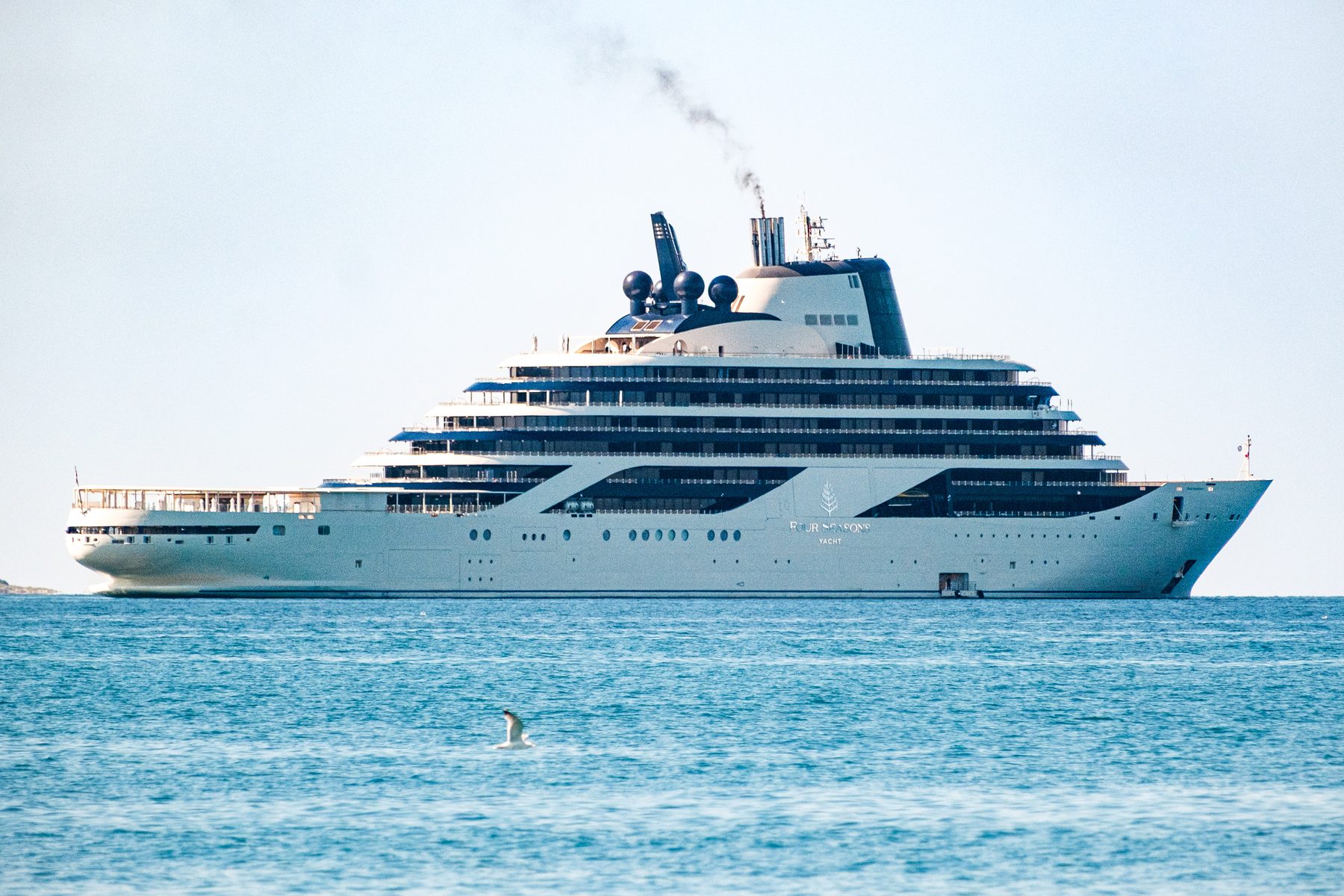
Explora I leads families; Four Seasons I favors adults
Choose Explora Journeys for a multigenerational vacation involving children or teenagers. Choose Four Seasons I when adults set the rhythm and connected accommodations matter more than organized youth time. Explora I and Explora II combine interconnecting suites with Nautilus Club and family destination activities. Four Seasons I centers its proposition on linked accommodations, broad dining and established hotel service. That distinction matters more than small differences in décor, branding or the number of public rooms.
Explora works particularly well when grandparents want private bedrooms without separating the family across the ship. Ocean Suites, Ocean Penthouses and Ocean Residences can form larger arrangements, while younger guests gain their own organized space. Grandparents can withdraw without ending the shared vacation. Parents also receive dependable breaks during long port days. This structure suits three-generation parties whose members alternate between meals together and separate afternoons, rather than expecting every person to follow one daily schedule.
Four Seasons I makes more sense for families whose youngest members already enjoy adult meals and unstructured sea days. Its accommodation plan allows suites to connect horizontally or vertically, giving larger parties options beyond a conventional adjoining pair. Eleven restaurants and lounges spread adults across different settings without requiring everyone to dine together nightly. This ship is less compelling for parents whose booking decision depends on published age bands, long youth hours and a clearly defined program for preschoolers.
Explora earns the family recommendation through operating rules that address children directly. Ages 6 to 17 receive a dedicated club, while ages 3 to 5 may attend selected sessions with a parent or guardian. Infants receive a different arrangement. Four Seasons I earns attention for physical connection, service and a small ship atmosphere. Families should therefore decide whether their hardest problem is entertaining children or housing adults with enough privacy. The answer usually identifies the right line.
Ocean Residences beat Four Seasons I’s broader connections
Book Explora when the group needs named family configurations rather than an improvised cluster of rooms. Explora I and Explora II have 82 interconnecting suites across Ocean Suites, Ocean Penthouses and Ocean Residences. The arrangements can accommodate groups of different sizes while preserving separate sleeping areas. That inventory gives parents, grandparents and children a defined path from two private suites toward a larger shared layout. It also reduces dependence on cabins that are merely nearby rather than internally connected.
Choose an Ocean Suite pairing when the family wants connection without making the accommodation the vacation’s main event. Move toward an Ocean Penthouse when a larger sitting area will support shared breakfasts or quiet evenings. Ocean Residences suit groups placing the greatest value on residential space and separation. Explora’s model works because each component remains an oceanfront accommodation with its own terrace. Relatives can close a connecting door without losing access to outdoor space or their own daily routine.
Consider Four Seasons I when the group’s shape demands more inventive links. Its suite catalog includes the Seaview Suite, Seaview Suite with Studio, Seaview Mid Suite and Superior Seaview Suite. Ocean Suite and Ocean Suite with Studio offer another progression. The ability to connect accommodations across a deck or between levels can help an adult family combine shared living space with stronger separation. That architecture may suit siblings, grown children and grandparents better than several conventional rooms along one corridor.
Use the larger Four Seasons categories for an adult group that treats the accommodation as its main gathering place. Grand Ocean Mid Suite, Saint Barths Suite, Milos Suite, Málaga Suite and Loft Suite indicate a broader upper-category ladder than a simple room-and-penthouse choice. The advantage is flexibility, not automatic suitability for children. A vertical arrangement may complicate supervision, while an extensive linked plan can leave unused space. Match the exact doors and levels to how the group will actually live.
Explora I’s six restaurants ease family dining
Favor Explora I when dining flexibility means feeding children without separating them from adults. The ship has six restaurants containing eleven culinary experiences, plus in-suite dining. Children may use the restaurants, lounges, pools and bars, and the culinary team can adapt choices for younger guests. That policy supports an early child’s meal followed by a later adult dinner. It also helps grandparents who prefer room service after a long excursion while the rest of the family goes out.
Use Helios Pool & Bar when adults need protected quiet rather than an entirely adult ship. That venue is reserved for adults, while children remain welcome across the other listed public spaces. The division is practical for multigenerational travel. Parents can exchange supervision without removing children from the ship’s social life. Grandparents gain a reliable retreat for a drink or swim. Families expecting unrestricted access everywhere should accept this boundary before choosing their preferred pool routine.
Expect Explora’s pace to feel contemporary, European and unhurried rather than ceremonial. Its service model emphasizes attentiveness without making formality the central event. That suits families who dislike organizing every dinner around one fixed gathering. Twelve bars and lounges give adults alternatives after children settle into evening activities. The ship’s scale still requires planning for popular meal times, but the broad venue mix supports smaller combinations. Two grandparents can dine alone while parents and teenagers choose another setting.
Choose Four Seasons I when restaurant variety and hotel like attention outweigh the need for child-specific dining rules. Its eleven restaurants and lounges draw on Four Seasons culinary and service traditions. Adult siblings can divide between venues, then regroup in a connected suite. The concept particularly suits guests who enjoy long meals and attentive table service during sea days. Families needing predictable accommodations for young diners will find Explora’s operating model easier to assess before departure and easier to use onboard.
Nautilus Club gives ages 6 to 17 independence
Choose Explora for children ages 6 to 17 who want independence beyond the family suite. Nautilus Club operates from 9 a.m. until midnight, an unusually useful span for both daytime activities and adult dinners. Games, sports and supervised adventures give school-age children reasons to return. Teenagers can use the space without sharing every activity with preschoolers. Parents still control attendance, but the long schedule reduces the need to build each day around alternating adult supervision.
Treat ages 3 to 5 as a parent-accompanied group, not full youth-club participants. They may enter during dedicated periods when accompanied by a parent or guardian. That arrangement works for grandparents who enjoy joining a short activity, but it does not create independent childcare. Families with several preschoolers should plan adult coverage carefully. Explora remains workable because the age rule is clear. It is not the right choice for parents expecting to leave a young child for an entire evening.
Plan differently for babies between 6 and 24 months. Explora places age-appropriate toys in the suite, but Nautilus Club does not run organized infant activities or provide infant facilities. Cribs, linens, blankets and baby pillows can be arranged, which reduces packing for a young family. The line welcomes babies from 6 months. Parents still carry the daily workload. Grandparents paying for the vacation should understand that a connected suite improves logistics without turning infant care into an onboard service.
Match teenagers to the program’s actual content rather than assuming every teenager wants a club. Nautilus offers technology, tournaments, sports-court periods, board games, art sessions and a place to spend time with peers. Younger children may respond better to structured games, while older teenagers may prefer pools and family excursions. Four Seasons I better suits self-directed teens comfortable around adults. Explora better serves siblings whose ages span elementary school through high school and whose parents need dependable evening options.
Journey Together changes Explora’s three-suite equation
Use Journey Together when the family needs three or four suites and will benefit from a shared social base. The arrangement requires at least three suites and allows no more than four. One must be an Ocean Penthouse or Ocean Residence. That rule favors grandparents hosting two adult children and their households. It does not fit a couple booking one room beside a child’s room. The larger suite becomes the practical gathering place instead of relying on public lounges.
Count the child benefit by suite, not by total family size. Journey Together permits one guest under 18 in each qualifying suite to sail without a journey fare. Transfers to the ship are also included for every participant booked through that arrangement. A family spreading children across several rooms may therefore structure the reservation differently from one placing all children with their parents. The value depends on occupancy, suite assignment and the required Penthouse or Residence component, not simply the number of minors.
Apply Explora’s standard child terms carefully when Journey Together does not fit. Infants ages 6 to 23 months can sail without a journey fare. Children ages 2 to 17 may receive a reduction on selected suite categories. Each infant or child must occupy the same suite as a third or fourth guest. A child booked first or second does not qualify based solely on age. These rules reward conventional family occupancy more than a grandparent and child sharing a two-person suite.
Separate stated inclusions from personal spending on both ships. Explora I combines its family benefits with in-suite dining and extensive public facilities, but the child terms depend on age, berth position and category. Four Seasons I should be selected for its accommodation design, restaurant choice and service style rather than an assumed family package. Adult groups may value those features more than a child-related fare rule. Families should compare the complete occupancy plan before treating any included transfer or child place as decisive.
Four Seasons I owns November 2026’s Atlantic crossing
Choose Four Seasons I for a deliberate Atlantic passage from Las Palmas to St. John’s. The Grand Atlantic voyage runs November 8 through November 19, 2026, for 11 nights. A full week at sea makes the ship itself central to the vacation. This is not a port-intensive choice for children who need a new attraction every morning. It better fits adults, grandparents and self-directed teenagers who enjoy long meals, reading, deck time and an uninterrupted onboard rhythm.
Use the Caribbean end of that crossing for contrast after the sea days. The route approaches Sint Maarten and St. Barths before continuing through the Lesser Antilles and finishing in Antigua. Those calls create a clear progression from open-ocean time toward island days. Families gain fewer packing changes than on a land itinerary, but the long crossing demands confidence in everyone’s sea-day habits. A group uncertain about consecutive days aboard should choose a more port-led Explora itinerary.
Favor Explora when destination breadth matters more than one signature crossing. The line spans more than 400 destinations across five continents and over 70 countries. That scale gives families more ways to match a school calendar, flight plan or grandparent’s preferred region. Its stated approach allows a slower encounter with each destination rather than treating every day as a rapid checklist. The stronger use case is a family choosing among regions, not an adult group specifically seeking a November Atlantic passage.
Consider the 2026 and 2027 vacation period on Four Seasons I when the family wants the accommodation and ship to anchor the celebration. Connected suites can keep adult children close while preserving privacy across levels or along one deck. The vacation concept works best for relatives comfortable making their own entertainment between meals. Explora remains safer for younger children because its family structure extends beyond sleeping arrangements. Four Seasons becomes stronger when shared time itself is the main activity and ports are secondary.
Four Seasons I wins for adult-led yacht groups
Choose Four Seasons I over Explora when every traveler values adult company, long meals and suite-based gatherings. The ship’s connected accommodation plan can support couples traveling with grown children or several adult siblings. A two-level connection may create stronger separation than side-by-side rooms while preserving an internal route between relatives. That arrangement can be especially useful when one couple keeps later hours. Explora’s youth infrastructure adds less value when nobody intends to use it, making Four Seasons the cleaner fit.
Pick Four Seasons I when the group wants the ship to control the pace. Consecutive Atlantic sea days create time for service, dining and private conversation rather than repeated morning departures. This rhythm suits grandparents who dislike rushing and adult children who view the vacation as family time first. It does not suit a group measuring value by the number of ports. Explora wins that argument through wider geographic choice, but Four Seasons wins when fewer transitions are part of the plan.
Prefer a Four Seasons studio configuration when one traveler needs proximity without a conventional shared bedroom. Seaview Suite with Studio and Ocean Suite with Studio offer a different planning idea from joining several full suites. That can suit an adult child, companion or relative whose privacy requirements differ from the hosting couple’s. Families should resist booking the largest arrangement automatically. A carefully selected studio combination may function better than a multilevel plan for anyone with limited mobility or an irregular sleep schedule.
Select Explora instead when the group’s adults need scheduled relief from supervision. Four Seasons I can connect relatives physically, but Explora organizes time apart through Nautilus Club and adult-only Helios. The Four Seasons advantage appears only when passengers can use a less structured day well. Couples traveling with grown children often can. Parents managing energetic grade-school children may not. The deciding issue is not which ship feels more refined. It is whether the family needs architecture alone or architecture plus programming.
Confirm ages, suite links and Las Palmas logistics
Start with a room-by-room census before selecting either ship. Record each traveler’s age at sailing, preferred bedtime, mobility and need for private outdoor space. Explora’s oceanfront accommodations each include a terrace, while its family inventory spans suites, penthouses and residences. Four Seasons I may connect rooms vertically or horizontally. The correct arrangement depends on who needs immediate access to children and who needs quiet. A diagram matters more than the category name when several generations share the reservation.
Map supervision by hour before deciding how much programming the family needs. Explora’s sports periods, games and evening access can release adults for meals, but preschool participation still requires an accompanying adult. Four Seasons I asks more of a family’s internal schedule because its strongest group feature is connected living space. Assign likely mornings, afternoons and dinners rather than assuming grandparents will provide care. That exercise often exposes whether a multilevel connection will help the party or make daily movement harder.
Match the itinerary to the least adaptable traveler. An 11-night crossing beginning in the Canary Islands requires different preparation from a destination-led sailing with frequent calls. Las Palmas also creates specific flight and before sailing planning needs for an American family. St. John’s, Antigua, creates a separate return plan after November 19, 2026. Parents should consider school absence, while grandparents should consider the effect of repeated sea days. The most enthusiastic adult should not set the pace for everyone else.
Confirm the precise connecting doors, maximum occupancy, child’s berth position, current youth hours, infant equipment, dining arrangements and port transfers with a specialist before placing the reservation.
Questions people ask
Good to know
Questions, answered
What can teenagers actually do on Explora Journeys?
Nautilus Club has PlayStation 5, PlayStation VR2, Xbox, Nintendo Switch, iPads and Oculus Pro. Teenagers can also join technology tournaments, use foosball and pool tables, browse a multilingual digital library or spend time in the club’s social area. The mix is strongest for teenagers who enjoy technology and meeting peers, rather than those expecting large amusement-park attractions.
Are Explora’s youth staff trained to supervise children?
Nautilus Club hosts hold child-safeguarding certification and follow Cruise Lines International Association standards for youth activities. That framework applies to the organized club environment for ages 6 to 17. Parents should still review sign-in permissions and collection rules for their sailing, especially when siblings fall into different age groups or grandparents may collect a child after an evening session.
Does Explora offer educational family excursions?
Family destination activities can include a space-center visit hosted by an astronaut or whale watching interpreted by a marine biologist. Nautilus programming also addresses marine conservation, environmental footprints and the effects of tourism through work with the MSC Foundation. These activities suit families whose children engage better through practical experiences than formal talks. The actual selection will depend on the destination and sailing.
How many pools and bars does Explora I have?
Explora I has four swimming pools and twelve bars and lounges, alongside outdoor decks with private cabanas. Its broader onboard mix includes Chef’s Kitchen, wellness facilities and entertainment spaces. That gives three generations several places to separate during the day. Parents should still distinguish general pools from youth-club swimming periods and the adult-only Helios area when planning where family members will meet.
How large is Explora I compared with a private yacht?
Explora I carries 461 oceanfront suites, penthouses and residences, so it operates more like a small resort ship than a private charter. Every accommodation has an ocean view and terrace. The scale supports multiple restaurants, youth facilities and several pools, but families should not expect every relative to encounter one another by chance. Agree on meeting places and meal times before each day begins.
Still have a question? Book a free 30 minute call or send us the brief.
Sources
Where to go next
- Cruise lines: Who each line is for, and who it isn't for.
- Compare ships: Our ratings for every line we sell.
- Book a free 30 minute call: Tell us who is traveling; we will shortlist the ships we would consider.