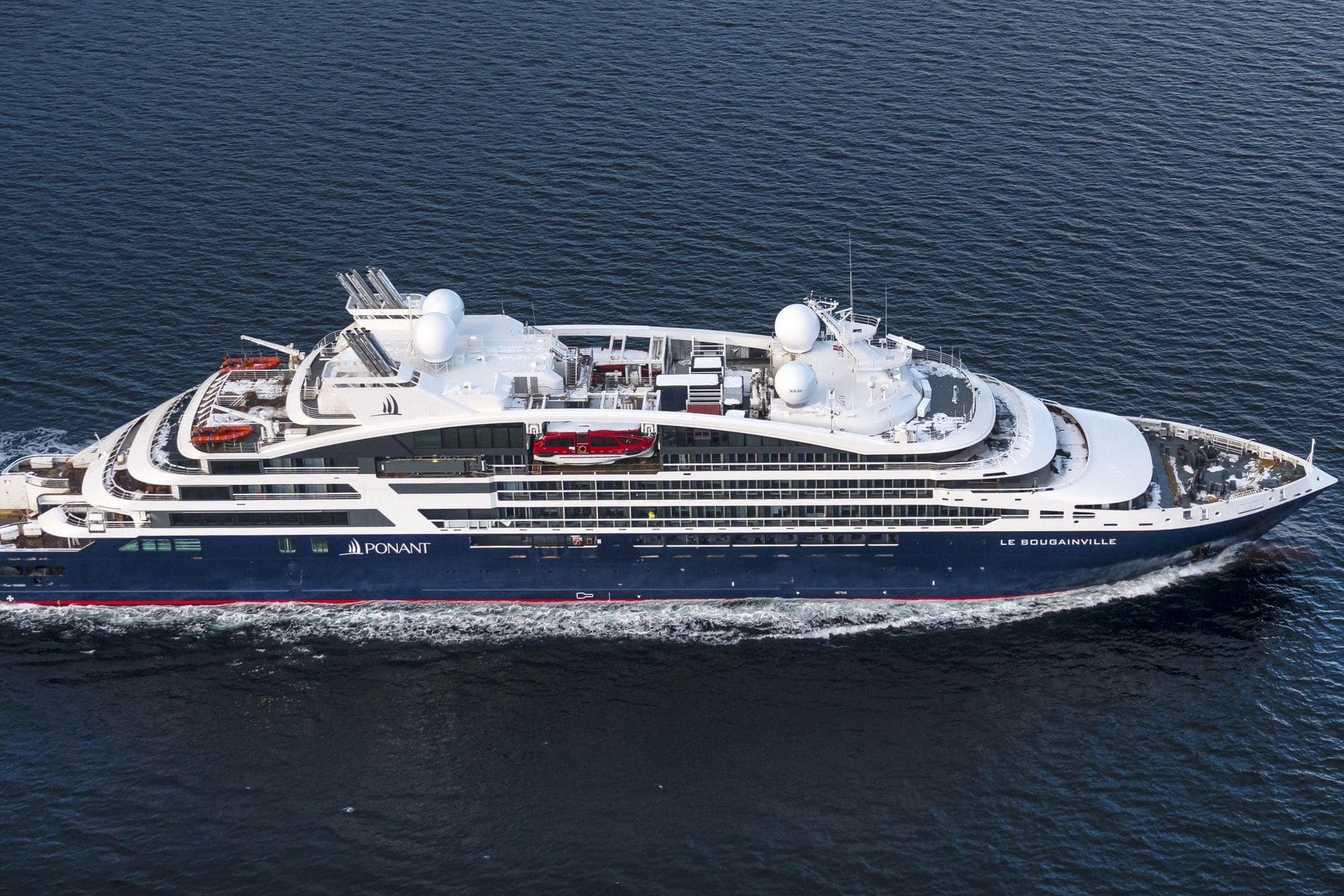
Silver Endeavour suits active expedition couples
Silversea is usually the stronger expedition choice for couples seeking active days, varied dining and relaxed evenings together. Ponant is better for couples who prefer one planned activity per port and a more measured daily structure. Silver Endeavour can schedule two landings in one day, sometimes followed by a Zodiac ride. Ponant Expeditions normally centers each port call on one naturalist-led activity, which may be a Zodiac outing, hike or snorkeling session. That difference matters more than the national style of either line.
Choose Silver Endeavour when both partners want to participate fully, then slow down over dinner and drinks. Its Antarctica Fly Cruise pattern can combine two daily landings with time in the Observation Lounge afterward. La Dame and Il Terrazzino provide distinct settings for dinner without changing ships. Couples who dislike early starts, changing landing plans or physically active days may find this rhythm tiring, even when they value the smaller ship and attentive service.
Choose Ponant when a single organized outing feels sufficient for each port day. Le Commandant Charcot and the six Explorer ships use naturalist guides, onboard lectures and small-group activities. Optional experiences may add more depth at selected ports, although those can carry an extra charge. This structure suits partners with different energy levels because the main day has a clearer center. It is less suitable for couples who measure expedition value by fitting several separate landings into every available day.
Treat the decision as Silversea for fuller expedition days and Ponant for controlled pacing. Neither line removes uncertainty caused by wildlife, ice, weather or local operating conditions. Silversea expressly builds flexibility around those variables, while Ponant publishes excursion programs eight months before departure and opens reservations about two months before sailing. Couples wanting the strongest onboard dining choice should start with Silversea. Couples valuing advance structure and one primary activity should begin with Ponant.
Ponant Explorer ships require suite-level checking
Do not select either line on a claimed space-per-guest advantage without comparing the actual ship and accommodation. Silversea describes smaller expedition vessels with lower guest counts, which helps groups move ashore efficiently. Ponant presents Le Bellot, Le Bougainville, Le Champlain, Le Dumont d’Urville, Le Jacques Cartier and Le Lapérouse as one Explorer family. Le Commandant Charcot is a separate icebreaker. These ship distinctions matter because a broad line comparison cannot establish the usable space inside a particular suite.
Treat named suite categories and connecting arrangements as voyage-specific booking decisions. Neither a Silversea expedition label nor a Ponant Expeditions label establishes that two neighboring accommodations connect internally. Couples rarely need that arrangement, but friends sharing a trip may want separate bedrooms behind one entry. Grandparents bringing another generation should not assume adjacent staterooms solve supervision or mobility needs. The useful comparison is the precise deck plan for the assigned ship, including doors, bed configuration and walking distance to elevators.
Silver Endeavour deserves priority for two adults who value public space after demanding landings. The Observation Lounge provides a specific retreat for a post-dinner drink, while the smaller-ship format keeps expedition operations central. Ponant couples should separate the Explorer ships from Le Commandant Charcot before judging layout. An icebreaker and an Explorer-class vessel serve different operating purposes. A couple sensitive to motion, long corridors or distance from boarding areas needs the exact cabin position, not a fleet-wide description.
Space matters differently on an expedition than on a conventional cruise. Lower guest counts can shorten small-group movements ashore, while an attractive cabin cannot compensate for a poor daily fit. Couples should first decide how much time they expect to spend outside, in lectures and on deck. Travelers who need a named suite size, internal connection or accessible route should avoid making a line-level choice. Compare the specific Silversea or Ponant deck plan only after choosing the region and ship.
Silver Endeavour offers four distinct dining choices
Silversea has the clearer dining advantage for couples who want their evenings to feel different from one another. Silver Endeavour offers The Restaurant, The Grill, La Dame and Il Terrazzino. La Dame supplies a French option, while Il Terrazzino provides an Italian setting. The Observation Lounge works for a drink after dinner without extending the evening into formal entertainment. That combination supports couples who enjoy active landings but still regard dinner as an important part of their vacation.
Ponant places more emphasis on the guided day than on a documented choice among named restaurants. Its Expeditions collection includes lectures from the expedition leader, naturalists or special guests. The main activity may involve a Zodiac, a hike or snorkeling, depending on the port. Couples who prefer one shared outing followed by an uncomplicated evening may like that balance. Diners who require several clearly differentiated restaurants should not assume every Ponant Explorer ship matches Silver Endeavour’s four named choices.
Service style should support the expedition rather than interrupt it. Silversea’s smaller ships pair lower guest counts with teams covering marine biology, ornithology, geology, history and anthropology. Recap sessions, lectures and workshops continue the day’s subject onboard. Ponant also uses naturalist teams and small groups, with talks connecting outings to local fauna, flora and communities. Couples who enjoy discussing the day together will find substance on both lines, although Silversea documents the broader restaurant choice aboard Silver Endeavour.
Formality is limited by the work of getting ashore. Silver Endeavour expedition dress leans practical, particularly when hills, ice and Zodiac transfers shape the day. That does not prevent dinner at La Dame or Il Terrazzino from feeling separate from field time. Ponant’s captain’s farewell dinner suggests an organized social close on some voyages, but it should not drive the booking. Couples wanting ballroom formality should choose another cruise style. Expedition clothing and variable schedules remain central on both lines.
Ponant’s ages 4 to 13 rule is limited
Couples traveling alone together are the clearest fit for Silver Endeavour. Two daily Antarctica landings, occasional Zodiac rides and quiet time in the Observation Lounge create a natural shared pattern. The ship is not ideal for partners who disagree sharply about physical activity or early expedition starts. One person can remain onboard, but repeated separation defeats much of the reason for choosing this format. First time expedition couples should be comfortable with schedule changes caused by wildlife, weather and ice.
Ponant suits couples who want guided exploration without making every day a physical test. One activity per day and port creates a more predictable commitment, while lectures add context before or after the outing. Optional activities can increase the workload when both partners want more. Le Bellot or Le Champlain may suit travelers who prefer an Explorer ship, while Le Commandant Charcot addresses a different polar brief. Couples seeking several separate daily landings should not assume Ponant’s standard structure provides them.
Families need careful departure selection because Ponant’s supervised Kids Club activities cover ages 4 to 13 only on certain sailings. Teenagers older than 13 fall outside that stated band. A family choosing Le Lapérouse or Le Bougainville should base the decision on the listed departure program, not the presence of children elsewhere in the fleet.
Travelers new to luxury cruising should choose according to tolerance for uncertainty, not previous hotel preferences. Silversea’s expedition day can change as local conditions develop, and nearly every landing uses a Zodiac. Ponant publishes the excursion plan eight months before departure, then generally opens reservations two months beforehand. That offers more advance visibility without removing operational change. Travelers requiring a fixed sequence of daily events should not book either. Couples accepting change but wanting fewer scheduled outings should lean toward Ponant.
Ponant includes one activity, with optional extras
Ponant Expeditions includes one activity per day and port, led by naturalist guides. Depending on location, that activity may be a Zodiac outing, hike or snorkeling session. Lectures by expedition leaders, naturalists or guests also form part of the program. Some deeper activities carry an extra charge, so couples should not interpret the all-inclusive expedition description as unlimited access to every option. The excursion schedule appears eight months before sailing, with reservations generally opening around two months before departure.
Ponant applies different operating descriptions to Timeless, Discoveries and Expeditions sailings. Timeless uses local guides for one excursion per port day. Discoveries may use local or naturalist guides for one daily activity. Expeditions uses naturalists and focuses on remote shores, Zodiac trips, hiking and snorkeling. Optional paid excursions can appear across these collections.
Silversea includes the specialist expedition structure that defines the voyage. Expedition Experts lead Zodiac trips, guided landings, lectures, workshops and recap sessions. Nearly every shore landing takes place by Zodiac, and activities can include wildlife observation, hiking, kayaking or snorkeling. The schedule remains responsive to wildlife, ice, weather and local conditions. Couples should distinguish these core operations from optional additions before or after the cruise. Silversea also offers separate Land Programs around some Antarctica expeditions.
The practical inclusion test concerns the activity each partner will actually use. Ponant makes one guided activity per port the clear baseline, then identifies optional experiences separately. Silversea builds the voyage around flexible expedition operations and a specialist team, with Zodiac access central to most landings. Couples who expect several fixed tours each day may be disappointed by either format. Couples concerned about extras should compare kayaking, specialty activities and land extensions against the exact departure rather than relying on line-wide language.
Silversea is stronger from Antarctica to Kimberley
Silversea offers the broader documented expedition choice for couples comparing regions rather than one departure. Antarctica can be reached by crossing the Drake Passage or by private charter to King George Island on an Antarctica Fly Cruise. Arctic choices extend from Svalbard toward the Northwest Passage. Kimberley programs can reach King George River and Ashmore Reef. Other expedition regions include the Galápagos, Africa, the Indian Ocean, Northern Europe, the South Pacific and parts of Asia.
Choose the Antarctica Fly Cruise when crossing the Drake Passage is the main objection. Choose the conventional Antarctica Expedition Voyage when the sea crossing belongs in the experience. Once south, possible activity areas include Paradise Bay, Half Moon Island, Deception Island, Croker Passage and Port Lockroy. Zodiac travel, kayaking and guided hikes shape the days. Couples should expect penguin colonies, seals, whales or albatrosses only as possible encounters, since wildlife and landing conditions control the actual sequence.
Ponant becomes compelling when a specific 2027 ship and routing fits the calendar. Le Lyrial’s Great Austral Loop runs 18 nights from Ushuaia to Buenos Aires, departing March 9, 2027. Le Bellot sails seven nights from Puntarenas to Cabo San Lucas on January 24, 2027. Le Commandant Charcot operates a 10-night Helsinki to Bergen sailing beginning January 23, 2027. These examples span expedition and ocean products, so couples must match the collection to their intended activity level.
Ponant also covers warmer and transitional routes during the coming 2027 season. Le Soléal sails seven nights from Dunedin to Lautoka beginning February 15, 2027. Le Dumont d’Urville runs 12 nights from Walvis Bay to Dakar beginning March 3, 2027. Le Lapérouse sails 10 nights from Colón to Fort-de-France beginning March 12, 2027. These are useful calendar options, but an ocean voyage should not be treated as equivalent to a naturalist-led Ponant Expedition.
Ponant wins when one daily activity is enough
Ponant wins when both partners want a defined daily focus rather than the fullest possible landing schedule. Its structure with one activity in each port can leave more time for lectures, meals and private conversation. Naturalist guides still lead Zodiacs, hikes or snorkeling on Expeditions sailings. Optional activities let more energetic couples add depth where available. This approach is not weaker by default. It is the better fit when two daily landings aboard Silver Endeavour would turn discovery into an endurance test.
Ponant also wins when advance excursion visibility reduces friction between partners. Programs appear about eight months before departure, while reservations generally open about two months before sailing. That sequence lets couples discuss physical demands before choices become immediate. It suits travelers managing stamina, joint pain or different interests. It does not create a fixed polar schedule, since local conditions still govern safe operations. Partners who want spontaneous wildlife-led changes may find Silversea’s flexible structure more natural.
Silversea wins again when dinner choice and evening decompression carry equal weight with shore time. Silver Endeavour’s The Restaurant, The Grill, La Dame and Il Terrazzino give couples four named options. The Observation Lounge offers a calm setting after active landings. Silversea is also the better starting point when the choice is between crossing the Drake Passage and flying to King George Island. Ponant remains stronger when one organized outing and a clearer advance framework matter more.
Neither option wins for every expedition couple. Partners wanting a highly fixed schedule should reconsider the category, because nature controls daily operations. Couples wanting several named restaurants should favor Silver Endeavour over a general Ponant fleet promise. Travelers prioritizing one guided activity should place Ponant first. Include Quark, HX and Lindblad in the search when neither pattern fits, but compare those lines on the same points: daily pace, ship, cabin layout, included landings and physical demands.
Decide between Le Commandant Charcot and Silver Endeavour
Start with the day you want, then choose the ship that delivers it. Silver Endeavour suits couples who want multiple Antarctica activities, flexible operations and four named dining venues. Le Commandant Charcot or a Ponant Explorer ship suits couples preferring one guided activity per port. Do not begin with décor, nationality or a broad luxury label. Those factors cannot correct a mismatch between personal stamina and the number of landings expected during a polar or remote-region day.
Match the route to the form of travel before comparing cabins. Silversea offers a Drake Passage crossing and an Antarctica Fly Cruise to King George Island. Ponant separates Timeless, Discoveries and Expeditions into different activity patterns. Spirit of Ponant and the Paul Gauguin sit outside the published collection details used for Ponant Expeditions. A couple seeking naturalist-led Zodiac operations should not substitute a repositioning ocean voyage merely because its dates or ship appear convenient.
Compare accommodations only after fixing ship, route and activity level. Ask whether the assigned category has an internal connection, separate sleeping areas or an accessible path to expedition boarding points. Review where the cabin sits relative to elevators, observation areas and outdoor decks. Couples rarely need a connecting layout, while grandparents or friends may depend on one. A fleet name cannot answer those questions. The exact deck plan and occupancy rule govern how the accommodation works.
Finish with the operational details that can change the experience for both partners. Review the expected number of landings, walking difficulty, Zodiac boarding method, restaurant reservation process and optional activity charges. Check the age rule when children join, especially Ponant’s conditional Kids Club coverage for ages 4 to 13. Confirm the exact suite layout, connecting-door status, included activities, medical requirements and current expedition schedule with a specialist before making the final commitment.
Questions people ask
Good to know
Questions, answered
Can we avoid the Drake Passage with Silversea?
Yes. Silversea offers an Antarctica Fly Cruise using a private charter to King George Island instead of crossing the Drake Passage by ship. From 2026, fly-cruise guests begin at The Cormorant at 55 South in Puerto Williams, Chile. This option removes the sea crossing, but it does not remove Zodiac transfers, changing conditions or active landings after arrival.
Does Ponant offer dog sledding on polar expeditions?
Ponant lists dog sled rides in the Arctic among destination-dependent expedition activities. Availability depends on the specific route, port and operating conditions. The line also identifies polar plunges in both the Arctic and Antarctica. Couples should distinguish the included daily naturalist-led activity from optional experiences carrying an extra charge, particularly when comparing Le Commandant Charcot with an Explorer ship.
Which line works better for wildlife photography?
Both place couples close to expedition subjects through small-group operations. Silversea uses Zodiac landings across regions including the Galápagos and Antarctica, supported by specialists in ornithology, marine biology and geology. Ponant combines Zodiac outings with naturalist-led walks and onboard lectures. The better choice depends on landing frequency, deck access and the actual route rather than the line name alone.
Are all Ponant voyages naturalist-led expeditions?
No. Ponant separates Timeless, Discoveries and Expeditions. Timeless generally uses local guides for one excursion per port, while Discoveries may use local or naturalist guides. Expeditions centers one daily activity on naturalist leadership, with options such as Zodiac outings, hiking and snorkeling. The published collection details do not apply to Spirit of Ponant or the Paul Gauguin.
How far ahead can we choose Ponant excursions?
Ponant releases the program for included and optional excursions about eight months before departure. Reservations generally open about two months before sailing. That schedule gives couples time to compare walking demands and interests before making selections. Optional activities may carry an extra charge, and safe operation still depends on the destination, weather and local conditions.
Still have a question? Book a free 30 minute call or send us the brief.
Sources
Where to go next
- Cruise lines: Who each line is for, and who it isn't for.
- Compare ships: Our ratings for every line we sell.
- Book a free 30 minute call: Tell us who is traveling; we will shortlist the ships we would consider.







