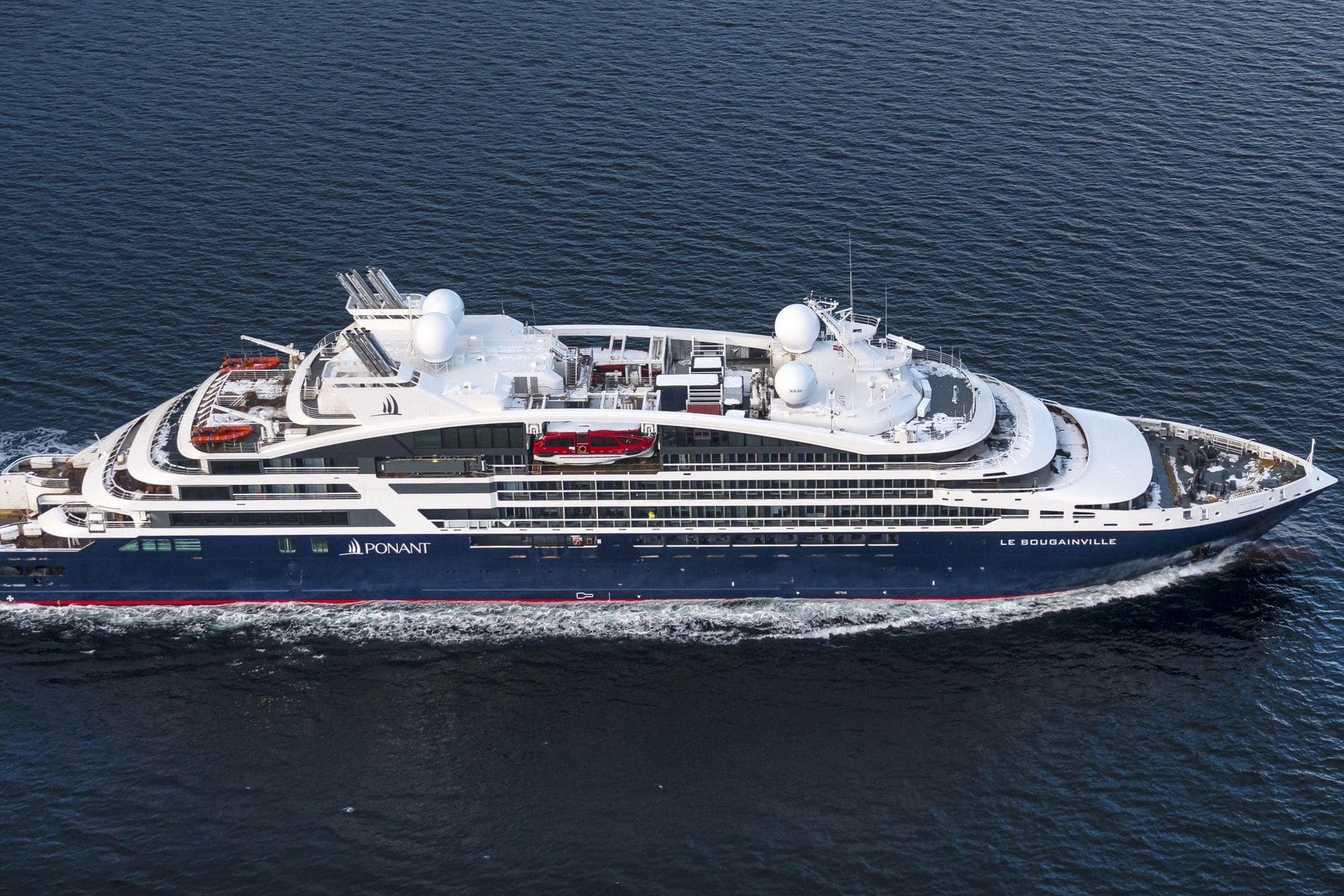
Ponant or Silversea depends on the children’s ages
Choose Ponant for children who will use organized activities, and choose Silversea for independent teenagers or adult children. Ponant offers Kids Club supervision for ages 4 to 13 on selected departures, while expedition guests must be at least 6, or 8 aboard Le Commandant Charcot. Silversea better serves families whose children can follow an adult expedition schedule. Silver Endeavour adds stronger suite service and several dining choices, but parents should not book it expecting a conventional children’s club.
Grandparents paying for three generations should begin with bedroom needs rather than brand preference. Le Champlain has Prestige, Grand and Owner’s Suites accommodating four guests, while its 290-square-foot Deluxe Suite accommodates three. Le Commandant Charcot extends the choice through a four-person Prestige Suite and six-person Owner’s Suite. Silver Endeavour’s Deluxe Veranda Suite can take three guests, but larger family parties may require multiple suites. That arrangement favors older relatives who value separation more than a shared family living room.
Ponant is usually easier for school-age children because its family offer has visible age bands and selected supervised departures. Activities can include workshops, board games, walks, swimming sessions and shore outings. Daily schedules still change with passenger numbers, children’s ages and weather. Silversea’s expedition model centers on naturalist-led exploration, Zodiac operations and flexible landings. That rhythm can captivate a wildlife-focused teenager, yet frustrate a young child who needs predictable entertainment between excursions.
Families needing daily childcare, large play facilities or extensive teen social space should consider another expedition specialist. Lindblad, HX and Quark merit discussion when education, equipment or a particular polar route outweighs suite service. Neither Ponant nor Silversea should be treated like a resort ship with continuous children’s entertainment. Ponant remains the safer first choice for ages 8 to 13. Silversea wins when the party consists mainly of adults and mature teenagers who will join the expedition program together.
Ponant Prestige Suites give families more configurations
Choose the ship before comparing suite labels because Ponant’s layouts vary sharply. Le Champlain carries 184 guests in 92 accommodations. Its 204-square-foot balcony staterooms sleep two, the 290-square-foot Deluxe Suite sleeps three, and the 409-square-foot Prestige Suite sleeps four. Grand and Owner’s Suites each provide 484 square feet for four guests. Those categories let parents keep one child in the same accommodation, although a four-person maximum may still leave grandparents needing an adjoining or nearby room.
Le Commandant Charcot provides the broadest family suite ladder in this comparison. The 245-guest polar ship has 123 staterooms and suites, supported by 215 crew members. Its 430-square-foot Prestige and 516-square-foot Privilege Suites accommodate four guests. The 1,011-square-foot Duplex Suite also takes four, while the 1,237-square-foot Owner’s Suite takes six. These larger categories suit three generations wanting a shared base, but the multilevel Duplex deserves caution for a grandparent with limited mobility.
Silver Endeavour favors private accommodations over squeezing a whole family into one room. The ship carries 220 guests and maintains close to a one-to-one crew ratio. Every suite has a balcony, and the Deluxe Veranda Suite accepts three guests. Parents booking two suites should prioritize a confirmed connecting arrangement or short corridor distance. A connection matters during rough nights, early Zodiac calls and changing clothes after wet landings. Two attractive suite names do not solve supervision when a child cannot safely sleep across the passageway.
Space per guest feels different from headline square footage. Le Commandant Charcot combines larger top suites with more shared expedition facilities, while Le Champlain offers a smaller 184-guest setting and practical four-person categories. Silver Endeavour’s advantage lies in low passenger numbers, all-balcony accommodations and intensive service. Ponant wins when one suite must hold four to six relatives. Silversea wins when the budget allows separate adult and teenage rooms, and everyone prefers privacy after a full day ashore.
Silver Endeavour leads dining while expedition pace rules
Choose Silver Endeavour when dining choice matters after a demanding landing day. The ship has four restaurants, an Arts Café and 24-hour in-suite dining. That selection helps grandparents who want an early private meal while teenagers eat later. Silversea’s open-seating main restaurant also avoids a fixed dinner assignment. Breakfast and lunch hours can move around excursion operations, so families still need flexibility. The ship is not ideal for children who expect familiar food at the same time every day.
Ponant offers a more distinctly French onboard rhythm, with dining fitted around the day’s exploration. Le Champlain’s outdoor bar serves lighter international food from 11 a.m. until 6 p.m., which can help families returning between activities. Le Commandant Charcot also has an outdoor venue, plus main and observation lounges. Parents should expect meal timing and venue operation to follow weather, landings and ship position. A delayed Zodiac return can reshape the afternoon without creating a full resort-style snack schedule.
Service differs more in style than competence. Silver Endeavour emphasizes suite attention and a crew-to-guest ratio near one to one. That works well for grandparents who use in-suite dining or need help coordinating separate routines. Ponant feels more expedition-led, particularly when a naturalist team is moving guests through Zodiac groups, hikes or briefings. Families who enjoy a visible service relationship may prefer Silversea. Those who want meals and hotel operations to stay secondary to the destination may prefer Ponant.
Expedition pace controls both ships, regardless of dining preference. Landings can move, shorten or disappear as sea, ice and wildlife conditions change. Silversea describes this flexibility as central to expedition cruising, with experts adjusting plans around nature. Ponant typically schedules one guided activity per port or expedition day, with lectures before or after. Families should enjoy changing plans rather than merely tolerate them. A rigid bedtime, medical meal schedule or daily remote-school block can become difficult on either line.
Ponant’s age rules favor children, not toddlers
Choose Ponant for children between 8 and 13 who want organized activities and can manage expedition landings. Selected sailings offer Kids Club supervision for ages 4 to 13, with one leader for every eight children and capacity for 24. Expedition voyages accept children from age 6, but Le Commandant Charcot starts at age 8. Parents remain responsible for minors aboard and ashore. Captain and expedition-leader approval can also determine whether a child joins a particular Zodiac landing.
Toddlers are a poor match for either serious expedition product. Ponant does not permit children under 12 months on its voyages, and polar operations impose higher practical limits. A child must understand instructions and act independently during Zodiac embarkation. Strollers have little use on wet beaches, snow or rough paths. Families with a young child may find selected Mediterranean Ponant sailings more workable than polar departures. The same child could spend much of a remote itinerary aboard with one parent.
Teenagers divide the verdict. A teenager who enjoys group games and guided workshops may still prefer a selected Ponant family departure. A focused teenager interested in photography, geology or wildlife may find Silver Endeavour more satisfying. Silversea’s expedition day treats the teenager as another participant rather than building a separate social schedule. That works when the teen wants naturalist briefings and Zodiac outings. It fails when the teen expects peers, late-night activities or a dedicated hangout.
Grandparents should judge stamina before choosing the grandest route. Le Commandant Charcot’s larger Owner’s Suite can house six, but a shared suite does not reduce the physical demands of boarding boats or crossing unstable ground. Silver Endeavour’s private balconies and suite service help on days when one traveler stays aboard. Ponant’s supervised activities may free grandparents for a lecture or rest period. Neither line suits a party requiring reliable assistance during every landing or continuous supervision between scheduled sessions.
Silversea includes service while optional activities remain
Compare inclusions by separating the expedition program from personal choices. Silversea expedition fares generally cover suite accommodations, dining, beverages, gratuities, Wi-Fi and the standard expedition activities offered during the voyage. Silver Endeavour also provides butler service and 24-hour in-suite dining. These inclusions help multigenerational parties avoid repeated onboard decisions. Spa treatments, private purchases and some arrangements before or after the cruise remain separate. Families should budget attention, not just money, for flights and remote embarkation logistics.
Ponant describes its expedition collection as all-inclusive, with naturalist-led Zodiac outings, walks, hikes and lectures forming the core day. One activity per day and port is generally included within the applicable exploration style. Some departures can also feature snorkeling, Arctic dog-sled rides or a polar plunge. Optional activities may carry an extra charge, depending on the port and route. Families should distinguish the standard landing plan from limited-capacity add-ons before assigning each traveler’s preferred activity.
Excursion timing creates the largest planning difference. Ponant releases included and optional excursion details about eight months before departure, with reservations opening roughly two months before sailing. That schedule gives grandparents time to compare walking demands and decide who stays aboard. It can still feel late for a family coordinating several generations. The stated timeline does not apply to Paul Gauguin or Spirit of Ponant. Those ships should be evaluated under their own operating model, not Ponant’s general expedition pattern.
Inclusions cannot fix a poor age or mobility match. A paid kayak slot has little value when a child cannot meet the age requirement or a grandparent cannot enter the craft. Included Zodiac landings also lose value if one adult repeatedly remains aboard with a younger child. Silversea usually gives the non-landing traveler a stronger suite-and-dining day. Ponant gives participating children a clearer organized structure on selected departures. The better fare is the one whose included activities the whole party can actually use.
Antarctica, the Arctic and Pacific reward different families
Choose Antarctica for older children who can accept long travel days and changing landing plans. Silver Endeavour is built around polar operations, while Le Commandant Charcot adds icebreaking capability and an 8-year minimum for expedition children. Both place wildlife, ice and Zodiac access ahead of predictable port calls. Families should favor a shorter polar route for a first expedition unless every traveler already handles small boats well. A large suite cannot compensate for seasickness or missed landings.
Choose the Arctic when the family values varied landscapes and possible community visits alongside wildlife. Ponant operates across Arctic regions and can combine Zodiac outings, hikes, lectures and, on certain routes, dog-sled activities. Le Commandant Charcot is the specialist choice for deeper ice operations. Silversea also uses expedition ships for remote northern itineraries. Arctic access can involve flights through gateways such as Reykjavík, Longyearbyen or Tromsø, making the total trip longer than the published cruise duration.
Choose the Pacific for a warmer expedition with less emphasis on heavy polar gear. Ponant’s wider operation includes Pacific islands, while its smaller ships can reach anchorages unavailable to larger vessels. Silversea’s March 11 to April 3, 2028 Silver Cloud voyage runs 23 days from Valparaiso to Papeete. That length suits grandparents with time to travel and adult children better than a family bound by a two-week school break. Warm-weather routes can still involve wet landings, snorkeling and long Zodiac rides.
Choose Mediterranean or Celtic exploration when younger children need easier logistics and more conventional ports. Ponant’s fleet includes Le Boréal, L’Austral, Le Soléal, Le Lyrial and the smaller Explorer ships. Some Mediterranean summer departures carry the children’s program, making them more practical than a high-polar route for ages 4 to 13. Families gain dockside calls, local transport and guided visits rather than relying entirely on Zodiac landings. These routes remain active, destination-led cruises rather than pool-centered family vacations.
Silver Endeavour wins for privacy and mature teenagers
Choose Silver Endeavour over Ponant when adults want a stronger retreat after shore activities. Every suite has a balcony, and the ship’s near one-to-one crew ratio supports separate routines. Grandparents can dine privately while parents attend an evening briefing. A mature teenager can join the expedition day without being assigned to a children’s group. This arrangement works especially well when the party books two connected or closely placed suites rather than expecting one accommodation to serve every generation.
Choose Silversea when food timing matters more than organized children’s activities. Four restaurants, the Arts Café and 24-hour in-suite dining give Silver Endeavour more ways to handle tired travelers. A grandparent can eat early, parents can attend a lecture, and an older teen can order later. Ponant’s lighter outdoor service from 11 a.m. to 6 p.m. is useful but narrower. Families with allergies or firm dietary routines should discuss actual menus and venue schedules before selecting either ship.
Choose Silversea when the children already behave like adult expedition guests. A teen photographer may value observation areas, expert talks and flexible wildlife stops more than a Kids Club. Silver Endeavour’s 270-degree viewing spaces support that interest when weather keeps guests aboard. Ponant wins again when a young child needs peers, games and supervised sessions. The deciding point is not which line appears grander. It is whether the child wants structured company or direct participation in the adult day.
Choose Ponant instead when four or more relatives need a single shared suite. Le Commandant Charcot’s Owner’s Suite accommodates six, while its Prestige, Privilege and Duplex Suites each take four. Le Champlain also provides several four-person categories. Silver Endeavour works better as a group of private suites. That can improve sleep and bathroom access, yet it may weaken the shared-living-room experience grandparents imagined. The other option wins whenever its layout matches how the family actually spends evenings.
Confirm age eight, suite connections and landing fitness
Start with the youngest traveler’s age on the embarkation date. Ponant expedition voyages generally begin at 6, while Le Commandant Charcot begins at 8. Selected Kids Club departures cover ages 4 to 13, but that service does not make every itinerary suitable for a preschooler. Match each child against Zodiac independence, swimming confidence, cold tolerance and instruction-following. A route becomes a poor family choice when one parent must miss most landings to supervise a child aboard.
Map the sleeping plan before comparing ship atmosphere. Write down who needs a real bed, who can use a third berth and which adults require a separate bathroom. Compare Le Champlain’s three-person Deluxe Suite with its four-person Prestige Suite. On Le Commandant Charcot, compare the four-person Privilege Suite against the six-person Owner’s Suite. For Silver Endeavour, obtain the exact suite numbers and connection type. Nearby doors and genuinely connecting rooms solve different supervision problems.
Test the daily rhythm against every generation’s stamina. Expedition mornings can begin with an early briefing, followed by layered clothing, a Zodiac ride and an uneven landing. Afternoon plans may shift around weather or wildlife. Ponant generally builds the day around one guided activity per port, while Silversea can alter operations as conditions develop. Grandparents should assess boat access and walking surfaces. Teenagers should accept limited peer groups. Parents should plan for shared responsibility when children skip an activity.
Finish with the practical items that can change the booking decision. Record the children’s program dates, operating hours, minimum ages, staff ratio and whether shore participation is supervised. Confirm each suite’s legal occupancy, bed configuration, connection, deck and distance from elevators. Check included activities, paid options, dietary needs, boot sizes, life jackets and medical restrictions. Ask us to confirm those particulars for the exact ship, departure and family roster before any reservation is made.
Questions people ask
Good to know
Questions, answered
Does Ponant provide childcare during expedition shore landings?
Parents should not treat Kid Explorers as drop-off childcare for every landing. Ponant keeps parents responsible for minors aboard and ashore, while the captain and expedition leader control participation when sea conditions or site access become difficult. Selected departures provide supervised activities, but hours follow the itinerary. Ask whether a specific session overlaps the planned Zodiac landing before assuming both parents can go ashore.
Can a child share a Silversea expedition suite with two adults?
Some Silversea categories accept a third guest. The Deluxe Veranda Suite is one example available aboard Silver Endeavour. Families should obtain the exact configuration for their assigned suite. Three legal berths may still feel restrictive when the room also holds parkas, boots and expedition equipment.
Which line is better for a first Antarctica trip with teenagers?
Silversea usually works better for self-directed teenagers who want wildlife, photography and adult-level briefings. Ponant becomes stronger when the teenager prefers organized peer activities and the selected departure actually carries Kid Explorers. Le Commandant Charcot accepts expedition children from age 8, but physical readiness matters more than reaching the minimum. The family should be comfortable with Zodiac boarding, cold conditions and itinerary changes.
Do families need formal clothes on a polar expedition cruise?
Expedition practicality controls daytime clothing on both lines. Families need layers and landing gear rather than elaborate outfits ashore. Evenings are more polished, especially on Silversea, but Silver Endeavour’s expedition setting remains less ceremonial than a traditional ocean voyage. Ponant’s French atmosphere can feel smart without requiring a large formal wardrobe. Pack one refined evening combination, then prioritize weather protection and comfortable indoor clothes.
Is Le Ponant suitable for a multigenerational expedition?
Le Ponant carries only 32 guests in 16 accommodations, creating a markedly smaller setting than Le Champlain or Silver Endeavour. Its Grand Privilege Suite accommodates five in 527 square feet, while the Privilege Suite takes three. The ship lacks the scale of a large children’s facility and is excluded from the general Kid Explorers offer. It suits close adult families who value sailing and shared time.
Still have a question? Book a free 30 minute call or send us the brief.
Sources
Where to go next
- Cruise lines: Who each line is for, and who it isn't for.
- Compare ships: Our ratings for every line we sell.
- Book a free 30 minute call: Tell us who is traveling; we will shortlist the ships we would consider.







