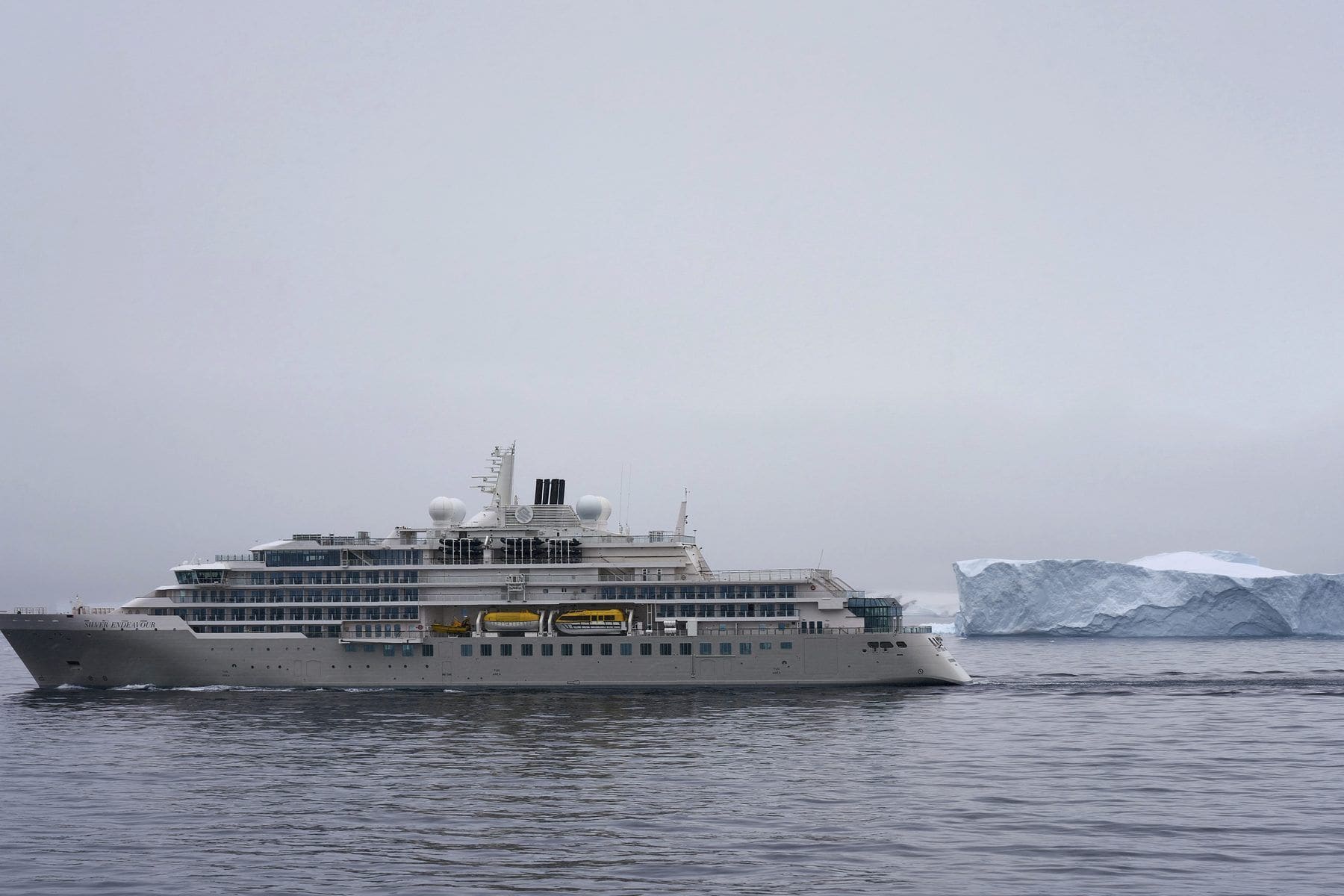
Silver Endeavour favors time-short families; Seabourn favors expedition depth
Choose Silversea for a family that wants fewer sea days, a six-day option or direct access to Antarctica. Choose Seabourn for older teenagers and adults who want included landings, guided walks and a fuller onboard expedition program. Silver Endeavour’s Fly Cruise removes the Drake Passage, while Seabourn builds its offer around Zodiac outings, photography instruction and naturalist-led enrichment. Neither should lead the list when supervised children’s programming matters more than polar exploration.
Silversea makes the stronger first recommendation for grandparents paying for three generations with limited vacation time. Its voyages span six to 13 days, with longer 13- to 15-day expeditions also described. The Fly Cruise uses Silver Endeavour and reaches King George Island by air. Families can therefore reduce open-water days without reducing the trip to a conventional cruise. That distinction matters more than décor when one family member dreads the Drake Passage.
Seabourn suits a group whose youngest travelers can engage with lectures, wildlife observation and changing landing plans. Every Antarctica cruise includes Zodiac tours and landings, an expedition team, guest speakers and digital photography workshops. A parka and day pack are also included. Those features favor independent teenagers, adult children and mobile grandparents. Families expecting fixed port times, predictable daily schedules or resort-style youth facilities should place Seabourn below ships designed around children’s clubs.
The clearest split is logistical rather than social. Silversea offers direct flying or a conventional Drake crossing, while Seabourn emphasizes what happens during the expedition. Silver Endeavour carries 220 guests, and Silver Cloud carries 254. Seabourn’s Antarctica program names Lemaire Channel, Pleneau Island and Deception Island among potential locations. Select the route first, then judge whether the family values saved time, a deeper program or a longer South Georgia extension.
Silver Endeavour’s 110 suites set the space benchmark
Silver Endeavour gives families the stronger small ship starting point, with 110 suites for 220 guests. Silver Cloud has 127 suites for 254 guests, producing the same two guests per suite shipwide average. Those totals do not resolve how a family of four should sleep. The practical comparison is between two suitable adjoining suites and a larger multiroom arrangement, not between headline passenger counts. Price the complete family layout rather than one attractive lead suite.
Seabourn describes every suite as oceanfront, which removes the risk of assigning one generation to an inside cabin. Its ships also favor an intimate atmosphere rather than a large resort layout. That works well when grandparents and teenagers need nearby rooms but can manage separate sleeping spaces. Families should focus on occupancy limits, bathroom count and the door arrangement between suites. A nominally large suite can still be awkward when two adults must share it with older children.
Silver Endeavour has nearly one crew member per guest, with 207 crew serving 220 passengers. Silver Cloud carries 212 crew for 254 guests. These figures suggest a particularly small operating scale aboard Silver Endeavour, though they do not determine family service by themselves. The ship also has a Mud Room, Observation Lounge, library, fitness center and pool deck. Those separate spaces give three generations places to regroup without spending every hour inside one suite.
Space becomes most important during weather delays and sea days. A six-day Fly Cruise places less pressure on the suite than a 10- to 12-day Peninsula voyage crossing the Drake Passage. A 13- to 15-day South Georgia expedition makes storage, seating and a second bathroom more consequential. Families should reject any layout that depends on daily sofa-bed conversion without enough daytime seating. Grandparents usually benefit more from an adjacent private suite than from adding everyone to one larger room.
Silver Cloud dining versus Seabourn’s included venues
Seabourn has the clearer dining proposition for a multigenerational account. Every dining venue is included, along with premium spirits, wines, caviar, welcome Champagne and an in-suite bar. That structure reduces discussion about which restaurant carries a charge. It also lets grandparents and adult children separate for a meal without creating different spending expectations. Personalized service and smaller ships support a relaxed rhythm, though expedition operations will still set the day’s real schedule.
Silversea offers four dining options on both Silver Endeavour and Silver Cloud. Silver Cloud’s four restaurants serve a ship carrying 254 guests, while Silver Endeavour’s serve 220. The smaller guest count may make Silver Endeavour attractive when a group wants repeated family meals without a large dining complex. Four choices remain fewer than some resort ships provide. Families with strict diets should judge usable menus and opening hours, not the raw number of venues.
Expedition pace overrides restaurant plans on both lines. Wind, weather and ice can move a landing, extend a Zodiac outing or change the day’s destination. Breakfast must sometimes support an early departure, while lunch can fall around a returning group. Families do best when they accept that the dining schedule serves the expedition. Travelers who expect the same table, the same time and an uninterrupted evening routine may find Antarctica unnecessarily frustrating.
Formality should not drive this decision as strongly as practical clothing and timing. Seabourn supplies an expedition-grade parka and day pack, while Silversea uses Zodiacs on most destination days. Both facts point toward functional daytime dress. Families still need comfortable evening clothes, but elaborate wardrobes compete with cold-weather gear and airline limits. The better line is the one whose dining hours work for the youngest traveler and whose service can keep three generations moving together.
Zodiacs shape the fit for children and grandparents
Children should be old enough to treat wildlife, lectures and shore operations as the entertainment. Seabourn’s program centers on landings, guided nature walks, photography and expedition commentary. Silversea uses Zodiac boats almost every day, sometimes as the only means of boarding or leaving the ship. A child who resists cold clothing, waits poorly or needs constant organized play can control the entire family’s experience. Choose neither line solely because a small ship sounds calm.
Teenagers are the strongest family fit, particularly when they enjoy photography, geology or wildlife. Seabourn provides photography workshops and guest speakers, while Silversea itineraries can visit penguin colonies, whale-watching bays, heritage huts and research bases. Independent teens can share the day with grandparents, then use lounges or fitness spaces separately. A teenager seeking waterslides, large sports courts or evening youth parties is likely to find the expedition structure restrictive, regardless of suite size.
Grandparents should assess transfers and small-boat access before choosing by brand. Silver Endeavour’s Fly Cruise exchanges the Drake crossing for flights through southern Chile and onward to King George Island. That can help travelers who dislike extended sea passages, but it does not remove Zodiac operations after arrival. Seabourn’s guided walks and landings similarly require comfort with changing surfaces and outdoor conditions. The least mobile family member should determine the acceptable itinerary, not the most enthusiastic adult.
Adult family groups have the broadest choice because they can divide without depending on childcare. One pair can attend a lecture while another uses the Observation Lounge or fitness center. The group can reunite for dinner and compare the day’s sightings. Seabourn works better when most members will join the included program. Silversea works better when route length and Drake avoidance divide the family. A reluctant traveler should not be carried by the majority into a demanding 15-day expedition.
Seabourn includes parkas; Silversea Fly Cruises change logistics
Seabourn bundles the clearest expedition package. Zodiac tours, landings, guided nature walks, digital photography workshops and onboard expedition commentary are included. Guests also receive an expedition-grade parka and day pack. The enrichment schedule adds guest speakers, while wildlife viewing occurs from ship and shore. These inclusions have practical value for a family account because several generations can join the core program without deciding separately which standard activities deserve priority.
Kayaking and submersible experiences sit outside Seabourn’s included core. Families should treat those activities differently from the included Zodiac program and guided walks. Interest can vary sharply across three generations, and participation may depend on the specific sailing and operating conditions. A teenager may value a kayak place more than a grandparent, while another family may prefer photography instruction. Do not let one optional activity determine the line before the group agrees on its shared priorities.
Silversea’s important inclusion is logistical on Fly Cruise arrangements. Beginning in 2026, guests start through The Cormorant at 55 South in Puerto Williams. The wider routing uses a charter connection from Santiago toward southern Chile before the flight to King George Island. That structure is part of the expedition design rather than an ordinary independent port arrival. Families should compare the whole air-and-ship sequence with a straightforward Puerto Williams embarkation and Drake crossing.
Silversea’s Antarctica pages establish the ships, route choices, guest capacities and four dining options, but the family budget still depends on the chosen voyage. Build the comparison around the exact fare conditions rather than assuming both brands bundle identical items. Air segments, hotels, kayaking, submersibles, specialty dining rules, gratuities and transfers can change the practical total. The six-day Fly Cruise deserves a separate worksheet from a 12-day sailing because its transport structure is fundamentally different.
Puerto Williams and King George Island favor Silversea
Silversea is stronger when itinerary choice begins with the Drake Passage. Families can sail from Puerto Williams aboard Silver Cloud or Silver Wind, crossing toward the Antarctic Sound, Antarctic Peninsula and South Shetland Islands. The conventional Peninsula trip takes about 10 to 12 days. Silver Endeavour offers the opposite approach, reaching King George Island by air. That choice lets a family decide how much ocean passage belongs in the vacation before debating restaurants or suite layouts.
The six-day Silver Endeavour Fly Cruise is the clearest answer for a narrow school-break window. An eight-day expedition adds time and may operate with or without a Drake crossing. Families with 13 to 15 days can push farther into the Southern Ocean and add South Georgia, sometimes with the Falkland Islands. These are materially different trips. The longer choice favors travelers who value wildlife and expedition depth more than a compact calendar.
Puerto Williams became more important to Silversea’s Fly Cruise structure later in 2026, replacing Punta Arenas in that operation. The Cormorant at 55 South became the starting point for Fly Cruise guests in 2026. King George Island remains the Antarctic air gateway, reached after the South American flight sequence. Those moving parts favor a family willing to follow a managed chain of flights. A group preferring one embarkation and continuous ship travel should select the sea route.
Seabourn is stronger when named landing areas matter more than multiple transport formats. Its Antarctica program identifies Lemaire Channel, Pleneau Island and Deception Island, while the wider region can include South Georgia and the Falkland Islands. New 2026-2027 winter and spring voyages are open, and new Antarctica expeditions are planned for 2028. Weather and ice can alter every final route, so the named locations describe intent rather than a fixed port sequence.
Seabourn wins when included expedition days matter
Seabourn wins over Silversea when the family wants a common activity plan already built into the voyage. Included landings, walks, photography sessions and expedition talks give grandparents, parents and teenagers a shared daily framework. The parka and day pack also simplify group preparation. This advantage is strongest for an active family that would otherwise debate each activity. It weakens when several members expect to remain aboard or cannot use small boats and uneven landing sites.
Silversea wins over Seabourn when avoiding the Drake Passage settles the booking. Silver Endeavour’s Fly Cruise removes several potential sea days and can deliver a six-day Antarctica itinerary. It also limits the ship to 220 guests and provides 110 suites. That combination suits time-short adults, families working around school calendars and grandparents concerned about a long crossing. The trade remains a flight-dependent operation followed by the same polar weather and small-boat realities.
Silver Cloud wins when the family wants a traditional crossing on a ship with more shared venues. Its 254 guests can use the Panorama Lounge, Explorer Lounge, Observation Lounge, Photo Studio, fitness center and pool deck. The ship also carries 20 Zodiacs and has four dining choices. Seabourn should remain ahead if included beverages and dining simplicity matter more than those named spaces. The better ship depends on how the group expects to spend delayed or quiet hours.
A longer Silversea extension wins when South Georgia is central rather than optional. A Seabourn voyage wins when its listed landing style and included instruction match the family’s interests more closely. Neither line wins for a party that needs a fixed daily plan or assured landings. Antarctica operations respond to wind, ice and weather. Families should accept that flexibility before buying more space, adding days or choosing an air shortcut around the Drake Passage.
Confirm suite connections before choosing Silversea or Seabourn
Start with the family’s hardest constraint, not its favorite brand. Choose among six days, eight days, 10 to 12 days or 13 to 15 days before comparing suites. Decide whether anyone refuses the Drake Passage and whether every traveler can use a Zodiac. Remove any route that fails those tests. The remaining choice will usually separate Silver Endeavour’s Fly Cruise from a longer Silversea crossing or Seabourn’s included expedition structure.
Map every traveler to an actual bed and bathroom before holding space. Record which adults need privacy, which children can share and whether grandparents require a nearby door. Compare two connected suites against one larger accommodation using total seating and storage. Silver Endeavour has 110 suites, while Silver Cloud has 127, but inventory totals cannot answer a six-person layout. The exact deck position matters when several generations must meet quickly for a landing.
Test the daily plan against the family rather than an imagined average passenger. Count who will attend lectures, photography workshops, guided walks, Zodiac trips and optional kayak or submersible sessions. Seabourn becomes stronger as participation rises. Silversea becomes stronger when flight access, six-day duration or a South Georgia extension solves the larger problem. A split family may need the ship with better indoor spaces, even if another route looks stronger on a map.
Review the complete trip from the first flight through the last transfer. Include Santiago, Puerto Williams, King George Island and any stay before the cruise relevant to the chosen Silversea route. For Seabourn, examine the expected landing pattern and included equipment across the 2026-2027 or 2028 program. Confirm exact suite occupancy, connecting doors, minimum ages, mobility rules, dining hours, flight terms and optional expedition charges with a specialist before placing the booking.
For the two lines head to head on every point, see the side-by-side comparison.
Questions people ask
Good to know
Questions, answered
Does an Antarctica Fly Cruise land on an ice runway?
Silver Endeavour’s passengers fly to King George Island aboard an aircraft adapted for Antarctic operations. The landing uses a gravel runway rather than an ice runway. Flying avoids the Drake Passage but does not create a weather-proof arrival. The aircraft segment remains part of a polar operation, followed by Zodiac-based exploration after passengers join the ship.
Which ship has better indoor spaces for a family?
Silver Endeavour includes an Arts Café, library, Observation Lounge, Explorer Lounge, Mud Room and pool deck. Silver Cloud adds spaces such as the Panorama Lounge, Photo Studio and Dolce Vita. The right choice depends on how independently each generation spends downtime. A library may matter more to grandparents, while teenagers may value a café or photo space.
What can families see beyond penguin colonies?
Silversea routes may include whale-watching bays, old whaling stations, heritage huts and international research bases. A South Georgia itinerary can also introduce the story of Ernest Shackleton through a local museum and memorial. Seabourn’s possible locations include the volcanic landscape of Deception Island. Actual calls remain controlled by ice, wind and landing conditions.
Is South Georgia worth adding for a multigenerational group?
South Georgia makes sense when wildlife and expedition history justify a 13- to 15-day commitment. Gold Harbour is among the island’s notable landing areas, and some routes also include the Falkland Islands. The extension is less suitable for a child with a short attention span or a grandparent who finds repeated small-boat operations tiring. It should be a shared priority.
Still have a question? Book a free 30 minute call or send us the brief.
Sources
Where to go next
- Cruise lines: Who each line is for, and who it isn't for.
- Compare ships: Our ratings for every line we sell.
- Book a free 30 minute call: Tell us who is traveling; we will shortlist the ships we would consider.