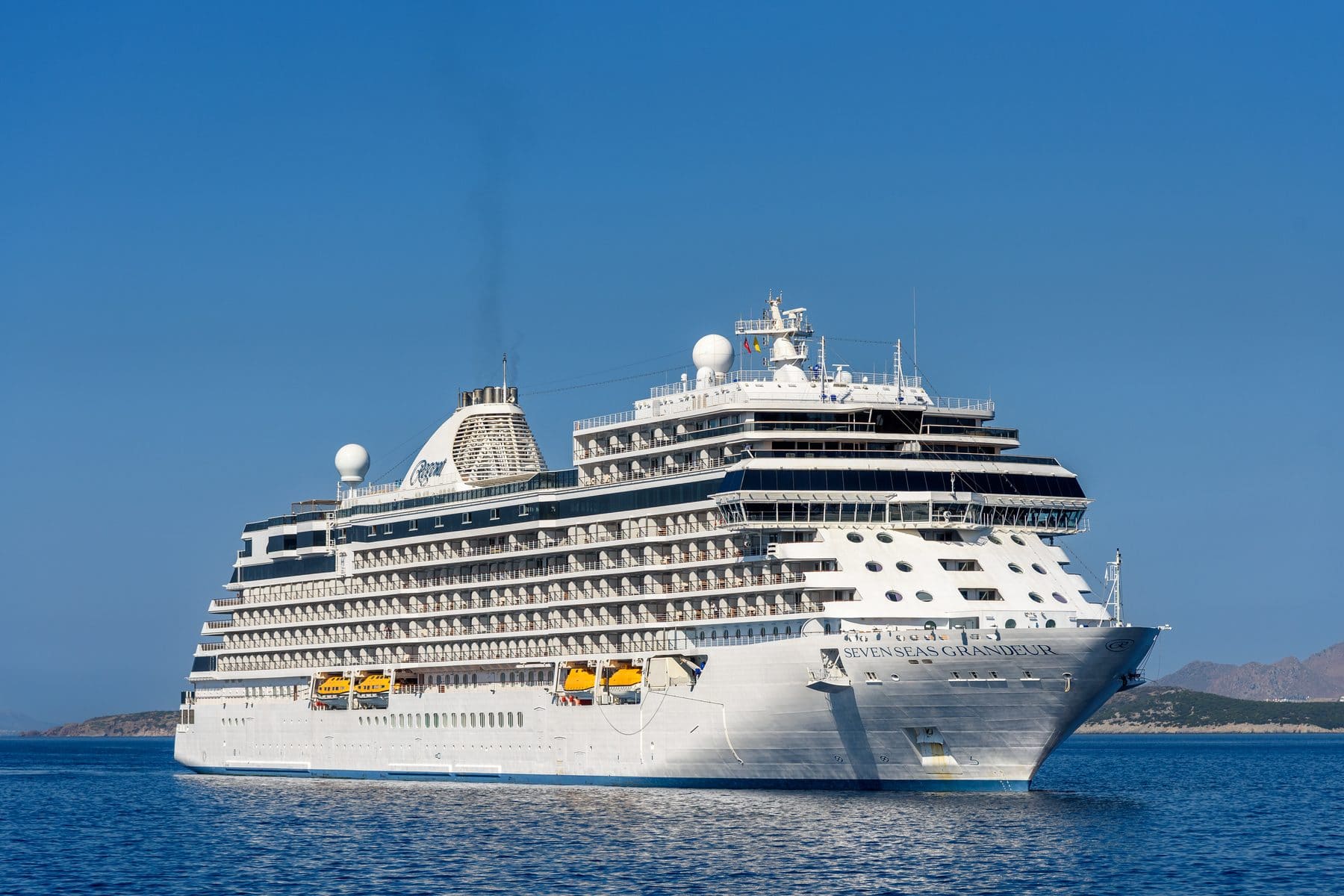
Seven Seas Explorer suites suit private families
For multigenerational groups needing distinct rooms, reserve verified connecting accommodations aboard Seven Seas Explorer. The Regent Suite instead houses as many as six guests across two bedrooms under one roof. Base the choice on sleeping privacy, bathroom access and evening routines rather than sheer square footage. This ship fits families planning included shore trips and dinners in its adult-oriented restaurants. It is a weaker match if supervised programming must occupy children throughout every sea day.
The Regent Suite makes sense for a closely connected party willing to share common space. Its two bedrooms, 2.5 bathrooms and dining room create a central meeting place without assigning grandparents a standard sofa bed. Two balconies and three walk-in closets help six guests distribute coats, formal clothes and shore gear. The private dining room seats up to 12, so relatives booked elsewhere can gather comfortably. This choice suits a milestone trip more than independent couples keeping different daily schedules.
Connected lower-category suites usually serve independent adults better than one residence. Closing the internal door gives grandparents quiet mornings while parents handle bedtime next door. Separate suite accounts and duplicate bathrooms also reduce friction during early excursion departures. The trade-off is a divided living area rather than one large family room. Seven Seas Explorer carries 748 guests across 374 suites, so its atmosphere remains adult and orderly even when several generations occupy neighboring accommodations.
Families centered on preschool care or constant teen entertainment should choose another ship. Regent’s strongest case is space, service and time ashore, not a large children’s complex. Club Mariner appears only on selected sailings, which makes departure choice central to the decision. The ship is also a poor fit for relatives expecting shorts and athletic shoes in every evening venue. Its social spaces follow an elegant-casual rule after 6 p.m., although jackets remain optional.
Regent Suite or two Explorer suites
Space per guest improves when the layout matches the family structure. The Regent Suite provides 3,672 interior square feet plus a 1,417-square-foot balcony on Deck 14. Its total footprint reaches 5,089 square feet and accommodates six guests. That sounds decisive, yet two connected suites can provide a more useful division between households. Separate entrance doors, bathrooms and sleeping zones matter when grandparents rise early, teenagers sleep late and parents need a room that closes securely.
The Regent Suite’s strongest feature is its true two-bedroom plan. Both rooms sit apart from the living and dining areas, while 2.5 bathrooms prevent the morning congestion common in a single large bedroom suite. The primary bedroom’s bed does not divide into twins, which can determine room assignments before anyone considers décor. A heated MiniPool Spa sits across two private balconies. The in-suite sauna, steam room and Jacuzzi favor adults who will actually use private wellness space.
Named alternatives serve smaller groups with different priorities. The Signature Suite supplies two bedrooms, 2.5 bathrooms, a large living room and a wraparound balcony. The Grand Suite has one primary bedroom and two full bathrooms, making it comfortable for a couple hosting nearby relatives rather than housing everyone. An Explorer Suite has one bedroom and 1.5 bathrooms. A Penthouse Suite adds butler service and priority reservations, but it remains a one-bedroom answer rather than a multigenerational residence.
Connecting doors require more scrutiny than category labels. Explorer’s deck plans identify connecting accommodations, but families should select the exact paired suite numbers rather than assume every matching category joins internally. Balcony partitions are not a substitute for an interior connection, especially with younger children. A useful pair keeps grandparents and parents close without placing a child alone behind a corridor door. Door location also affects furniture placement, nighttime noise and how naturally both suites function as one family area.
Explorer dining rewards coordinated family schedules
Dining works best for families willing to coordinate their evenings. Seven Seas Explorer offers Pacific Rim, Chartreuse and Prime 7 alongside its main dining choices. Specialty reservations reward advance planning, particularly when six relatives want one table at the same hour. A connecting pair does not automatically place the whole party under one dining priority. The lead guest should link every suite before restaurant requests open, then choose nights around long excursions and planned family celebrations.
The Regent Suite removes much of that reservation pressure. Residents receive a guaranteed specialty restaurant reservation each night, subject to the applicable operating terms. Its separately located dining room seats 12, creating another practical option when grandparents prefer a quiet meal. Twenty-four-hour in-suite dining also helps after late shore days. Daily canapés and a replenished in-suite bar support informal gatherings without requiring six people to dress and leave together every evening.
Butler service becomes valuable when a group uses it to solve logistics. Regent Suite guests have a personal butler, while Penthouse and several larger categories also include butler attention. The useful requests are concrete: coordinate an in-suite meal, manage garment pressing or help align restaurant arrangements across linked bookings. A butler does not replace family decisions about dining times. Groups with incompatible schedules still benefit more from separate suites and occasional shared meals than from one large residence.
Explorer’s pace is calm rather than child-led. Adults can spend a long dinner at Prime 7 while older teenagers dine with them, but younger children may find repeated formal meals tiring. Families should alternate specialty dinners with flexible meals and room service after demanding port days. The ship suits grandparents who enjoy sitting through several courses and parents whose children already handle adult restaurants. It is not designed around rapid dining, character meals or continuous youth programming between courses.
Club Mariner serves ages 5 through 17
Club Mariner can help, but it should not drive the booking without a sailing-specific check. The supervised program divides participants into ages 5 through 8, 9 through 12 and 13 through 17. Those bands suit siblings and cousins who want time apart from adults. Club Mariner operates only on selected departures, so its availability matters more than the ship name. Families needing daily care should not treat a possible program as assured childcare throughout their vacation.
School-age children fit Explorer better than toddlers. A child comfortable with restaurant meals, coach excursions and quiet public rooms can participate in the family’s day without needing a large activity deck. Teenagers often appreciate a separate connected suite, particularly when the internal door keeps grandparents nearby. Children under 16 cannot enter the spa or fitness center. That rule removes two adult spaces from their sea-day options and increases the importance of Club Mariner on itineraries with several days aboard.
Grandparents gain the most when the family preserves some independence. A connected pair lets them rest after lunch while parents and children continue ashore or use the pool. The Regent Suite instead suits grandparents who enjoy hosting and do not mind shared routines. Mobility also affects category choice. Deck 14 provides exceptional space, yet relatives should consider elevator routes and the distance from dining rooms before selecting the largest accommodation solely for its measurements.
This ship does not suit every three-generation group. Families seeking nursery care, water slides or structured activity from morning until midnight should look elsewhere. Relatives who resist an evening dress standard may also feel constrained after 6 p.m. Refined denim, slacks and collared shirts meet Regent’s elegant-casual guidance, with jackets optional. T-shirts, baseball caps, shorts, athletic shoes, flip-flops and bathrobes do not meet the rule in social areas during those evening hours.
Explorer inclusions favor families going ashore
Regent’s inclusions favor families who plan to explore together. Unlimited shore excursions, fine dining, beverages and Wi-Fi form the central package. That structure reduces separate decisions for grandparents paying across several suites. It also makes participation easier when relatives have different personal spending habits. Included excursions are most valuable when everyone can manage the stated activity level. A family requiring private pacing, child seats or individualized mobility support may still need arrangements outside the standard excursion schedule.
The Regent Suite adds benefits that affect a longer family trip. Valet laundry and dry cleaning reduce packing pressure, while priority access applies to online shore-excursion and dining reservations. Four Wi-Fi logins across four devices are included for the suite. A one-night hotel package before sailing includes ground transfers, breakfast and porterage. These benefits belong to that accommodation and should not be assumed for relatives booked in a separate lower category without checking their own category terms.
Smaller suites still carry substantial onboard value. Serenity Suite amenities include valet laundry, a replenished minibar, 24-hour in-suite dining and two Wi-Fi logins across two devices. Distinctive Suites add priority check-in, bath-amenity choices and personal butler service. The practical comparison is not simply included against excluded. Families should compare which benefits attach to each suite in a connecting pair, because category differences may create separate reservation windows or service levels within the same traveling party.
Private family preferences can still create extras. A personal car and guide accompanies the Regent Suite’s stated benefits, while ordinary included excursions follow Regent’s published group format. Spa treatments beyond accommodation benefits, highly individualized touring and purchases ashore remain separate decisions. Gratuity anxiety is lower within Regent’s broad package, but a family should still set expectations for discretionary spending. The greatest value appears when relatives use the restaurants, beverages, laundry and excursion program rather than remaining aboard in port.
Explorer’s July 2027 Alaska week stays active
Alaska gives a multigenerational Explorer party a clear shared purpose. The seven-night voyage leaving Whittier on July 14, 2027 reaches Vancouver on July 21, 2027. Its compact duration helps grandparents fund several suites without committing everyone to a long absence. Summer timing also aligns with many school schedules. The route places scenery and ports at the center of each day, which suits children who engage more readily ashore than during long stretches of adult shipboard life.
The first half balances scenic cruising with manageable port calls. Seven Seas Explorer cruises Hubbard Glacier on July 15, 2027, then visits Sitka on July 16, 2027. Skagway follows on July 17, 2027, and Juneau on July 18, 2027. Those consecutive days reward a family that organizes breakfast and departure times the night before. Connected suites help because each household can prepare separately while still meeting inside before leaving for the gangway.
The final days maintain the itinerary’s active rhythm. Ketchikan arrives on July 19, 2027, followed by Inside Passage cruising on July 20, 2027. Vancouver ends the voyage on July 21, 2027. One scenic day near the finish provides recovery after four port days. Families with limited stamina should avoid booking demanding excursions at every stop. Regent’s included choices support variety, but grandparents and children may need different activity levels even when everyone shares the same ship and suite arrangement.
Longer Regent voyages demand a different family test. Seven Seas Splendor’s 2027 world cruise leaves Miami on January 11, 2027 for either 126 nights to Rome or 140 nights to New York. Those durations illustrate why a workable suite layout matters more as weeks accumulate. Explorer’s seven-night Alaska sailing asks less of school calendars and family compatibility. Grand voyages suit grandparents with time to travel and flexible adult children, but they rarely solve the scheduling needs of school-age grandchildren.
Explorer loses when children need daily structure
Another line wins when children’s facilities decide the vacation. Explora I and Explora II each offer 82 connected-suite combinations designed for several generations. The choices span Ocean Suites, Ocean Penthouses and Ocean Residences. That breadth gives families more ways to separate adults and children without moving to one exceptional top category. Explorer remains stronger for a Regent-style excursion and dining package, but Explora offers the clearer accommodation story when several households require confirmed connections across multiple price and space levels.
Explora’s Nautilus Club provides a more dependable daily framework. It serves ages 6 through 17 and operates from 9 a.m. until midnight. Children ages 3 through 5 may attend specific sessions with a parent or guardian. PlayStation 5, Xbox, Nintendo Switch, virtual-reality equipment, board games and a multilingual digital library create varied indoor options. Sports sessions, technology tournaments, painting and crafts further separate its youth offer from Explorer’s selected-sailing Club Mariner model.
Explora also handles family and adult zones more deliberately. Younger guests receive reserved periods at the Sports Court and one heated pool. Helios Pool and Bar on Deck 12 remains adults-only, preserving a quiet forward retreat. During busier periods, other spaces may receive family or adult designations. Parents gain defined places for children without surrendering every pool deck to youth activity. Grandparents who want predictable quiet time may value that division more than Explorer’s more uniformly adult atmosphere.
Explora wins for families combining infants, preschoolers and teenagers. Hosts can provide cribs, blankets, linens and pillows on request, while infants from six months to two years can receive in-suite toys. Its package covers nine dining experiences, in-suite dining, beverages, spa thermal access, group fitness, Wi-Fi and onboard gratuities. Regent wins when the family values included shore excursions more highly. Explora wins when connected inventory, longer youth-club hours and age-specific onboard equipment carry greater weight.
Confirm Explorer cabin numbers before paying
Start with the sleeping plan, not the suite name. Assign every traveler a real bed, bathroom and storage area before comparing amenities. Decide whether the primary couple can use a fixed king bed and whether children may sleep beyond a closing bedroom door. A Regent Suite works for six on paper, but family comfort depends on relationships and sleep habits. Two connecting accommodations may work better when each household wants a private entrance and control over its morning schedule.
Match the suite to the itinerary’s hardest day. On the July 14, 2027 Alaska departure, consecutive calls at Sitka, Skagway, Juneau and Ketchikan create repeated early preparations. Ask how far the proposed suites sit from elevators and the usual route ashore. Review whether a connecting door reduces usable wall space or changes the sitting area. Families using strollers, walking aids or several layers of outdoor clothing need practical circulation more than decorative space or a larger balcony.
Align privileges across every reservation in the family. Ask when dining and shore-excursion booking opens for each category, then link all reservation records. Record who receives butler service, laundry, hotel benefits and priority access. Confirm that the chosen departure operates Club Mariner for the relevant ages. Families booking ages 5 through 8 and 13 through 17 need to know whether both groups will run, rather than relying on a general youth-program description.
Set the family’s onboard rules before final payment. Agree on evening clothing, independent teen access, excursion intensity, meal times and who may charge purchases. Decide whether grandparents want daily shared dinners or only two planned gatherings. Choose backup arrangements for missed ports or a child declining an excursion. Ask us to confirm the exact connecting suite numbers, internal-door configuration, occupancy, bed setup, Club Mariner operation and category-specific benefits for the selected 2027 departure.
Questions people ask
Good to know
Questions, answered
Can the primary bed in the Seven Seas Explorer Regent Suite become twins?
No. The primary bedroom’s king-size Savoir bed is fixed and cannot convert into two beds. That detail matters when six relatives divide the Regent Suite’s two bedrooms. Confirm the second bedroom’s setup and every additional sleeping position before assigning grandparents, adult siblings or children. A connecting pair may provide more flexible bed arrangements when several adults do not share beds.
Which Seven Seas Explorer decks have Serenity Suites?
Serenity Suites are on decks 7, 8, 9 and 10. Each measures 332 square feet inside, with an 83- to 132-square-foot balcony, and accommodates up to three guests. They can suit parents with one child or a couple beside relatives. Use the current deck plan to identify a genuine internal connection rather than choosing two nearby suite numbers independently.
How large is Seven Seas Explorer compared with its guest count?
Seven Seas Explorer is 735 feet long and 102 feet wide, with 55,254 gross tonnage and accommodation for 748 guests. Those proportions support substantial suites without creating a resort-scale ship. Families should still compare walking routes carefully. A suite at one end of the ship may challenge a relative with limited mobility even when the overall guest count feels manageable.
Is Seven Seas Navigator better for a smaller family group?
Seven Seas Navigator can appeal to a smaller party wanting a more compact Regent ship. It carries 496 guests in 244 suites across eight decks. Its Signature Suite measures 851 to 1,067 square feet and accommodates up to six, despite having one bedroom. That layout suits a family comfortable with shared sleeping space, but Explorer provides stronger two-bedroom choices for adults requiring bedroom privacy.
Does a Seven Seas Explorer Signature Suite have two balconies?
Families needing two full bedrooms can consider the Signature Suite, with 2.5 bathrooms and a large living room. Two balcony sections form its wraparound outdoor space. This layout makes sense when relatives want proper bedrooms without the Regent Suite’s private spa complex. Ask us to verify occupancy limits and the precise layout aboard your sailing, since configurations can differ among ships.
Still have a question? Book a free 30 minute call or send us the brief.
Sources
Where to go next
- Family cruises: Which ships genuinely work with children, and which quietly don't.
- Compare the lines: Families, children, food and formality, side by side.
- Book a free 30 minute call: Tell us who is traveling; we will shortlist the ships we would consider.