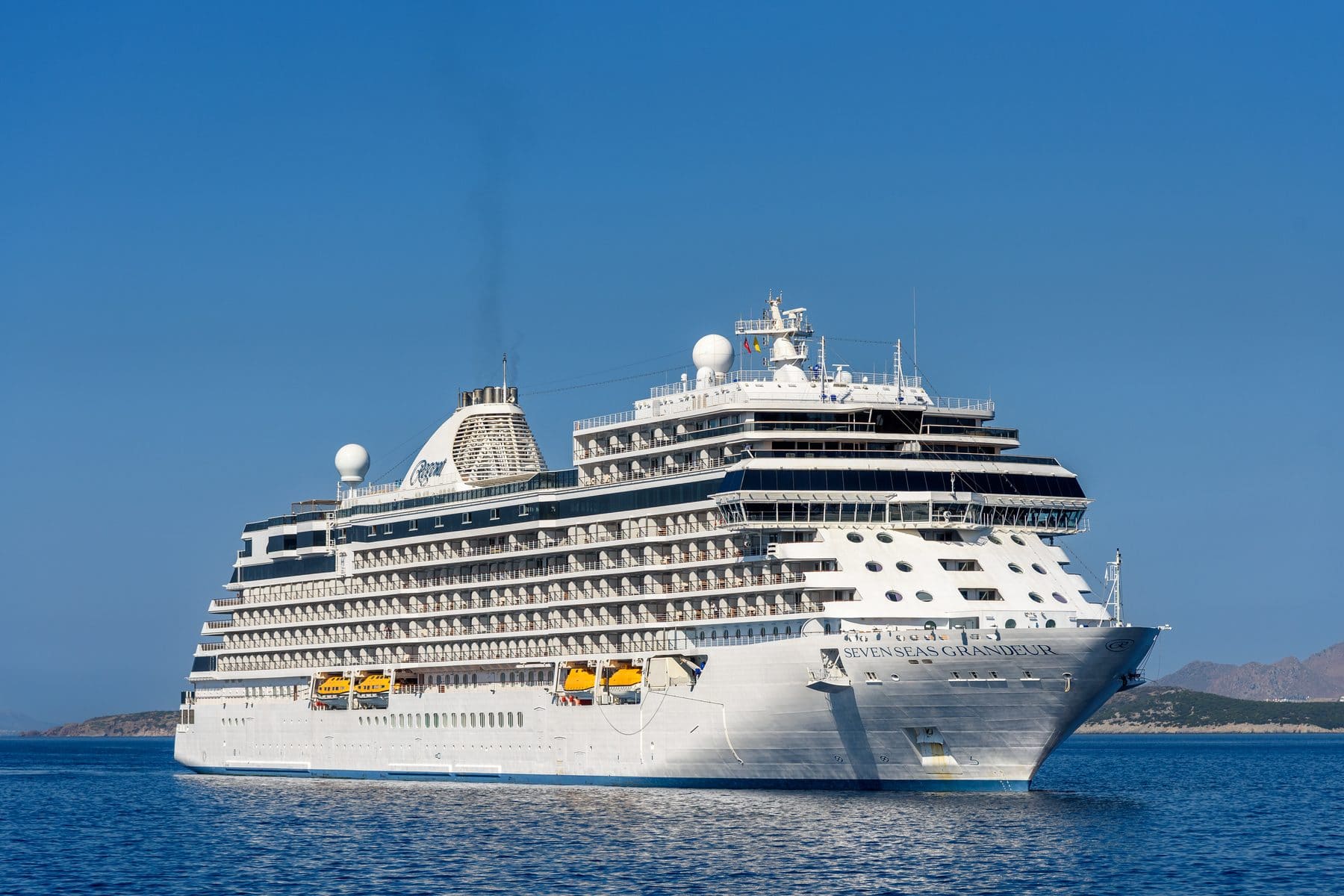
Regent Penthouse wins for simplicity; Seabourn for groups
Choose a Regent Penthouse Suite when two travelers want broad inclusions, a personal butler and fewer charges to track. Choose Seabourn when room configuration matters more, especially for families considering a Penthouse Suite, Signature Suite or Wintergarden Suite connected to another veranda accommodation. Regent makes the trip easier to budget before departure. Seabourn provides more ways to build private space around several adults, teenagers or grandparents who want proximity without sharing every room.
Regent is our first choice for a couple taking its first high-end cruise. The Penthouse tier adds a butler and daily canapés, while Concierge-level benefits already include priority access to dining and shore-excursion reservations. That structure reduces planning friction on Seven Seas Grandeur, Seven Seas Splendor and their fleetmates. It is less compelling for travelers who dislike organized excursions or expect to spend most port days making independent plans.
Seabourn is the stronger answer for a group that will use the suite as a gathering place. Signature and Wintergarden Suites can join adjoining Veranda Suites in Grand Suite arrangements, creating several sleeping spaces, bathrooms and verandas. That distinction matters when grandparents pay for three generations but still want a closed bedroom. The choice is less persuasive for two travelers who would leave a large living room and dining table unused during most days.
Neither line wins every comparison. Regent emphasizes an inclusive trip around the Penthouse, while Seabourn spreads the choice across several premium categories and two ship types. Couples should usually begin with Regent. Groups should begin with Seabourn. Travelers considering polar regions should also examine Seabourn Venture and Seabourn Pursuit. Anyone prioritizing a larger mainstream luxury fleet should compare Regent’s seven named ships before choosing a particular suite layout.
Seven Seas Grandeur meets Seabourn Wintergarden Suite
Regent’s Penthouse Suite reaches 644 square feet from entrance to balcony on the largest cited layout. It separates the bedroom and living area and adds a walk-through closet. The category appears across Seven Seas Grandeur, Seven Seas Splendor, Seven Seas Explorer, Seven Seas Voyager, Seven Seas Mariner and Seven Seas Navigator. Ship choice still matters because the stated maximum does not mean every Penthouse on every vessel has the same dimensions or plan.
Seabourn’s standard Penthouse Suite provides 436 square feet inside and a 98-square-foot veranda. Its separate bedroom, dining area and living room make it more useful than a studio-style suite when one person rises early. The footprint is smaller than Regent’s stated maximum, yet the division between sleeping and sitting space remains valuable. Third-guest accommodations exist in Penthouse, Penthouse Spa and Penthouse Panorama categories, although not every suite within a category accepts another guest.
Seabourn moves well beyond the basic Penthouse when a party needs substantial common space. The Signature Suite has 859 square feet inside, a 493-square-foot veranda and dining for four to six. The Wintergarden Suite has 989 square feet inside, a 197-square-foot veranda and dining for six. Both add a guest bathroom and wet bar. Those details make either category a more convincing headquarters for several adults than a standard Penthouse booked mainly for two.
Seabourn’s Penthouse Spa Suite occupies the middle ground. It has 536 to 539 square feet inside, plus a veranda measuring 167 to 200 square feet. The Owner’s Suite varies more, with 526 or 593 square feet inside and a veranda of 133 or 354 square feet. These variations reward careful plan selection. A category name alone cannot tell a family how much outdoor space, separation or usable dining capacity it will receive.
Butlers and course-by-course dinners set the pace
Regent provides the more formal service relationship in a Penthouse Suite. A personal butler introduces the accommodation, reviews bar preferences, unpacks on request, arranges spa appointments and handles shoe shining. The same person can organize canapés or an anniversary surprise. This arrangement suits travelers who want one contact coordinating details. It may feel unnecessary to guests who prefer calling the appropriate department themselves and rarely ask anyone to unpack or manage personal plans.
Seabourn divides suite care between a Personal Suite Host and Suite Attendant. Their work centers on the room, requested pillows, refreshments and daily preferences rather than a named butler model. On Seabourn Venture and Seabourn Pursuit, a host may prepare a bath or deliver a snack after an expedition day. The style feels less ceremonial at the suite door. Travelers who equate penthouse status with a dedicated butler will find Regent’s structure clearer.
Private dining is more developed inside Seabourn’s premium accommodations. Dinner can arrive one course at a time, which preserves pacing better than receiving several covered plates together. A proper dining area lets Penthouse guests invite friends, while wet bars support drinks within larger suites. Regent also supplies 24-hour in-suite dining, but its strongest distinction is broad restaurant access elsewhere aboard. The better choice depends on whether dinner usually happens privately or around the ship.
Pace follows the service model. Regent encourages advance organization through priority restaurant and excursion reservations for Concierge Suites and higher. Seabourn makes the room itself more useful for an unhurried evening, with fresh fruit, a stronger bar arrangement and space for hosted meals in premium categories. A couple that likes a scheduled day and reserved dinner should lean Regent. A group expecting several informal evenings together should lean toward Seabourn’s larger layouts.
Grand Suite connections suit three generations
Grandparents hosting adult children should begin with Seabourn’s connecting premium-suite plans. A Signature Suite or Wintergarden Suite can connect with an adjoining Veranda Suite, giving the group several bathrooms, sleeping areas and outdoor sections. The larger suite becomes the shared room without requiring everyone to sleep there. This setup works particularly well when grandparents want breakfast together but need a quiet bedroom after dinner. Exact connections must drive ship and location selection from the start.
Families with one child may find a Seabourn Penthouse sufficient when the selected room permits a third guest. The same option extends to Penthouse Spa and Penthouse Panorama Suites, but capacity varies within each category. Parents should not assume that an open sofa or large floor plan confirms legal occupancy. A teenager will usually value a separate sleeping zone and another bathroom more than decorative space, making a connected Veranda Suite the stronger arrangement for a longer sailing.
Regent fits grandparents traveling as a couple, especially when relatives occupy independent accommodations elsewhere aboard. The Penthouse living area can host a visit, while the butler handles small gatherings and canapés. It is not our first choice for several generations trying to live behind one suite door. The cited Regent Penthouse plan emphasizes one separated bedroom and living room rather than the multiroom Grand Suite combinations available through Seabourn’s connecting Signature and Wintergarden categories.
Children’s programming should not be inferred from either penthouse label. These accommodations solve sleeping, privacy and service needs, not supervision. Families should choose the room arrangement first, then match age-specific activities to each child and sailing. Teenagers often benefit from a separate Veranda Suite more than extra space inside an adult bedroom. Families focused primarily on organized youth facilities should compare both lines with Cunard’s Grills and discuss the exact age bands before placing a deposit.
Regent Penthouse bundles excursions and a hotel night
Regent includes more trip components before the Penthouse benefits begin. Every suite receives unlimited shore excursions, specialty restaurants without an added charge, beverages, gratuities, Wi-Fi, valet laundry and 24-hour room service. The in-suite bar is replenished according to guest preferences. This package favors travelers who expect to join many included tours and dine across the ship. Independent explorers may place less value on the excursion portion, even though it remains part of the fare structure.
Concierge Suites and higher add a one-night hotel package before sailing with breakfast and transportation from the hotel to the ship. They also receive priority online reservations for restaurants and shore activities, plus savings on Regent Choice experiences and land programs. Penthouse Suites then add the personal butler and daily canapés. The meaningful comparison is therefore not simply Regent Penthouse against Seabourn Penthouse. It is Regent’s layered package against the specific Seabourn room and services a traveler will actually use.
Regent’s broader transportation package depends on the fare selected. Its top inclusive fare adds round-trip flights with a choice of cabin class and coach transfers between airport and ship. Travelers should separate these transportation elements from the benefits attached specifically to a Penthouse Suite. That distinction prevents a fare option from being mistaken for a cabin entitlement. Air preferences also deserve careful attention when travelers want particular carriers, nonstop routes or control over the ticket from booking onward.
Seabourn’s premium-suite extras concentrate more closely around the accommodation. Benefits include a private car and airport transfer within 50 miles, although the transfer does not apply to upgraded occupancy. Guests also receive unlimited streaming internet for one device per suite, an enhanced bar arrangement, a Nespresso machine and a daily newspaper through PressReader. This package rewards travelers using the room heavily. Regent offers the stronger answer when excursions, hotel arrangements and shipwide dining carry greater weight.
Seabourn Venture takes penthouses toward Antarctica
Seabourn has the clearer advantage when the destination requires a purpose-built expedition ship. Seabourn Venture and Seabourn Pursuit carry just over 250 guests and each has 132 oceanfront veranda suites. Their listed regions include Antarctica, the Arctic, the Northwest Passage, the Kimberley, South America and the South Pacific. A Penthouse Suite therefore combines a separated living arrangement with access to remote itineraries. Regent’s value proposition is stronger on conventional port-intensive cruises than on this expedition question.
The two expedition ships use PC6 Polar Class construction and carry kayaks plus an expedition team. Their compact scale supports access beyond many larger vessels. This is not merely a different itinerary aboard a similar hotel ship. It changes the daily rhythm, with landings and wildlife viewing taking priority over a predictable succession of conventional port calls. Travelers choosing a penthouse mainly for long restaurant evenings should decide whether expedition days will leave enough time to enjoy the extra interior space.
Seabourn’s broader destination list also includes Alaska, Japan, the Mediterranean, Northern Europe, Australia, New Zealand, the Caribbean, the Amazon, Canada, New England and the Panama Canal. Premium suites are particularly relevant where scenery rewards a larger veranda or where several sea days increase time in the room. The category choice should follow route shape. A port-heavy Mediterranean sailing may not justify the same suite upgrade as an Arctic passage or a long scenic day in Alaska.
Regent offers a wide geographic spread across Africa, Arabia, Alaska, Asia, Australia, New Zealand, Bermuda, Canada, New England, the Caribbean, the Panama Canal, Northern Europe, South America and the South Pacific. Its strongest itinerary case is not a particular port. It is the inclusion of shore excursions across those regions. Travelers planning organized touring nearly every day gain more from Regent’s structure. Those choosing remote landings and expedition equipment should place Seabourn first.
Seabourn Panorama wins when the view matters
Seabourn wins when the bed-facing view matters more than a closed bedroom. The Penthouse Panorama Suite replaces the separate sleeping room with a bed directed toward floor-to-ceiling windows and the private veranda. Its semicircular living area retains separation without blocking the outlook. This is a strong choice for two travelers who wake early for scenery. It is a weak choice when one person wants to sleep while the other reads, orders breakfast or takes a call.
The Penthouse Spa Suite wins for travelers who will use its specific wellness features. It provides an oversized shower with several wall jets, a health bar, daily smoothies, music and access to the Spa Serene area. Those benefits are more focused than Regent’s general Penthouse service package. They make sense for a couple building sea days around the spa. Travelers who rarely use wellness spaces should direct the same attention toward itinerary, veranda position or included touring instead.
Regent wins when administrative simplicity outweighs maximum room choice. Complimentary laundry, shoe care, unpacking assistance and spa booking through the Penthouse butler remove several small tasks. Early access to restaurant and shore reservations also matters on a popular sailing. Seabourn’s host-and-attendant structure remains attentive, but it does not mirror that single butler relationship. Couples accustomed to asking one person to coordinate requests will usually find Regent more intuitive from embarkation onward.
Neither option should be forced when its central strength goes unused. Add Silversea to the comparison if Regent’s excursion package feels excessive and Seabourn’s connected-suite choices exceed the party’s needs. Keep the comparison at equivalent room levels rather than matching names alone. A Seabourn Panorama Suite, Regent Penthouse and Silversea Veranda Suite answer different priorities. The sensible shortlist starts with party size, privacy and itinerary, then tests service and inclusions against those requirements.
Confirm occupancy, connections and dining reservations
Start with the legal sleeping plan, not the suite name. Record every traveler’s age, who shares a bedroom and who requires a separate bathroom. A Seabourn Penthouse may accept a third guest, while a Signature or Wintergarden connection can create a wider Grand Suite arrangement. Regent’s Penthouse centers on one bedroom and a separate living area. This first decision usually removes several unsuitable cabins before service style, restaurant access or airport arrangements enter the discussion.
Match the itinerary to the amount of time the party will spend inside. A port-intensive Regent trip rewards travelers using included excursions, while Seabourn Venture or Seabourn Pursuit shifts value toward scenery, expedition operations and a comfortable room after active days. Count sea days, early landings and late departures. A 989-square-foot Wintergarden Suite offers little benefit if everyone separates after breakfast and returns only to sleep. A smaller suite can be the more rational purchase.
Compare benefits line by line before assigning value. Regent’s Penthouse package combines a hotel night, priority reservations, butler service and daily canapés with extensive all-suite inclusions. Seabourn’s premium arrangement emphasizes the room, private dining, a transfer radius and one-device streaming access. Mark each benefit as useful, duplicated or irrelevant. This method prevents an included feature from deciding the booking merely because it sounds substantial. It also exposes costs that may sit outside the selected fare.
Finish with operational details that can change the result. Confirm the exact suite number, square footage, veranda size, approved occupancy, connecting doors, bed setup and bathroom count. Check dining reservation dates, excursion release dates, flight terms, transfer eligibility, evening dress expectations and the children’s program for every age in the party. A specialist should confirm those points for the chosen ship and sailing before any nonrefundable commitment is made.
Questions people ask
Good to know
Questions, answered
How much larger is a Seabourn Penthouse than a Veranda Suite?
A Seabourn Penthouse has 436 square feet inside plus a 98-square-foot veranda. A Veranda Suite has 246 to 302 square feet inside and 68 to 83 square feet outside. The Penthouse therefore adds meaningful interior room and a separate bedroom. Deck 5 is the listed location for Veranda Suites, but the best choice still depends on ship position and legal occupancy.
Do Regent Penthouse guests get free laundry?
Yes. Regent includes valet laundry for all suites, while Penthouse guests also have a butler who can handle laundry requests and shoe shining. That makes the service useful on longer voyages or trips with a hotel stay before embarkation. Travelers should distinguish ordinary laundry from special garment care and ask how quickly items return when several formal or restaurant evenings fall close together.
Are binoculars included in Seabourn penthouse suites?
Seabourn premium suites include Swarovski binoculars for use during the voyage. Seabourn Venture and Seabourn Pursuit extend Swarovski Optik binoculars to every suite category, not only penthouses. That broader rule is useful when family members occupy an adjoining Veranda Suite on an expedition. The equipment remains for onboard use, so travelers who want a familiar personal pair for wildlife viewing may still pack one.
What is the smallest Seabourn suite below a Penthouse?
The Ocean View Suite has about 295 square feet inside and sits on Deck 4, while the Veranda category begins at 246 square feet inside. The distinction is not simply total interior area because a Veranda Suite adds private outdoor space. Couples comparing downward from a Penthouse should decide whether the closed bedroom or the private veranda matters more than the headline square-foot figure.
How many landing craft do Seabourn expedition ships carry?
Seabourn Venture and Seabourn Pursuit each carry 24 Zodiacs, along with kayaks. Both ships were built to PC6 Polar Class standards for varied environments. Those particulars matter more than penthouse size on landing-intensive routes because equipment and boarding flow shape each expedition day. A traveler with mobility concerns should discuss Zodiac entry, landing surfaces and the distance from the suite to the Landing Zone.
Still have a question? Book a free 30 minute call or send us the brief.
Sources
Where to go next
- Cruise lines: Who each line is for, and who it isn't for.
- Compare ships: Our ratings for every line we sell.
- Book a free 30 minute call: Tell us who is traveling; we will shortlist the ships we would consider.







