Seabourn for ease, Silversea for wider choice
Choose Seabourn when your party values flexible dining, familiar service and an easy social rhythm. Choose Silversea when restaurant variety and destination-led menus matter more than keeping each evening simple. Seabourn works especially well for grandparents hosting adult children because nearly every restaurant uses open seating. Silversea better suits couples who enjoy planning several distinct dining experiences. Neither line provides the supervised children's structure that many three-generation parties expect, so the verdict changes when young children need organized care.
The clearest dining difference is breadth against freedom. Silversea offers 10 dining concepts across its fleet portfolio, ranging from Italian cooking to French menus and the S.A.L.T. program. Seabourn makes every dining venue complimentary and keeps nearly all of them open seating. That distinction shapes the day. Silversea encourages couples to select restaurants and build evenings around them. Seabourn lets a group decide later, change table size, or have dinner privately without making dining the day's central appointment.
Travelers new to luxury cruising usually find Seabourn easier to understand. The Restaurant, The Colonnade, Earth & Ocean and 24-hour in-suite dining cover formal dinners, casual meals, outdoor evenings and private service. Silversea gives curious diners more contrast, but the choice can require more advance thought. Atlantide alone serves open-seating breakfast, lunch and dinner, while other concepts create a broader rotation. Travelers who dislike deciding where to eat each night may prefer Seabourn's simpler pattern, particularly on a seven-day voyage.
We would not pick either line solely because it includes food and drinks. Regent should also enter the conversation for travelers comparing several all-inclusive cruise styles, though this decision turns on Seabourn's ease and Silversea's culinary range. Couples should favor Silversea when dinner is part of the destination experience. Larger adult groups should favor Seabourn when changing plans matters more. Families with children should first settle supervision, age rules and suite placement before comparing menus or restaurant counts.
Owner's Suite space versus Silversea suite choice
Choose the suite around how your party lives, not around the word all-suite. Seabourn's Owner's Suite has either 526 or 593 square feet inside, plus a veranda of either 133 or 354 square feet. It provides a separate dining area for four to six, a guest bath and a wet bar. That layout helps grandparents host adult children without moving every meal into a restaurant. The variation between configurations makes the exact suite number as important as the category name.
Seabourn's larger categories create clearer gathering spaces for an adult group. A Wintergarden Suite has 989 square feet inside and a 197-square-foot veranda, with dining for six and a guest bath. A Signature Suite has 859 square feet inside, plus a 493-square-foot veranda and dining for four to six. Many premium suites can connect to an adjoining Veranda Suite. That arrangement can separate sleep schedules while preserving a shared living room for breakfast, drinks or a private multi-course dinner.
Silversea divides its accommodations into Villa, Residence, Veranda and Oceanview categories, with ship-specific names beneath them. Residence and Villa accommodations offer separate bedrooms and living areas, private balconies, premium Wi-Fi and laundry service. A Silver Suite is a useful starting point for couples wanting more living space, while Grand, Royal and Otium suites serve travelers who expect a distinct entertaining area. Silver Nova and Silver Ray carry Otium Suites, so category comparisons must be tied to the chosen ship.
Connecting accommodations require closer attention on both lines. Seabourn identifies many premium suites that can join adjacent Veranda Suites, but furniture placement and measurements can differ within one category. Silversea requires guests under 18 to stay with a parent or responsible adult over 21 in the same or a connecting suite. That rule matters for teenagers seeking privacy. Ask for the actual connection type, bed arrangement and occupancy before choosing two smaller suites over one larger residence-style accommodation.
Atlantide variety versus Seabourn's open seating
Silversea wins on restaurant variety, while Seabourn wins on spontaneous group dining. Silversea presents 10 concepts across its dining portfolio, supported by the destination-focused S.A.L.T. program. Atlantide offers open seating from 8:00 to 9:30 a.m., noon to 1:30 p.m., and 7:00 to 9:30 p.m. Those defined meal windows suit couples who organize days carefully. Port-day schedules can change, so diners should not assume every venue operates for every meal during an intensive itinerary.
Seabourn removes more friction when several adults want different schedules. Nearly every venue uses open seating, and guests can decide where, when and with whom to dine. The Restaurant handles dinner at tables for two through ten. The Colonnade offers breakfast and lunch by buffet or table service, followed by regionally themed dinners. Earth & Ocean serves evening meals outdoors when conditions permit. This system works well after a long shore day because the group can divide, regroup or dine later without disrupting everyone.
In-suite dining reveals another practical difference in pace. Seabourn operates it around the clock and can serve a multi-course dinner from The Restaurant menu in a suite or on its veranda. That is useful in an Owner's, Signature or Wintergarden Suite with a proper dining area. Silversea's butler-serviced suites support private dining as part of its broader service model. Couples may value that personal structure, while a multigenerational Seabourn party may value ordering late after different excursions end at different times.
The better service style depends on how much direction the traveler wants. Silversea's wider restaurant portfolio rewards diners who enjoy distinct concepts and destination-linked cooking. Seabourn's format feels less scheduled because complimentary restaurants and open seating reduce the need for group coordination. Sushi operates as a dedicated lunch or dinner choice on Seabourn Encore and Seabourn Ovation. Seabourn Venture and Seabourn Pursuit instead serve made-to-order sushi bites in The Club during the evening, illustrating why ship selection still matters.
Age rules matter before menus for families
Adult couples are the easiest fit on both lines. Silversea suits couples who enjoy changing restaurants and linking dinner to the destination through S.A.L.T. Seabourn suits couples who prefer deciding late and sharing tables only when they wish. Solo travelers can use open seating to control how social an evening becomes, though neither line's dining structure forces communal tables. Travelers new to luxury cruising should consider how much planning feels enjoyable before choosing between Silversea's larger menu of concepts and Seabourn's more fluid nightly pattern.
Grandparents paying for three generations should favor Seabourn when the grandchildren are older and the family can manage itself. Seabourn accepts infants from 6 months on most sailings. Children must be at least 12 months old for trans-ocean crossings and remote routes with more than two consecutive sea days. Expedition voyages require guests to be at least 6 years old. These thresholds can rule out an itinerary before suite size, school dates or dining preferences become relevant to the family decision.
Silversea works better for self-contained families than for parents expecting organized child care. Children under 18 must share the same or a connecting suite with a parent or another responsible adult over 21. Most Classic voyages accept infants from 6 months, while Expedition voyages require children to be at least 5 years old. Silversea does not operate dedicated children's programs or provide supervision. A family with young children must therefore plan every meal, excursion and evening around adult responsibility.
Teenagers may prefer connected suites and independent dining, but the adults still need realistic expectations. Seabourn's casual daytime environment and flexible restaurants can suit mature teens who enjoy long meals and port days. Silversea's restaurant variety may appeal to older teens interested in food, particularly on Silver Dawn or another S.A.L.T. ship. Neither line is a strong choice for children who need clubs, scheduled activities or same-age groups. Oceania deserves consideration for food-focused adults, not as a solution to missing children's care.
Included dining differs from dining without limits
Seabourn includes every dining venue, which makes the onboard bill easier to predict. Premium spirits, fine wines, Champagne, an in-suite bar and caviar are included, and tipping is neither required nor expected. Complimentary Wi-Fi also forms part of the line's standard onboard package. These inclusions support flexible dining because changing from The Restaurant to Earth & Ocean does not create a restaurant charge. Optional shore programs and selected expedition experiences remain separate, so all-inclusive does not mean every activity ashore is covered.
Silversea includes destination-inspired dining, premium beverages, Wi-Fi, onboard gratuities, entertainment and access to its fitness center and spa facilities. Its all-inclusive fare also includes butler-serviced suites, unlimited wines and spirits, and the line's standard dining program. The value is strongest for travelers who will use several restaurant concepts and appreciate having drinks and service folded into the cruise fare. Spa treatments, retail spending and optional arrangements outside the stated package should remain outside the dining comparison.
Restaurant inclusion and restaurant access are different questions. Seabourn's complimentary model covers the venues, yet one named dining experience may permit only one reservation during a voyage. Venue availability also varies by ship. Sushi has a different form on Seabourn Venture than on Seabourn Ovation, while Earth & Ocean may appear several times during an expedition rather than nightly. Silversea also adjusts venue hours around itineraries and port days, so a 10-concept portfolio does not mean 10 restaurants operate simultaneously on every ship.
Air, hotels and transfers should be separated from the onboard comparison. Promotional terms can limit gateways, flights, suite occupants and eligible sailings, and availability can change. The dining decision remains cleaner: Seabourn includes all restaurants and emphasizes open access, while Silversea combines included dining with a larger concept portfolio. Travelers comparing Regent, Seabourn and Silversea should use the same fare basis and itinerary length. Bundled transport can otherwise obscure which ship provides the dining pattern and suite arrangement they actually prefer.
Silver Dawn leads fall 2027 food itineraries
Silversea is stronger when the itinerary and culinary program should reinforce each other. Silver Dawn's 60-day Grand Mediterranean sails round-trip from Lisbon from September 28 through November 27, 2027. It combines all-suite accommodations with the S.A.L.T. program and visits 48 ports across 12 countries. The long duration gives a couple enough time to use varied restaurants without compressing every concept into one week. Fall timing also shifts the focus away from a conventional peak-summer Mediterranean schedule.
The 2027 Silver Dawn route can also be booked as shorter 12-day sectors. The sequence runs Lisbon to Civitavecchia from September 28 to October 10, Civitavecchia to Piraeus through October 22, and Piraeus to Fusina through November 3. Later sectors continue to Monte Carlo and return to Lisbon by November 27. Ports include Leixões, Vigo, Gibraltar, Malaga, Cartagena, Palma de Mallorca and Mahon. That structure suits travelers selecting a region rather than committing to all 60 days.
Seabourn is stronger when small ship flexibility and repeated Mediterranean choices matter more than one long culinary arc. Seabourn Ovation's 2027 Mediterranean program covers 22 itineraries and 77 destinations. Published examples include seven days round-trip from Dubrovnik, 16 days from Civitavecchia to Barcelona, 22 days from Barcelona to Dubrovnik, and 36 days from Fusina to Lisbon. These varied durations make Seabourn easier to fit around work, school schedules or a larger European trip during the 2027 season.
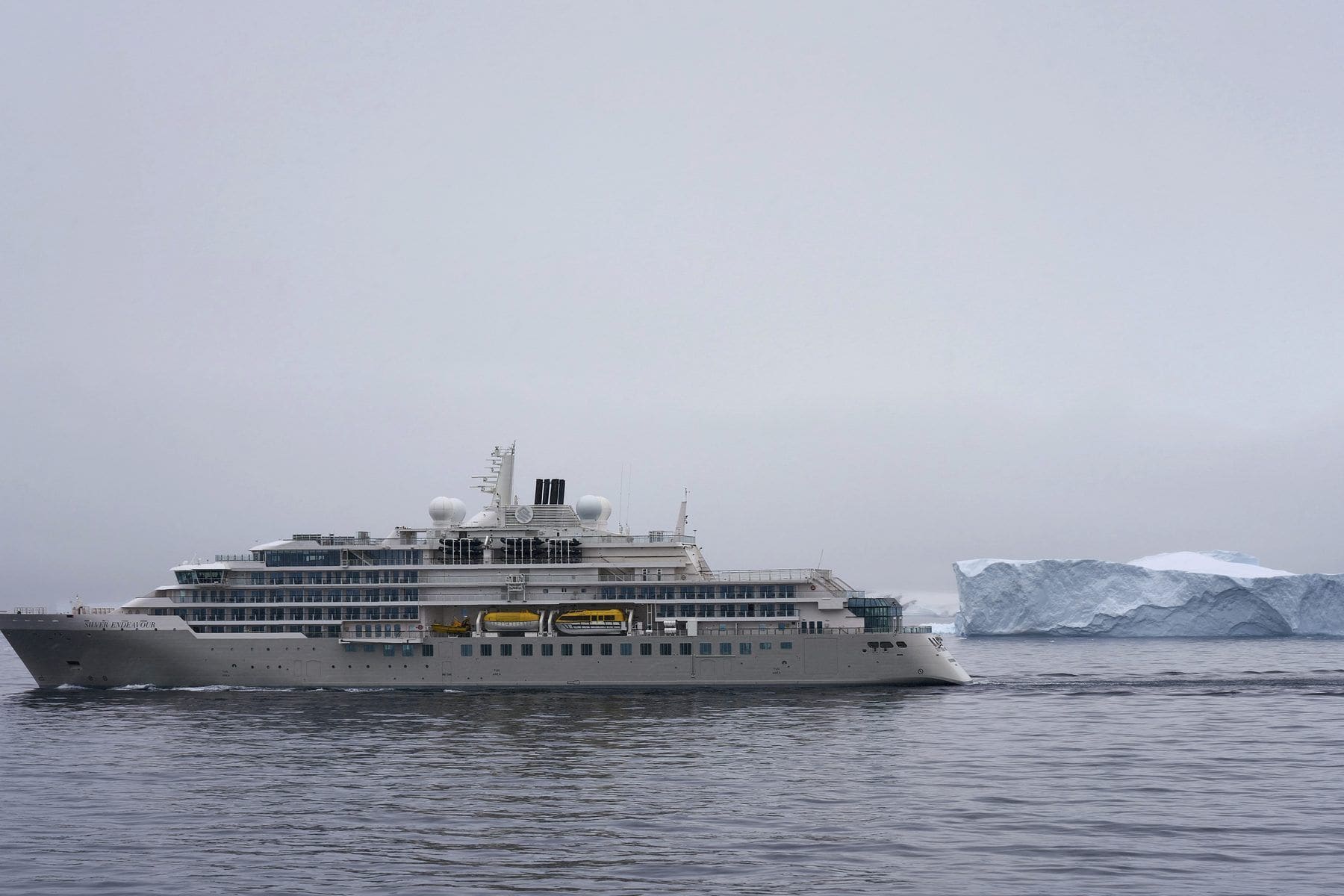
Expedition geography changes the comparison. Seabourn Venture and Seabourn Pursuit pair expedition operations with included guided experiences at many stops, while their dining pattern differs from Seabourn's larger ocean ships. Silver Endeavour, Silver Cloud, Silver Wind and Silver Origin use an expedition-oriented onboard dress approach. Travelers choosing Antarctica in the 2027-2028 season should put landing operations, age rules and physical ability ahead of restaurant counts. A polar ship should not be selected merely because its parent line won the ocean-cruise dining comparison.
Seabourn or Silversea can reverse the verdict
Seabourn wins back food-focused couples when flexibility matters more than restaurant count. A couple returning late from Mahon may prefer Earth & Ocean under the stars, a casual meal in The Colonnade, or dinner from The Restaurant menu on their veranda. They need not turn every night into a separate dining event. Seabourn also wins when one traveler prefers an early table and the other wants a later meal, since open seating and 24-hour room service make compromises easier.
Silversea wins back multigenerational groups when the children are mature, the suites connect correctly and the adults value restaurant variety. A Residence or Villa category can provide separate living and sleeping areas, while a connecting arrangement can keep guests under 18 beside a responsible adult. Silver Dawn adds S.A.L.T. programming for grandparents who want food to frame the voyage. This option fails when the family expects supervised activities, but it can work well for older teenagers who willingly dine with adults.
Seabourn should not be booked by diners who need a long list of sharply differentiated restaurants every evening. Eight or nine dining venues may operate across the broader Seabourn experience, but exact choices depend on the ship. Seabourn Pursuit does not mirror Seabourn Ovation, and Sushi changes format between them. Silversea's 10-concept portfolio offers the clearer answer for travelers who measure a cruise by culinary variety. That advantage grows on longer voyages, where repeating the same favorite venues can become less appealing.
Silversea should not be booked by travelers who dislike restaurant planning or prefer one dependable dining rhythm. Atlantide provides open seating, yet the broader appeal comes from exploring multiple concepts, not ignoring them. Seabourn gives that traveler a simpler nightly decision. Regent may win instead when a party wants another all-inclusive interpretation, while Oceania may suit adults who place food at the center of the choice. Neither alternative removes the need to compare ship, suite and exact itinerary rather than line reputation alone.
Confirm ship, suite, rules and restaurant access
Start with the party rather than the menu. Record every traveler's age at embarkation, preferred bed arrangement, mobility needs and tolerance for formal evenings. A young child can meet Seabourn's expedition minimum, while a young child may meet Silversea's stated Expedition threshold. Those facts do not make either ship suitable, but they narrow the field. Adult groups should decide whether they need one shared dining room, connected suites, separate bedrooms or enough private space for six people to eat together.
Match the suite to the meals the party will actually share. A Seabourn Wintergarden Suite supports dining for six within 989 square feet of interior space, while a Signature Suite adds a 493-square-foot veranda. Silversea Residence and Villa categories offer separate living and sleeping areas, but the exact category changes by ship. Ask for a deck plan showing the suite numbers, connecting doors and nearby service areas. Category names alone cannot reveal noise, walking distance or the practical shape of shared space.
Build a realistic restaurant plan next. On Seabourn, identify which venues operate on the selected ship and which require reservations. On Silversea, list the concepts available aboard the chosen vessel, then compare likely port-day hours. Atlantide's published dinner window runs from 7:00 to 9:30 p.m., but operating times can change with the itinerary. A group should also decide how many nights it wants together, how many meals can split naturally, and when private dining would solve conflicting schedules.
Finish with the itinerary's pace and the line's current rules. A 12-day Silver Dawn segment between Lisbon and Civitavecchia creates a different dining rhythm from Seabourn Ovation's seven-day Dubrovnik sailing. Long port days reduce restaurant time, while sea days create room for lunches and extended dinners. Formality, child eligibility and suite occupancy can also affect the final fit. Confirm the exact ship, suite connection, restaurant access, dress schedule, age rules and included fare components with a cruise specialist before booking.
For the two lines head to head on every point, see the side-by-side comparison.
Questions people ask
Good to know
Questions, answered
Does Seabourn have more formal nights than Silversea?
The schedules use different frameworks. Seabourn generally plans one formal evening on cruises through 13 days, two on voyages of 14 to 20 days, and three from 21 days, although special voyages can differ. Silversea uses Elegant Casual and Formal Optional evenings for Classic sailings departing from June 1, 2026. Elegant Casual clothing remains acceptable on Silversea's Formal Optional nights.
Can I wear jeans to dinner on both cruise lines?
Seabourn permits elegant jeans in its dining venues, but jeans are not appropriate in The Restaurant after 6:00 p.m. Silversea permits high-end denim while excluding ripped, distressed or excessively casual jeans. Both lines expect a more polished appearance after 6:00 p.m. Pack slacks or a dress as an easy alternative, particularly when the evening includes a main dining room or Formal Optional event.
Which line is easier for dietary requests?
Discuss dietary needs before sailing and identify every restaurant you expect to use. Seabourn's open-seating system and 24-hour in-suite dining can simplify schedule changes. Silversea's multiple concepts may provide useful variety, but a traveler should not assume every kitchen handles the same request identically. Ask how allergies are recorded, which venues need advance notice and whether the selected ship can support the requirement throughout the itinerary.
Are jackets required at dinner on Silversea or Seabourn?
Silversea states that jackets are optional under its dress approach for sailings from June 1, 2026. Guests may wear gowns, tuxedos or dark suits on Formal Optional nights, but Elegant Casual remains acceptable. Seabourn's regular evening standard allows men to wear slacks with a collared dress shirt or sweater, with a jacket optional. Formal nights on Seabourn Quest, Encore and Ovation carry stricter expectations in The Restaurant.
Which line is better for dining alone?
Seabourn is usually easier for a solo diner who wants maximum control over timing and company because nearly all venues use open seating. Silversea can suit a solo traveler who prefers rotating through more restaurant concepts and building evenings around food. On either line, request a private table when desired and ask the dining team about hosted or shared tables only if social meals appeal to you.
Still have a question? Book a free 30 minute call or send us the brief.
Sources
Where to go next
- Cruise lines: Who each line is for, and who it isn't for.
- Compare ships: Our ratings for every line we sell.
- Book a free 30 minute call: Tell us who is traveling; we will shortlist the ships we would consider.